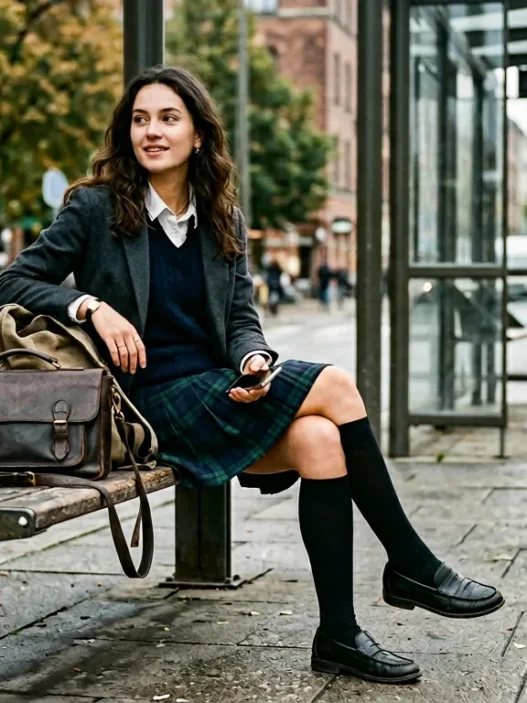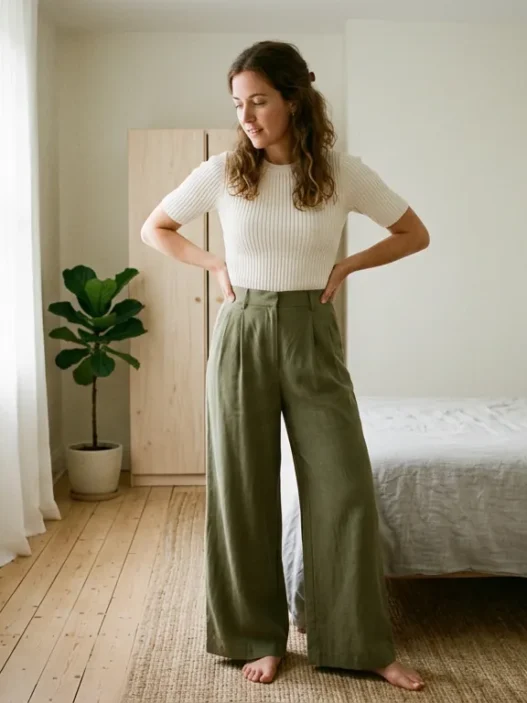









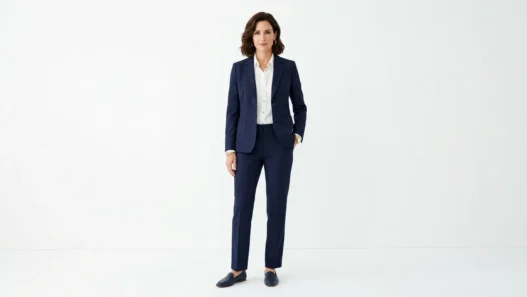


I used to think asymmetrical tops were just trendy pieces you threw on and hoped for the best. Then I spent three months looking like I’d gotten dressed in the dark, and realized there’s actually a method to making these statement pieces work. It’s not about following trends — it’s about understanding the silhouette you’re creating and why certain shapes just click.
What You’ll Need
Before we dive into the shape-making process, let’s get your styling toolkit ready. You don’t need much, but these pieces make all the difference:
- Your asymmetrical top (obviously!)
- Well-fitted bottoms in a neutral or complementary color
- A structured jacket or blazer
- Statement earrings or minimal jewelry
- Shoes that ground the look — heels, loafers, or sleek sneakers
- A full-length mirror
- Good lighting to see your silhouette clearly
Why Silhouette Beats Trend
Here’s what I wish someone had told me earlier: asymmetrical tops aren’t about being edgy or different. They’re about creating intentional visual movement. Every asymmetrical detail — whether it’s a draped hem, an off-shoulder cut, or an angled neckline — shifts how your eye travels across your body.
Think of it like this. A symmetrical outfit creates a predictable, stable silhouette. Your asymmetrical top breaks that predictability in one specific spot. If you don’t control where the rest of your outfit balances that break, you end up looking unfinished rather than intentionally styled.
The key is working with your top’s asymmetry, not against it. Some pieces want to be the dramatic focal point of a minimalist outfit. Others work better when their asymmetry is just one interesting detail in a more complex look. Understanding the design intent helps you figure out which category your piece falls into.
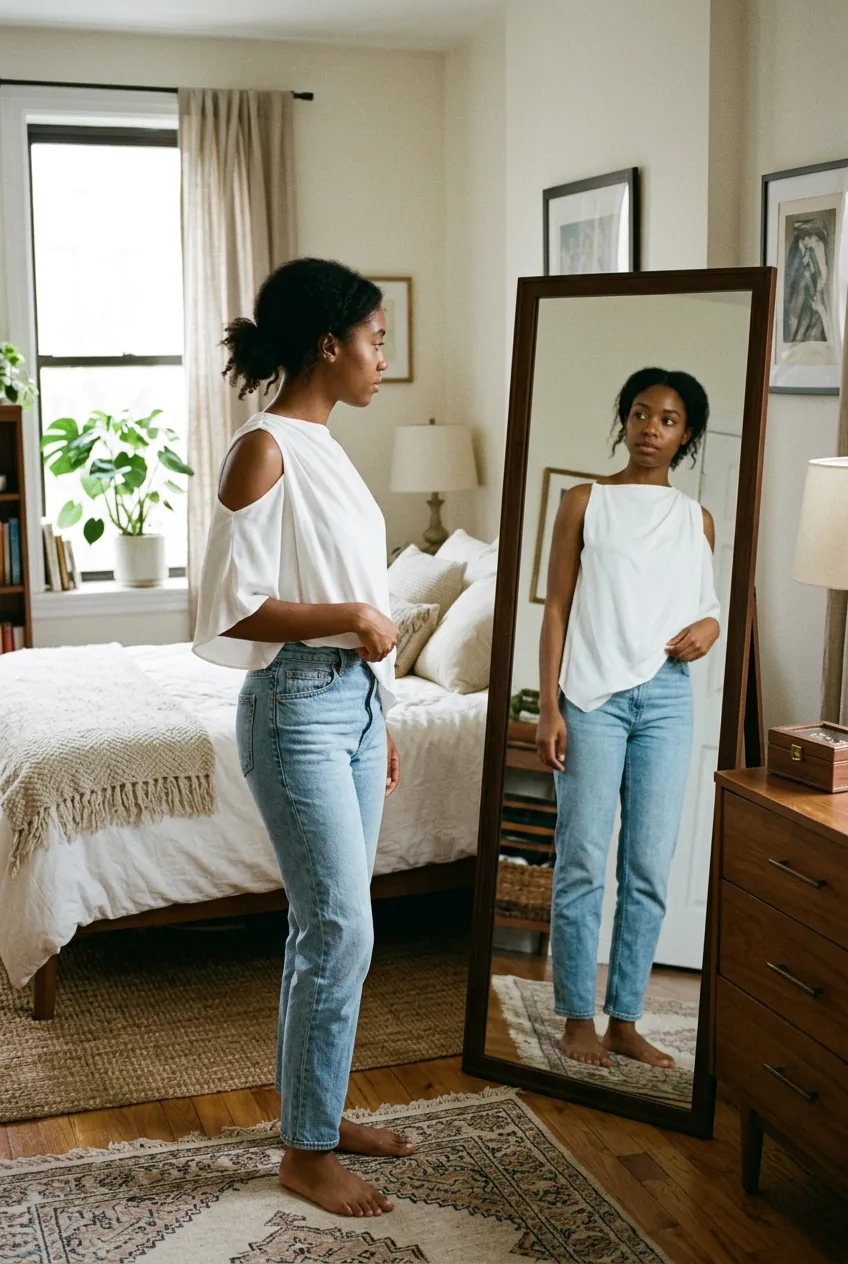
Picking Your Base Shape
Every great asymmetrical top outfit starts with understanding what silhouette you’re building toward. I’ve found there are three main directions you can go, and your choice here determines everything else.
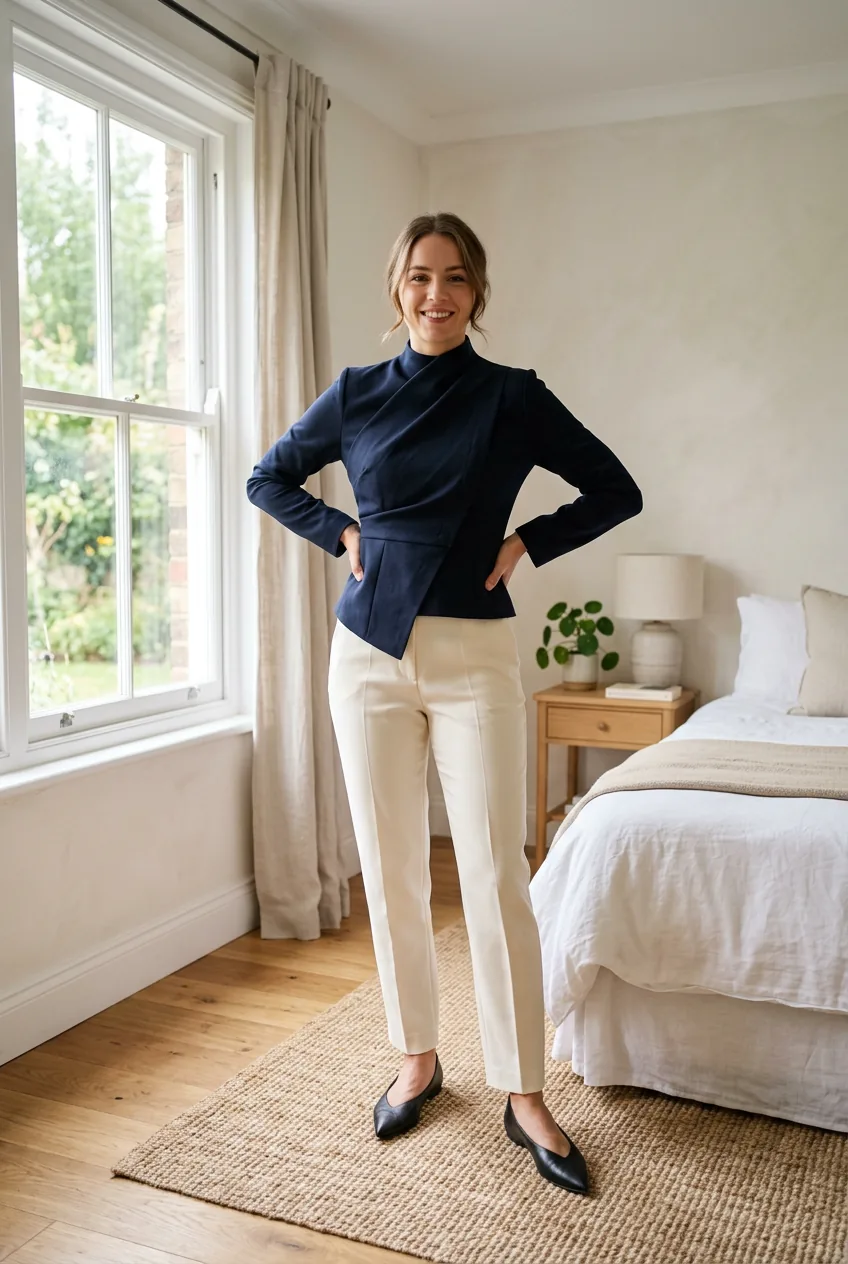
The Clean Line approach uses your asymmetrical top as the single point of visual interest against otherwise structured, symmetrical pieces. Think blazer, straight-leg trousers, and minimal accessories. Your top gets to be the star because everything else is deliberately understated.
The Balanced Asymmetry route adds complementary irregular elements throughout your outfit. Maybe your top has an angled hem, so you choose shoes with an interesting strap detail or a bag with an off-center handle. The asymmetry feels intentional rather than accidental.
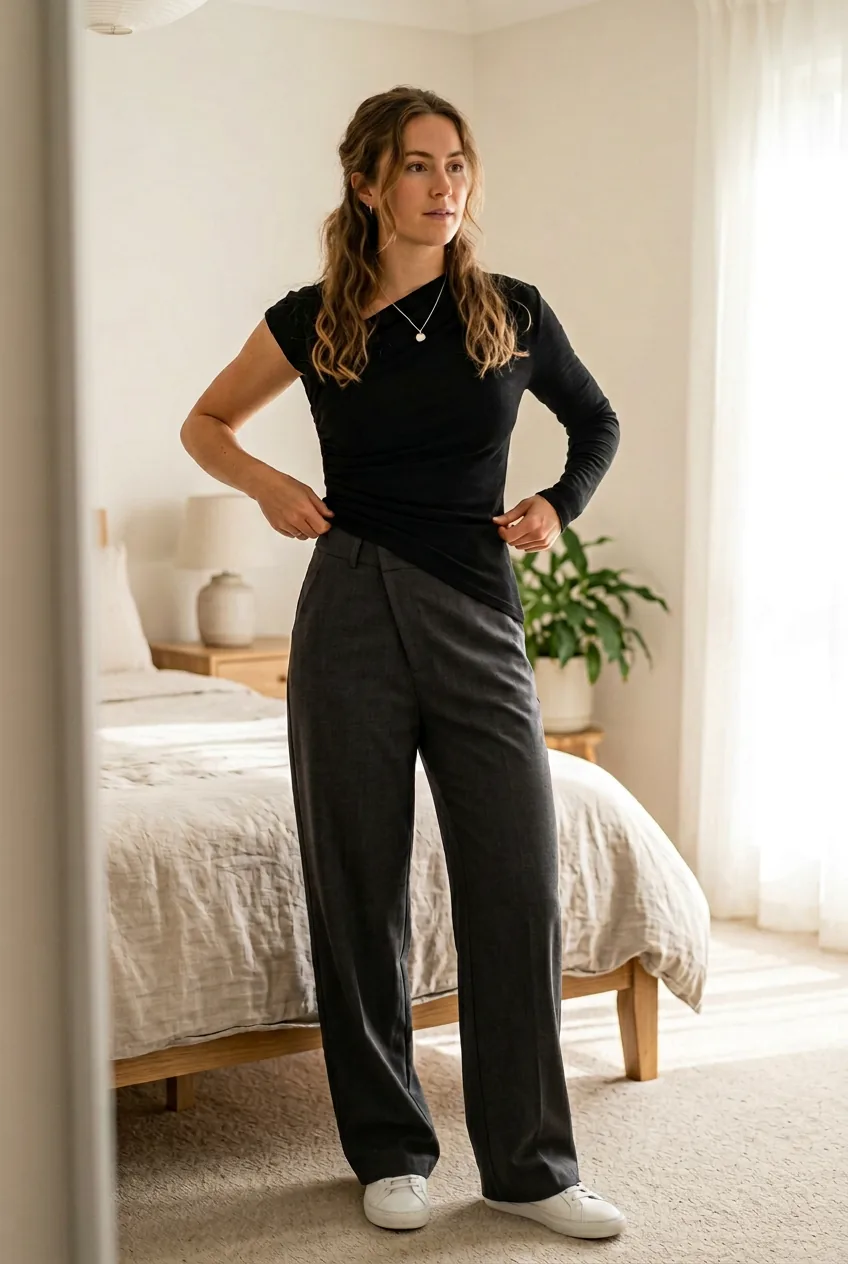
The Grounded Drama approach pairs a highly asymmetrical top with very stable, classic bottoms. Wide-leg trousers, A-line skirts, or perfectly fitted jeans. The contrast between the dramatic top and reliable bottom half creates tension that actually works.
I personally gravitate toward Clean Line because it’s foolproof, but Grounded Drama can be stunning when you nail the proportions.
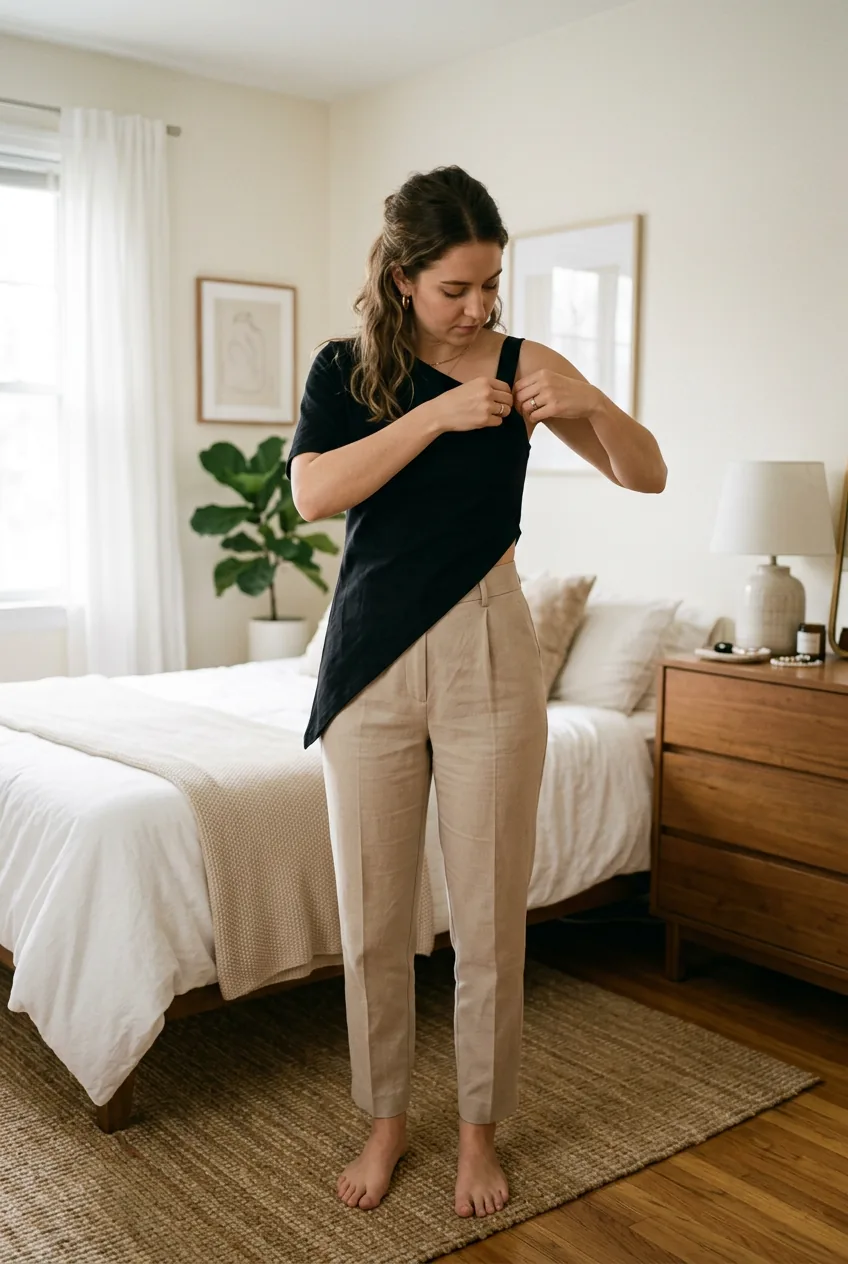
Step 1: Choose Your Asymmetrical Focal Point
Look at your asymmetrical top and identify where the asymmetry is strongest. Is it the neckline? The hemline? One shoulder versus the other? This becomes your outfit’s primary focal point — everything else should either support it or stay out of its way.
If your top has multiple asymmetrical elements, pick the most dramatic one to highlight. I learned this the hard way when I tried to showcase an off-shoulder detail AND a wrap-style hem at the same time. The result looked busy rather than intentional.
Once you’ve identified your focal point, position yourself in front of your mirror and notice where your eye goes first when you look at the top. That’s the area we’re going to build the entire outfit around.
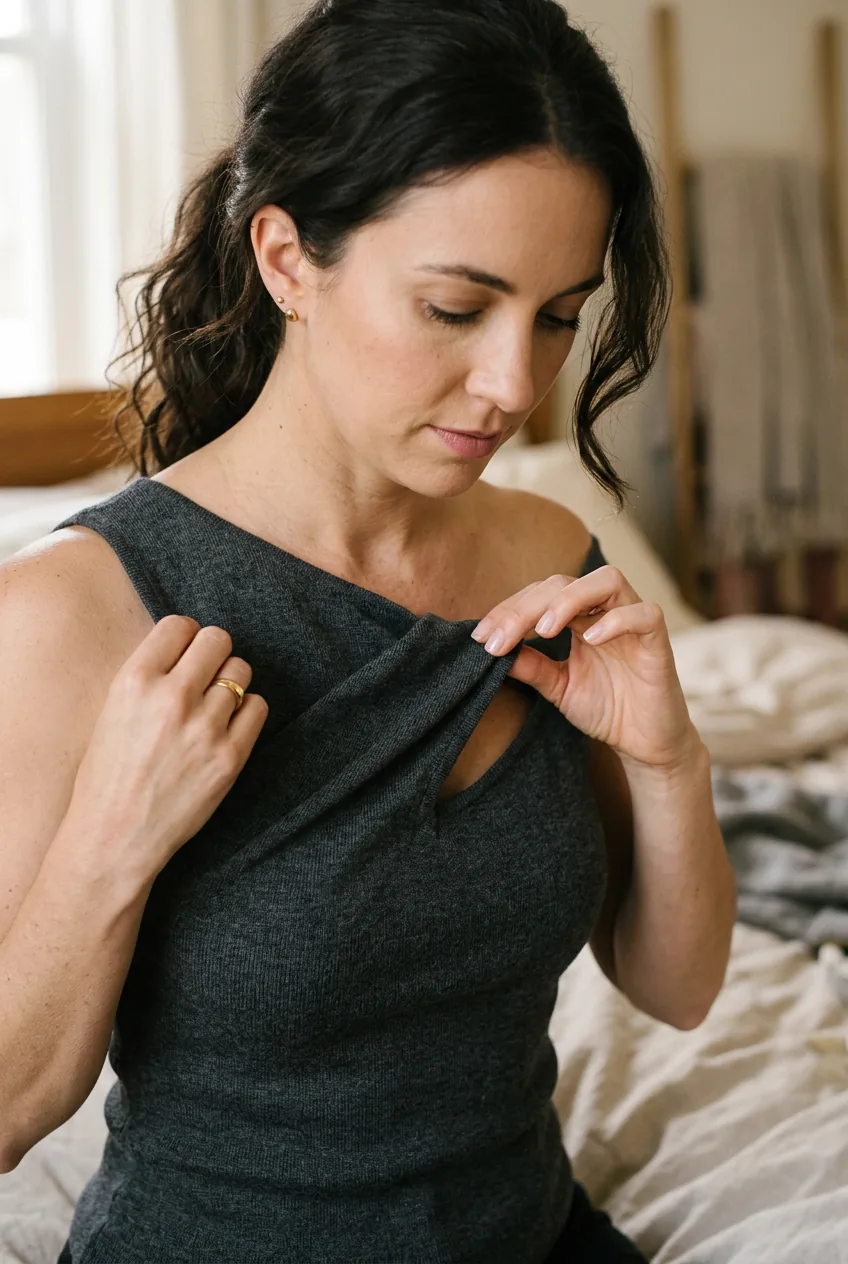
Step 2: Balance the Visual Weight
This is where most people go wrong with asymmetrical tops. They focus on the asymmetrical detail and forget about visual balance. If your top pulls the eye strongly to one side, you need to create some subtle visual weight elsewhere to keep the whole look from feeling lopsided.
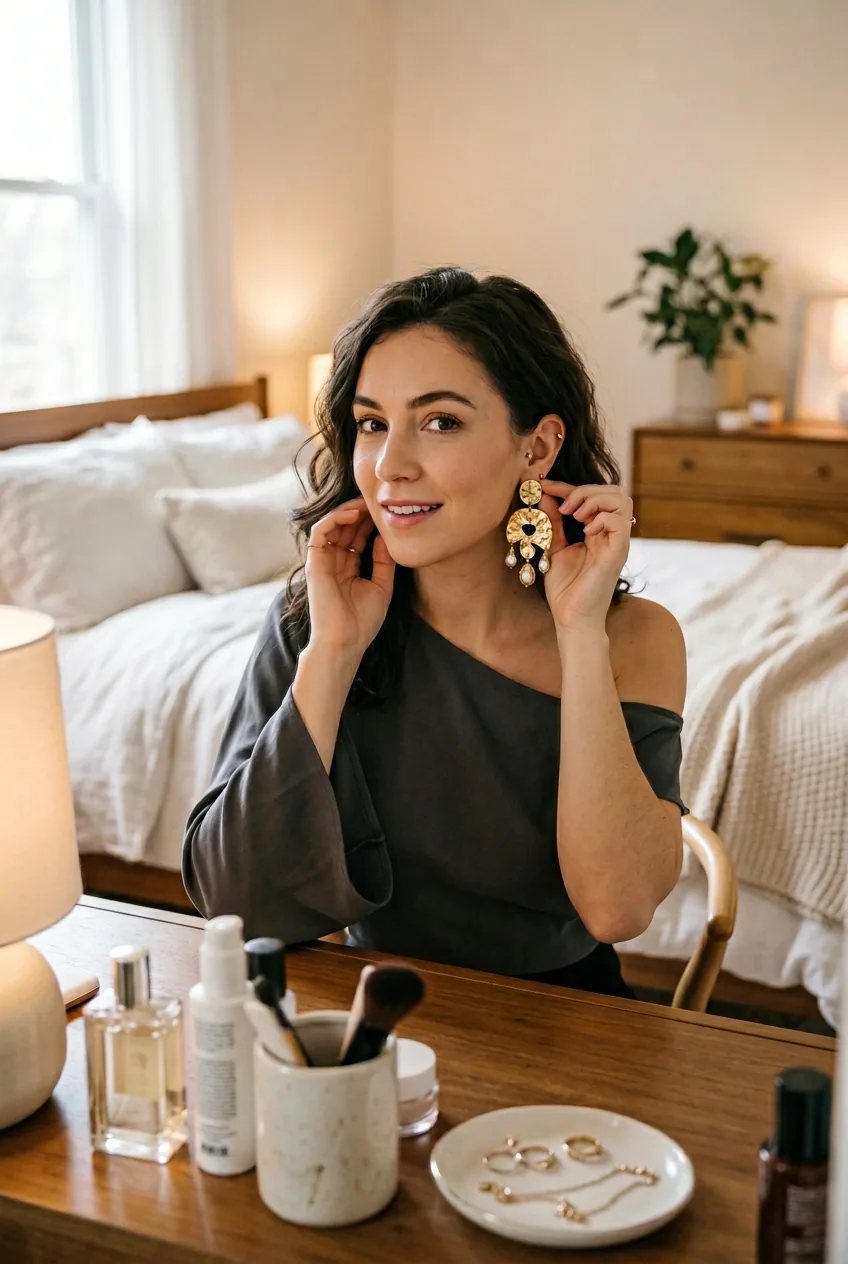
The easiest way to do this is through accessories. If your top has a dramatic left shoulder detail, try wearing a watch or bracelet on your right wrist. If the asymmetry is in the hemline, balance it with earrings or a necklace that draws attention back up to your face.
I once wore an asymmetrical one-shoulder top to dinner and felt off-balance all night. Later I realized I’d piled all my jewelry on the same side as the shoulder detail. The visual weight was completely uneven, and it showed in how awkward I felt moving around.
The goal isn’t perfect symmetry — you still want that interesting asymmetrical element to be noticeable. You just want the overall composition to feel intentional rather than accidental.
Step 3: Ground Your Look with Structure
Here’s what I’ve learned about styling asymmetrical pieces: they need something structured to play against. Without that contrast, the asymmetry can feel sloppy rather than sophisticated.
Your structured element can come from your bottoms, your shoes, or an outer layer. High-waisted trousers with a clean waistline work beautifully. So do fitted jeans, pencil skirts, or even well-tailored shorts. The key is choosing something with clear, defined lines that won’t compete with your top’s irregular silhouette.
If your bottoms are flowy or relaxed, bring structure through your footwear instead. Pointed-toe flats, structured ankle boots, or clean-lined sneakers all work. Sometimes I’ll add a structured blazer over everything, which instantly makes any asymmetrical top look more put-together.
The structure doesn’t have to be severe or formal. It just needs to provide visual stability so your asymmetrical element reads as a design choice rather than a styling accident.
Step 4: Add Movement Without Chaos
Now comes the fun part: adding elements that work with your top’s asymmetry to create a cohesive sense of movement. This is different from the visual balancing we did in Step 2 — here we’re amplifying the dynamic feeling rather than stabilizing it.
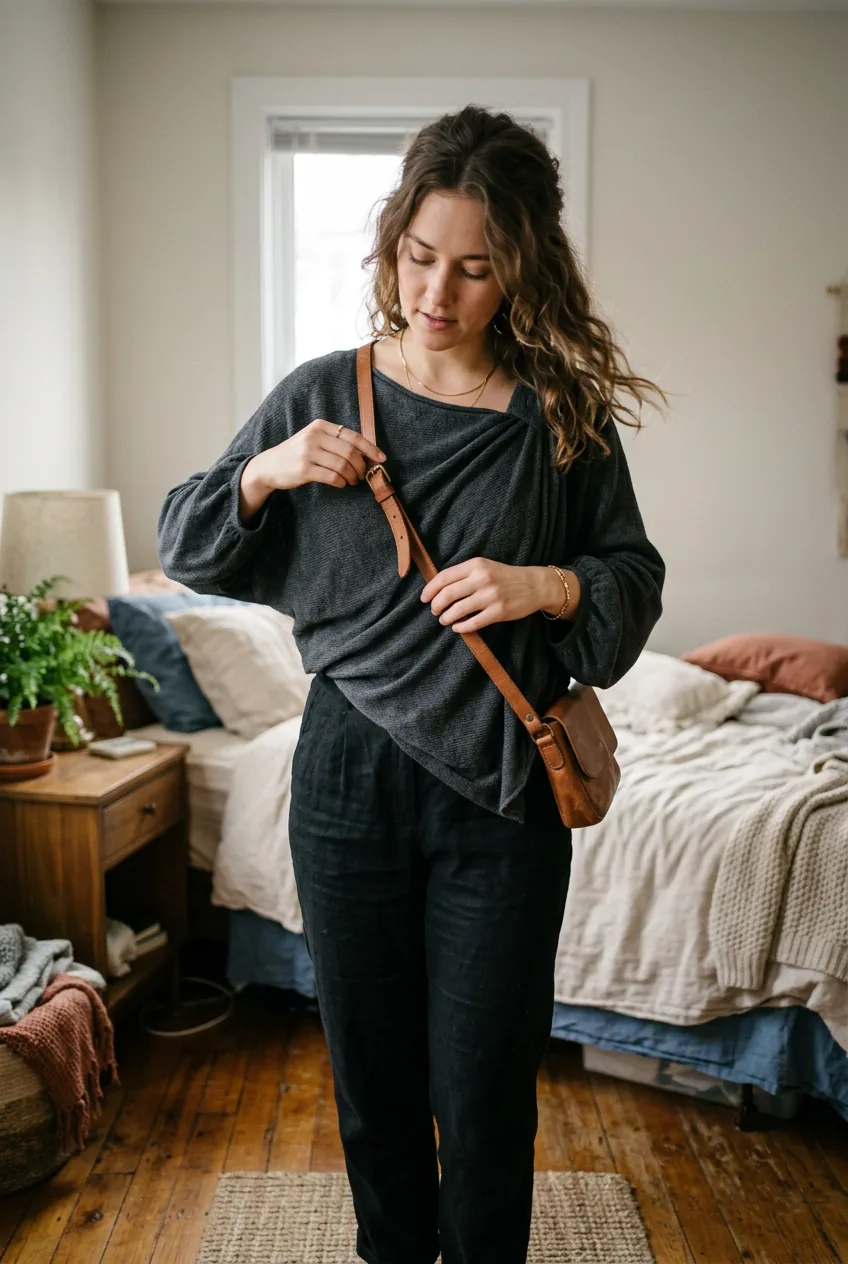
Look for pieces with subtle directional elements that echo your top’s asymmetrical flow. A crossbody bag worn at an angle. Shoes with interesting strap details. A scarf tied in an off-center way. These small touches make the asymmetry feel like part of a larger design story.
The key word here is subtle. You’re not trying to match the drama of your asymmetrical top — you’re supporting it. If your top has a bold angled hemline, maybe your shoes have a small asymmetrical buckle detail. If your top drapes to one side, perhaps your necklace has an interesting off-center pendant.
Spring outfit trends often feature this kind of coordinated asymmetry, where multiple small details work together to create visual interest without overwhelming the look.
See the Styling Process in Action
Step 5: Perfect Your Proportions
This final step is about fine-tuning the overall silhouette until everything feels intentional and balanced. Stand back from your mirror and look at your complete outfit as a single shape rather than individual pieces.
Pay attention to where the visual weight falls. If your asymmetrical top creates volume or drama in your upper half, consider whether your lower half needs to balance that or complement it. Sometimes a fitted bottom half makes an asymmetrical top look more deliberate. Other times, adding some volume to your bottoms creates a more cohesive silhouette.
Check your proportions at different angles. Asymmetrical tops can look completely different from the side versus straight-on. Make sure you’re happy with how the outfit reads from multiple viewpoints, especially if you’ll be moving around a lot.
The final proportion check is about scale. Are your accessories appropriately sized for the drama level of your top? A highly asymmetrical statement piece might need equally substantial accessories, while a subtly asymmetrical top works better with delicate details.
This is also where you can make small adjustments that have a big impact. Tucking just the front of your top, rolling your sleeves slightly, or adjusting how your necklace sits can fine-tune the whole look.
Quick Answers
Can asymmetrical tops work for professional settings?
Absolutely, if you choose the right asymmetrical detail and pair it with structured pieces. Subtle asymmetrical necklines or hemlines work beautifully under blazers, while dramatic one-shoulder styles might be better saved for creative industries or after-work events.
What body types should avoid asymmetrical tops?
None! The key is choosing asymmetrical details that work with your proportions rather than against them. If you’re curvy, look for tops where the asymmetry creates vertical lines. If you’re petite, avoid overwhelming asymmetrical details that might swamp your frame.
How do I know if I’m overdoing the asymmetrical styling?
If you look in the mirror and your eye doesn’t know where to land first, you’ve probably added too many competing asymmetrical elements. The goal is controlled visual interest, not chaos. Start by removing accessories one by one until the look feels balanced.
Can I wear asymmetrical tops with patterns?
Yes, but choose your patterns carefully. Small, regular patterns like polka dots or thin stripes can work beautifully because they don’t compete with the asymmetrical silhouette. Large or irregular patterns might clash with the asymmetrical lines and create visual confusion.
What I love about this approach is how it changed my relationship with asymmetrical pieces completely. Instead of feeling like I was taking a styling risk every time I wore one, I now have a reliable method for making any asymmetrical top look intentional and polished. The shape-first thinking works for everything from subtle wrap details to dramatic one-shoulder statements — you just adjust the intensity of your supporting elements to match.