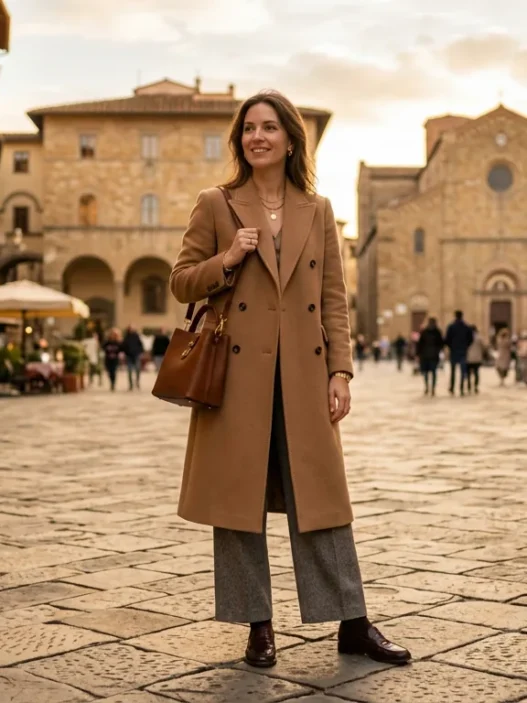







My partner and I had a trip planned last fall — a day at a pumpkin patch, dinner after, the kind of date where you want to look put-together without looking like you coordinated too hard. I volunteered to style both of us. And then I stood in front of two open closets, completely frozen, because it turns out styling someone else is a completely different skill set than styling yourself. You can’t just project your own taste onto another person and call it done.
So I figured it out the hard way. I pulled things wrong, had to start over, and at one point handed over a cardigan that got politely handed back to me. But by the end of it, we both felt like ourselves — just a coordinated version of ourselves. That’s the whole goal of matching relationship outfits done right: not matchy-matchy in a cringe way, but visually connected in a way that reads as intentional and warm.
This is the process I now use every time I style someone I love for a shared occasion. It works for couples, for siblings going to a wedding together, for best friends at a birthday dinner. The principles are the same.
How to Style Matching Relationship Outfits (Without Losing Anyone’s Personality)
- What You’ll Need Before You Start
- Step 1: Reading What They Already Feel Confident In
- Step 2: The Pieces They Won’t Pick Themselves
- Step 3: Build the Shared Visual Thread
- Step 4: The Styling Move You Can Only See From Outside
- Step 5: Fit Checks and the Comfort Conversation
- Step 6: The Reveal Moment
- Questions I Get About This
What You’ll Need Before You Start
Before anything touches a hanger, get these things sorted. Trust me — winging the prep stage is how you end up with two people in outfits that technically match but feel weirdly costume-y.
- Access to both wardrobes (even just a photo tour of theirs if you’re shopping)
- A clear idea of the occasion — the venue, the season, whether you’ll be walking a lot
- A color reference — a single paint chip, phone screenshot, or fabric swatch you both agree on
- Measuring tape if you’re buying anything new (waistbands lie)
- A neutral third-party mirror, ideally full-length
- Snacks. This takes longer than you think and someone always gets hangry.
One thing I’d also recommend: check the weather forecast and the dress code in the same breath. A romantic summer evening outfit has totally different needs than a fall day out — and your coordination strategy changes based on layering possibilities.
Step 1: Reading What They Already Feel Confident In
This is the foundation of everything. Before you suggest a single item, you need to understand what your person already reaches for when they feel good. Not what you wish they’d wear. What actually makes them walk out the door like they own the sidewalk.
The fastest way to do this is to ask them to show you their three favorite outfits — not the most polished ones, just the ones they genuinely love wearing. You’re looking for patterns. Do they always go back to a particular silhouette? A specific fit around the shoulders or waist? Do they gravitate toward texture over print, or the opposite? Are they a tucked-in person or a never-tuck person?
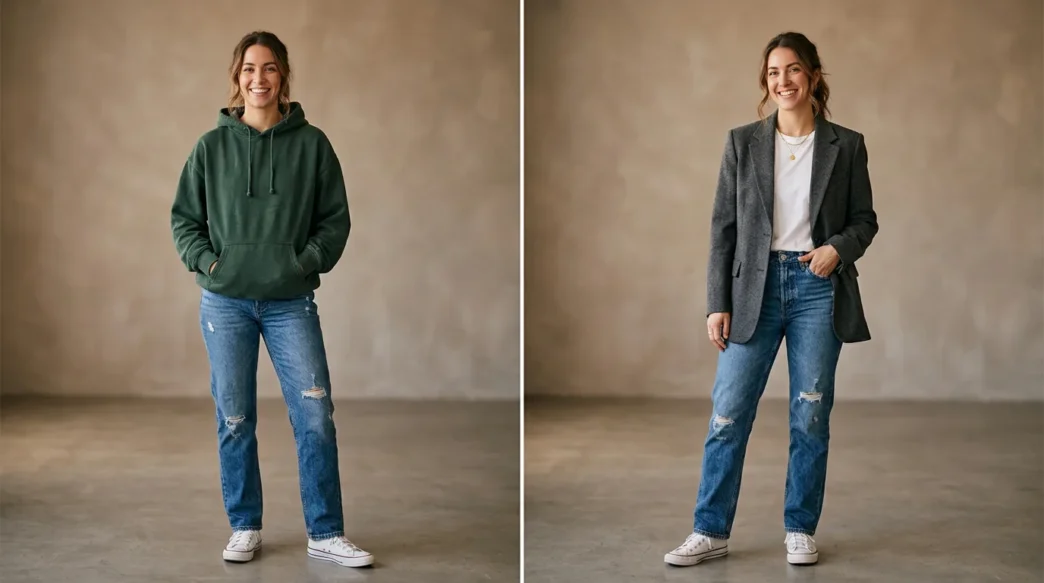
When I did this with my partner, I noticed immediately: every go-to outfit had something structured on top — a jacket, a crisp collar, something with weight to it. Soft on the bottom, structured on top. That told me everything I needed to know about how to build their half of our look.
Don’t skip this step thinking you already know them well enough. Even people who’ve been together for years miss this. Loving someone and being able to read their style confidence are genuinely different things.
Step 2: The Pieces They Won’t Pick Themselves
Here’s where your role as the outside stylist actually starts to matter. Most people have a gap between what they’d pick off a rack unprompted and what genuinely looks incredible on them. Your job is to identify that gap — not to override their taste, but to gently extend it.
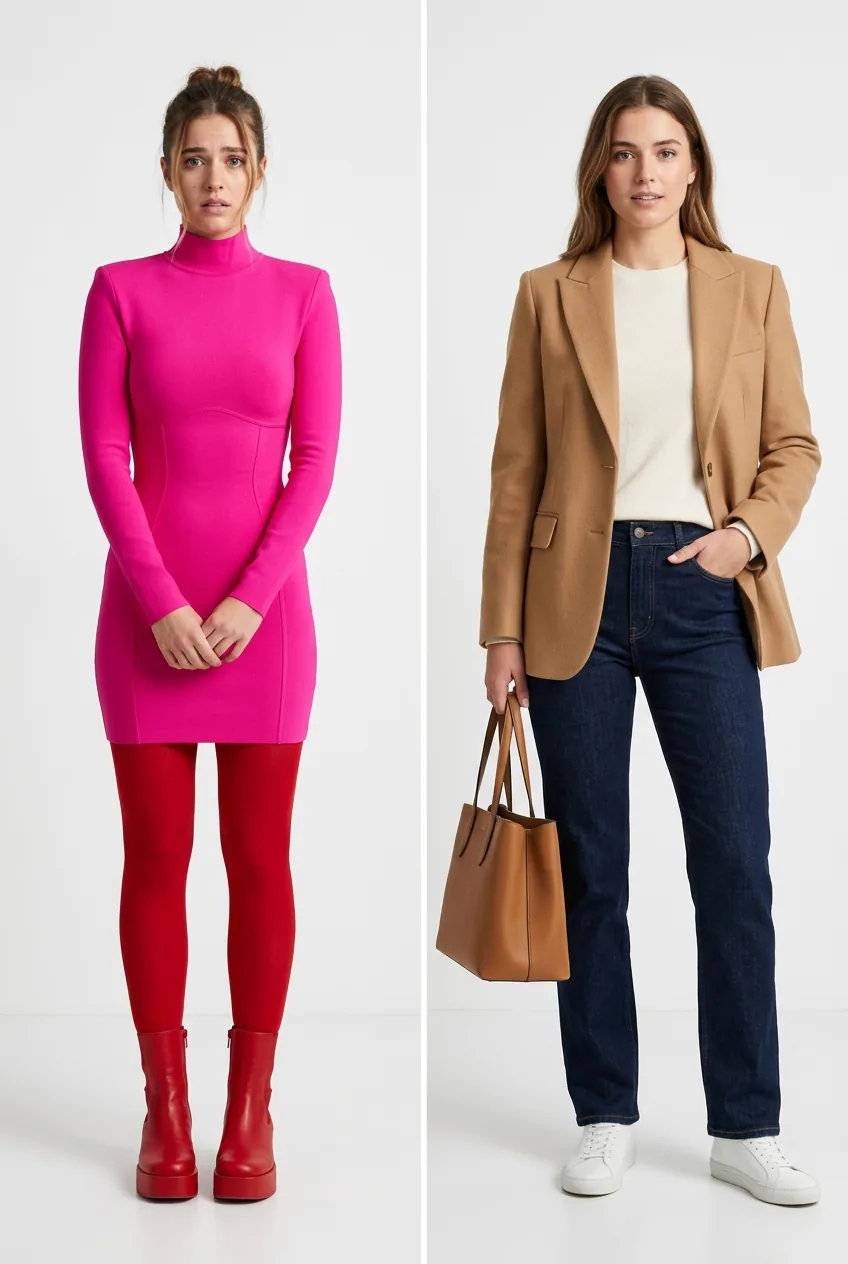
The trick is to stay within their established comfort zone in every dimension except one. If they always wear neutrals, introduce one piece with a subtle print — but keep everything else neutral. If they always go oversized, introduce one piece with a closer fit — but pair it with something loose. You’re not reinventing them. You’re giving them one brave choice surrounded by everything safe and familiar.
The mistake I made the first time: I introduced two new elements at once — a bolder color AND a tighter fit — and my partner felt like they were wearing a costume. The outfit wasn’t wrong, but it was asking too much at once. One stretch at a time. Always one stretch at a time.
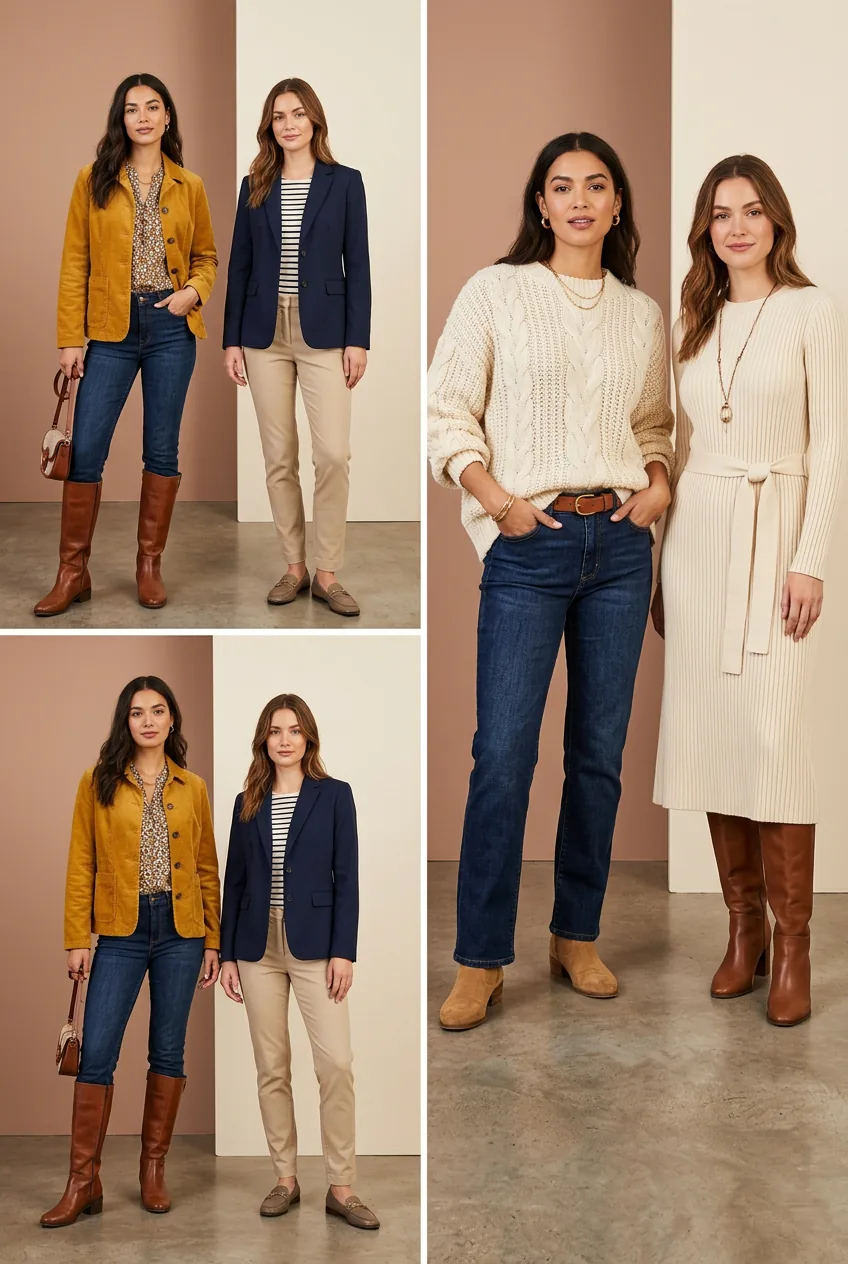
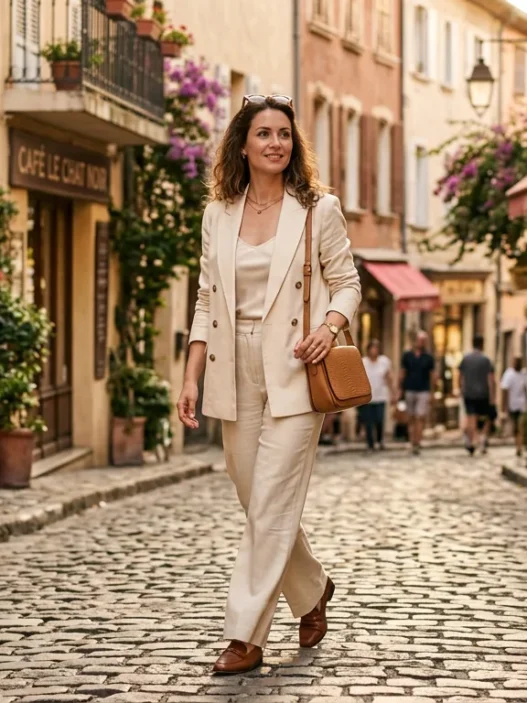
This is also where you want to think about what will photograph beautifully together. Look at how she’s wearing that structured camel blazer in the image above — notice how it echoes the tones without being identical. That’s the energy you want. Two people who clearly belong in the same frame, without looking like they ordered matching Halloween costumes online.
Step 3: Build the Shared Visual Thread
Now you have a feel for both wardrobes and both personalities. It’s time to find — or create — the visual element that will tie the two looks together. This is what makes matching relationship outfits actually work instead of just accidentally existing near each other.
There are four levers you can pull: color, texture, silhouette, or detail. You only need one. Trying to match on all four is how you end up looking like you accidentally wore the same uniform.
- Color: Share one specific shade — a dusty sage, a warm rust, a deep navy — while each person’s overall palette stays distinct.
- Texture: Both wearing something knitted, both wearing something leather-trimmed, both in linen — same texture family, totally different pieces.
- Silhouette: Both in wide-leg trousers, both in something belted at the waist, both in clean minimal lines. The shape reads as coordinated even when colors differ.
- Detail: A shared button style, a matching trim, the same shoe color — one small detail that connects the two looks to anyone paying attention.
For fall dates — which is genuinely my favorite season for this — I lean hard into texture. The same cream knit in two different forms, or matching suede details, reads as intentionally coordinated without being too on-the-nose. If you’re planning fall outfit ideas for pumpkin patch and coffee dates, the texture lever is your best friend because the season naturally lends itself to layering in coordinating material families.
A Stylist Breaks Down Color Coordination for Two
Step 4: The Styling Move You Can Only See From Outside
This step is the one I’m most passionate about, because it’s genuinely something you can only do for someone else. When you’re styling yourself, you’re looking at pieces. When you’re styling someone you love, you’re looking at a whole person — their posture, the way they carry their weight, what lights up in their face when something fits right.
Practically, this means: watch them put the outfit on. Don’t just hand it over and wait for a verdict. Stand in the room. Watch where they pull at the fabric first — that’s where something is uncomfortable or wrong. Watch what they do with their hands when they look in the mirror. Do they relax? Do they fidget? Do they tilt their chin up or down?
You want to see the moment they stop performing “trying on clothes” and start just… being in it. That’s the green light.
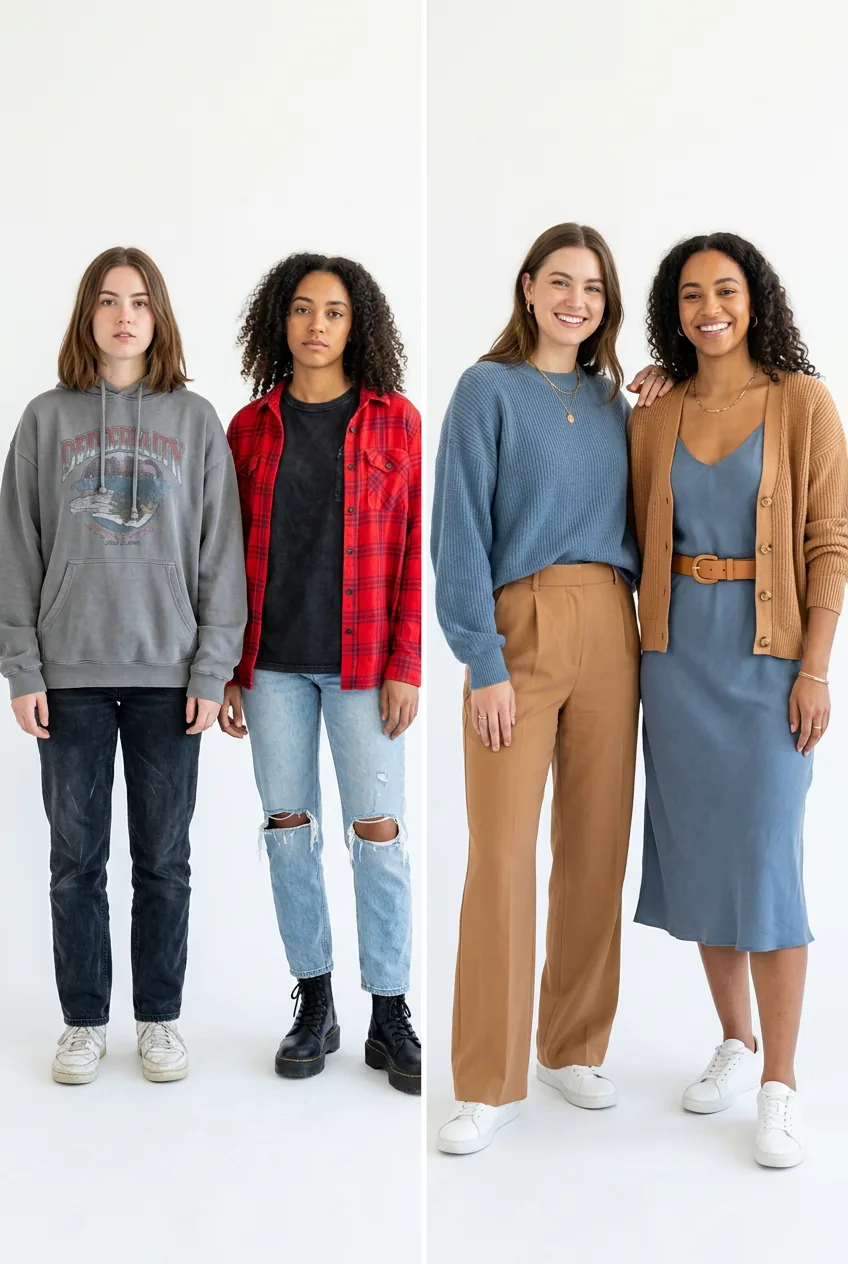
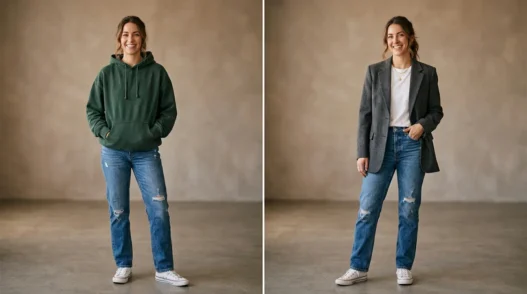
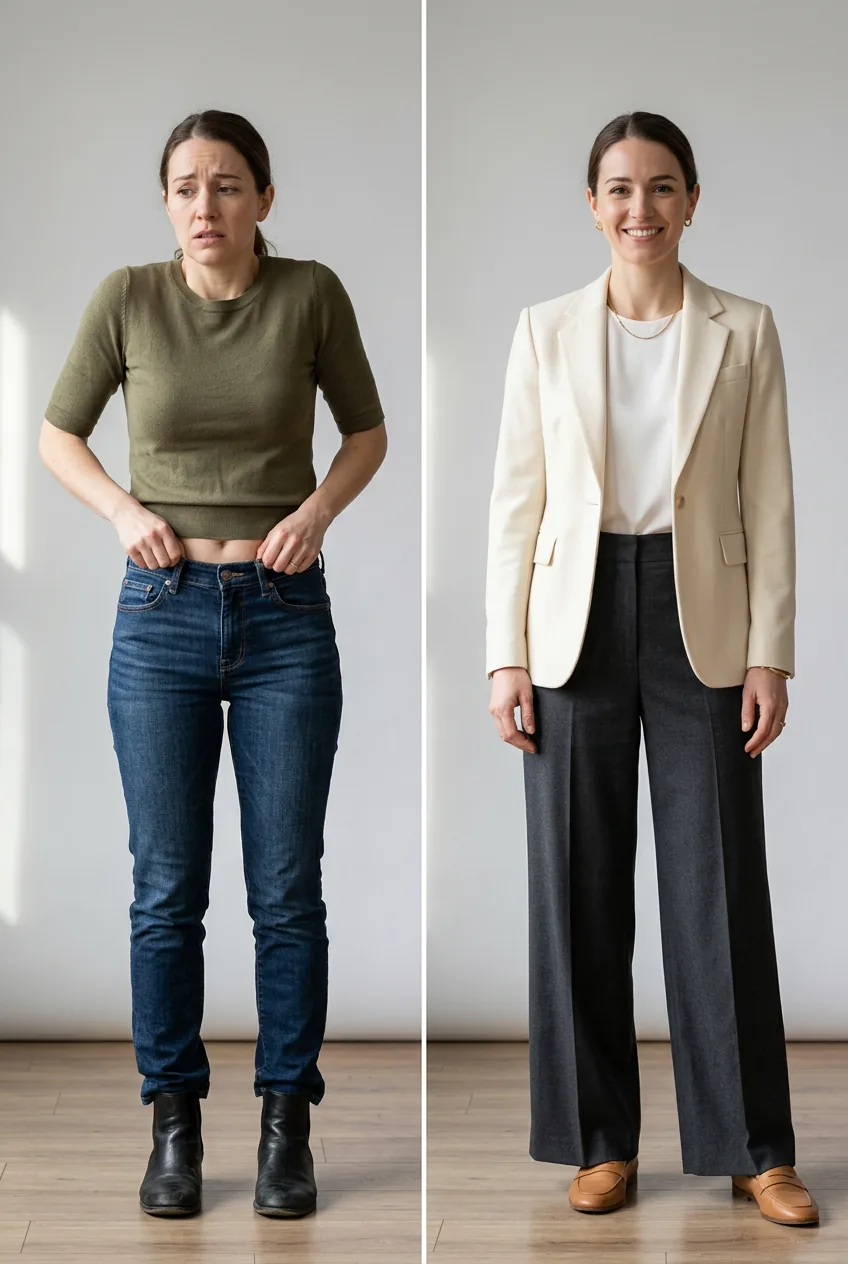
Look at the right-hand panel in the image above — the way she’s standing in the coordinated look versus how she’s standing on the left. Same woman, same background, but there’s a visible ease in her posture on the right. That’s not just styling. That’s someone feeling seen by the person who chose their outfit. You can only create that from the outside, and it’s genuinely one of my favorite things to witness.
This is also the step where you might realize one person’s look needs to be adjusted to serve the pair rather than just serve the individual. Maybe the silhouettes work better together if one person goes slightly slimmer on the bottom. That’s a conversation worth having — gently, with the full context of “I can see something you can’t right now.”
For occasion-specific styling — like dress-to-impress outfits where the stakes feel higher — this outside-eye step is especially important. When people feel nervous about an event, they default to safe choices that aren’t always their best ones. Your calm outside perspective is the actual gift here.
Step 5: Fit Checks and the Comfort Conversation
An outfit that looks gorgeous in a fitting-room moment and then gets quietly abandoned at hour two of the event is a failed outfit. Full stop. Comfort isn’t a nice-to-have — it’s the whole job.
Ask specific questions. Not “is that comfortable?” — nobody answers that honestly. Ask: “How does the waistband feel when you sit down?” Ask: “Can you take a full step in those shoes without gripping?” Ask: “Does that shoulder seam feel like it’s in the right place?” Specific questions get you real answers instead of polite ones.
Also: have them simulate what they’ll actually be doing in the outfit. If there’s dancing, they should be able to raise their arms. If there’s a long dinner, they need to sit comfortably. If you’re shooting for chic winter date night outfits that involve going in and out of a cold restaurant, layering needs to be something they can actually manage without destroying the look.
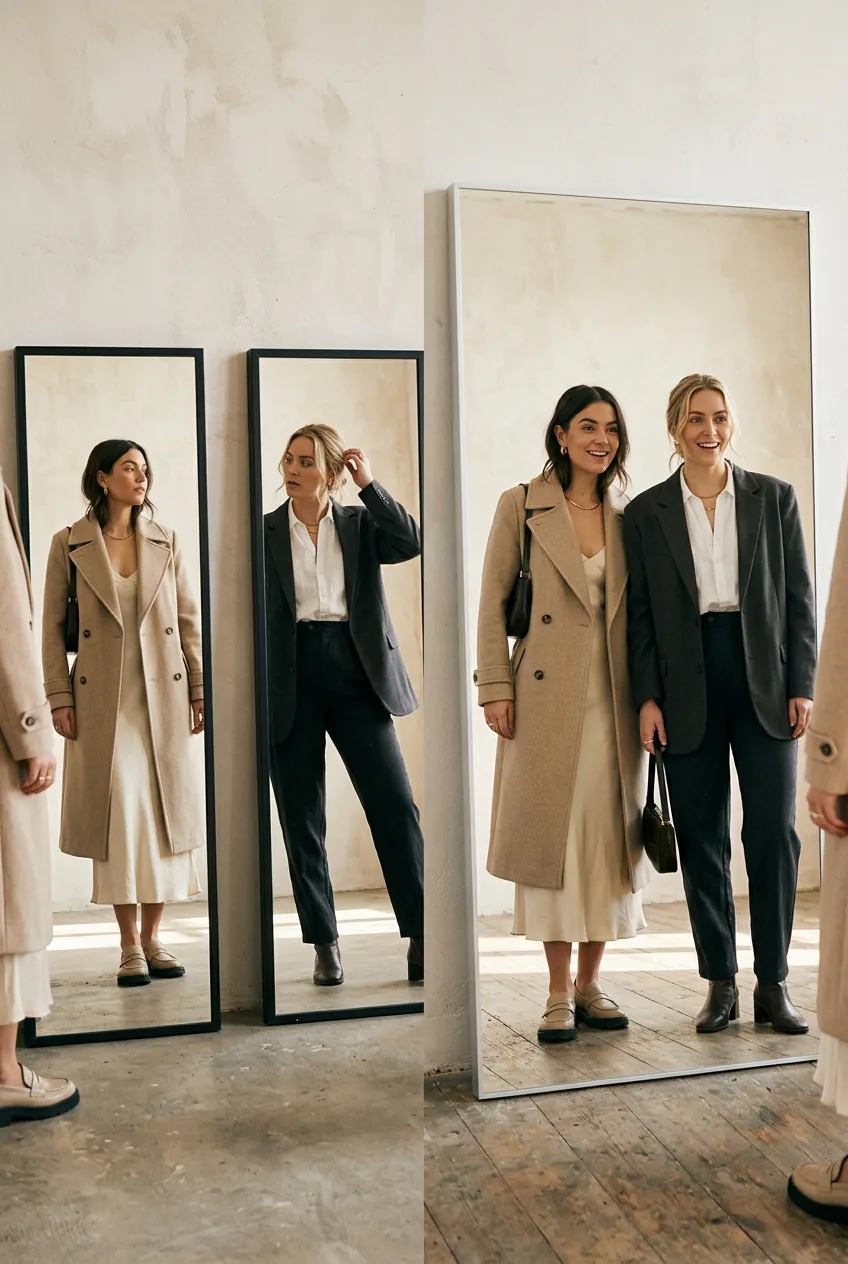
See how the coordinated pair in the image above both look completely relaxed — no pulling, no adjusting, no hands that want to tug at hemlines? That’s the goal. That ease is what you’re checking for in this step. You can learn what coordinating couples outfits work best for different body types and occasions, which helps especially when you’re navigating fit for two different figures at once.
One thing people consistently underestimate: shoe comfort determines mood at hour four. If the shoes are wrong, nothing else matters. Build backward from the shoes if you have to. An amazing shoe in the right color can anchor a whole look, and feet that hurt turn the best outfit into a bad memory.
Step 6: The Reveal Moment
This is my favorite part — and also the step most people completely fumble by making it too casual. The reveal matters. Not in a dramatic, over-the-top way, but in a “this was intentional and I want you to actually see it” way.
Get in front of a full-length mirror together. Side by side, not one at a time. That’s when the magic of the shared visual thread actually becomes visible — to both of you — for the first time. Stand there for a minute. Let them really look. Point out the thing that ties the looks together: “See how both of us have this same dusty blue coming through?” Or “Notice how the textures are the same family even though the pieces are totally different?”
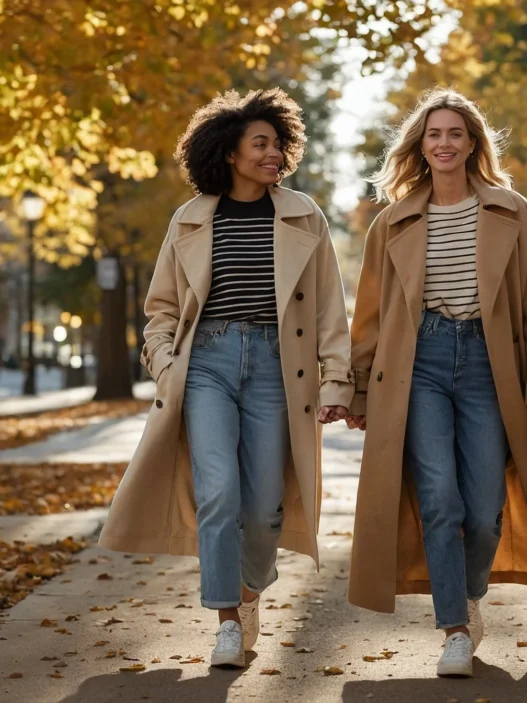
Look at the pair in the image — she’s pointing to the tonal connection between the two outfits, and you can see the other woman register it for the first time. That recognition moment is what you’re creating. It’s the part where the styling becomes a shared experience rather than just a task you completed.
Take a photo before you go anywhere. Not necessarily to post it — just to capture the look before it gets lived in. Then live in it. Spill something if necessary. That’s what the outfit is for.
If the occasion calls for something more special — a birthday dinner, a milestone event — you might want to bookmark some stunning birthday outfits as a reference for the elevated version of this same process. The steps don’t change. The pieces just get slightly fancier.
Questions I Get About This
Do matching relationship outfits have to use the exact same color?
Absolutely not — and honestly, identical colors often look more costume-y than coordinated. I prefer using one shared accent color or the same tonal family rather than the exact same shade. Two people in slightly different versions of rust, or both in navy-adjacent tones, reads as intentional without looking like you ordered a set.
What if the other person hates everything I suggest?
That’s actually useful information. If they’re rejecting everything, go back to Step 1 — you probably misread their confidence zone. Ask them to veto specific elements rather than whole outfits. “Is it the color or the cut?” narrows it down fast. Sometimes the issue is one small thing that’s easy to swap.
How do we coordinate if we have completely different body types?
This is where the texture and detail levers (from Step 3) do their best work. You’re not trying to mirror each other’s silhouette — you’re tying the looks together through a shared element that works for both figures independently. You can also check resources on dressing different body types together, which helps you understand how to flatter each shape while keeping the visual thread alive.
Can this work for casual days, not just special occasions?
Completely. In fact, casual is where coordinated relationship outfits look the most effortlessly cool — like it just happened naturally. A shared denim tone, matching sneaker colors, or both wearing the same neutral base layer works for a grocery run or a coffee date just as well as a dinner out. The process is the same, just lower-stakes pieces.
How far ahead should I plan this?
At least a week if you’re buying anything new — returns happen, sizes are wrong, shipping is optimistic. If you’re working entirely from existing wardrobes, a day-before session is usually enough. Just don’t leave it to the morning of. The comfort conversation alone takes twenty minutes when done properly.
The pumpkin patch day went beautifully, for what it’s worth. We ended up in coordinating caramel tones — my partner in a structured brown bomber, me in a caramel wrap coat — with matching cream knit underneath. We didn’t plan it to look like a photo shoot, but every picture from that day looks like one. That’s the whole secret: when both people feel genuinely themselves, the coordination reads as effortless even when it wasn’t. Do the work in private so it looks easy in public. Worth it every single time.