











I remember my first “business casual” job in 2016. I stood in my closet for twenty minutes every morning, trying to decode what exactly that meant. Too casual? Too formal? I made every mistake in the book — blazers that looked like armor, pants that screamed “I’m trying too hard,” and shoes that made me look like I was playing dress-up.
Ten years later, I’ve finally cracked the code. Business casual isn’t about following rigid rules — it’s about building a wardrobe that works for your actual life. Whether you’re working from home, in a hybrid setup, or back in the office full-time, these are all the lessons I wish someone had shared with me from day one.
The Foundation Pieces Nobody Talks About
Everyone focuses on the obvious pieces — blazers, trousers, blouses. But the real game-changers are the things no one sees. I learned this the hard way when I kept buying “perfect” outfits that felt wrong the moment I put them on.
Start with undergarments that actually fit. I know it sounds basic, but a properly fitted bra changes how every single top looks on you. Same goes for seamless underwear — visible lines under fitted pants or skirts immediately cheapen an otherwise polished look.

The second foundation piece is shoes that don’t make you walk funny. I spent years in heels that looked great but made me shuffle around like a newborn giraffe. Now I invest in comfortable flats with actual arch support, low block heels I can walk confidently in, and ankle boots that work with both pants and dresses.
And here’s something controversial — invest in a steamer, not dry cleaning. Most business casual pieces can be refreshed at home with a good steamer. I steam everything the night before, and it’s changed how put-together I look without the constant dry cleaning bills.
The Basic Formulas That Always Work
Once you have the foundations sorted, business casual becomes a lot more like playing with building blocks. I have three formulas I rotate through, and they’ve never failed me.
Formula 1: The Elevated Casual
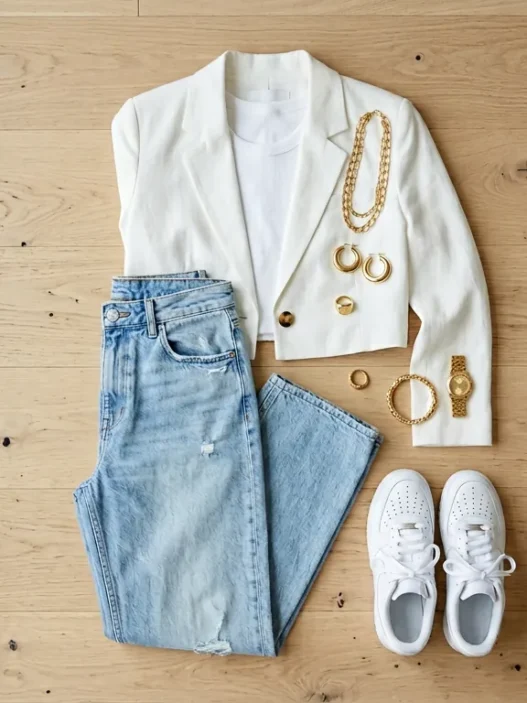
Dark wash jeans (no rips or fading) + silk blouse + structured blazer + loafers or ankle boots. The key is making sure the jeans actually fit properly — no baggy knees or too-tight waistband.

Formula 2: The Dress + Layer
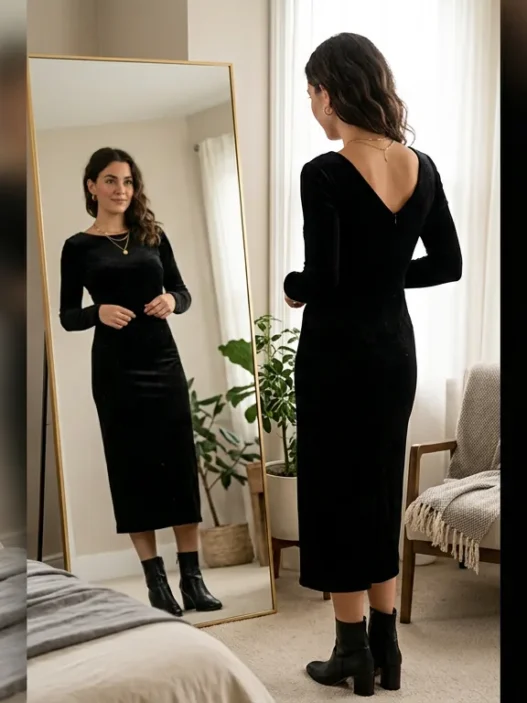
Simple sheath or wrap dress + cardigan or lightweight blazer + comfortable pumps. This is my go-to for days when I need to look polished but my brain isn’t working yet.
Formula 3: The Mix and Match
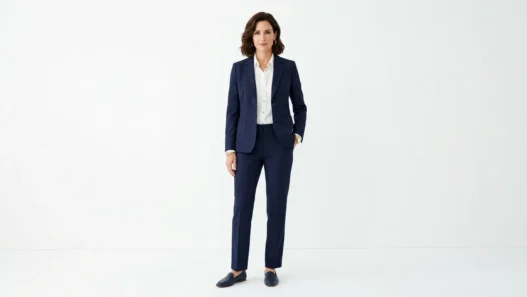
Tailored pants (not suit pants, but not leggings either) + nice t-shirt or sweater + statement accessory. The accessory elevates the whole look — could be a great watch, interesting earrings, or a quality leather bag.
The beauty of these formulas is that you can shop for pieces that work across multiple combinations. That blazer works in formula 1 and 2. Those pants work in formula 3 and can substitute for jeans in formula 1.
The Intermediate Mixing Tricks
This is where business casual gets fun. Once you’re comfortable with the basics, you can start breaking rules strategically.
Mix textures instead of just colors. Pair a cotton button-down with wool pants and leather shoes. Or try a cashmere sweater with denim and suede boots. The different textures add visual interest without being loud or attention-grabbing.

Play with proportions. If you’re wearing a flowy top, balance it with fitted bottoms. Wide-leg pants look great with a tucked-in fitted tee. This is especially important for those of us working from home part-time — proportions show up differently on video calls than in person.
Layer strategically for flexibility. I keep a lightweight cardigan or blazer at my desk for temperature changes or unexpected meetings. The casual winter outfits I wear to the office often start with a base layer that works on its own, then add or remove pieces as needed.
Accessories can completely change the vibe of an outfit. The same black pants and white shirt can look corporate with a structured blazer and pointed pumps, or creative with a statement necklace and block heels. I keep different accessories at my office for this exact reason.
See These Styling Tricks in Action
The Advanced Styling Secrets
Here’s where I share the stuff that took me years to figure out. These are the details that make the difference between looking good and looking effortlessly polished.
Color temperature matters more than exact color matching. I used to stress about everything matching perfectly, but now I pay attention to whether colors have warm or cool undertones. A warm gray blazer looks better with cream than with stark white, even though “gray and white” sounds like it should work.

Fit trumps everything. A $50 shirt that fits perfectly looks more expensive than a $200 shirt that’s too big or too small. I get most of my pants hemmed and some blazers tailored at the shoulders. Professional styling guides often skip this, but it’s the difference between looking good and looking great.
Quality over quantity, but be strategic about where you splurge. I invest in blazers, shoes, and bags because they’re visible and get the most wear. But I buy basic tees and camis from more affordable places because they’re under other pieces anyway.
Pay attention to your office culture. What works for a creative agency won’t work for a law firm. I spent my first month at any new job observing what the successful women wore, not just following the written dress code. Sometimes the unwritten rules matter more.
The Seasonal Adjustments I Swear By
Business casual has to work year-round, which means adapting to weather without sacrificing professionalism. I’ve learned some tricks that keep me comfortable and put-together through every season.
Summer is actually the trickiest season. Air conditioning means layers, but you can’t show up to work sweaty. I keep a blazer in my car and wear breathable fabrics like cotton and linen. Sleeveless tops are fine under blazers, just make sure the blazer actually fits well in the shoulders.

Fall is business casual heaven. This is when layering really shines. Lightweight sweaters over button-downs, blazers over everything, ankle boots with both pants and dresses. The fall outfit ideas that work best for office settings usually involve at least one structured piece to keep things polished.
Winter requires strategic planning. I keep indoor shoes at my office so I can wear weather-appropriate boots for commuting. Wool pants become my best friend, and I invest in a really good coat that looks professional but actually keeps me warm.
Spring is transition season. I layer lighter pieces and start incorporating brighter colors, but gradually. A bright scarf or colorful flats can freshen up winter pieces while you’re transitioning your wardrobe.
The Things I’m Still Learning
Even after a decade, I don’t have everything figured out. The fashion industry keeps evolving, workplace norms are shifting, and honestly, sometimes I still stand in my closet feeling clueless.
I’m still figuring out how to incorporate trends into business casual without looking like I’m trying too hard. When wide-leg pants came back, it took me months to find a pair that felt professional but still current. Same with cropped blazers — cute in theory, harder to pull off in conservative office settings.

The work-from-home/hybrid situation has thrown me for a loop too. Do I need business casual outfits for video calls? What about days when I’m home all morning but have afternoon meetings? I’m still experimenting with pieces that photograph well on camera but feel comfortable for all-day wear.
Sustainable fashion and business casual is another puzzle I’m working on. I want to buy less and choose better, but workplace appropriateness sometimes conflicts with sustainable brands’ aesthetic. Eco-friendly professional clothing is getting better, but there’s still a gap.
And honestly? I’m still learning to dress for my actual life, not the life I think I should have. Some weeks I need five business casual outfits. Other weeks I work from home in yoga pants and only need one office-appropriate look. Building a wardrobe that flexes with real life instead of an imaginary consistent schedule is an ongoing project.
Questions I Get About Business Casual
Can I wear jeans to a business casual office?
Usually yes, but they need to be dark wash, well-fitted, and styled up with a blazer or nice top. Avoid anything distressed, faded, or too casual. When in doubt, ask a trusted colleague or start with dark wash straight-leg jeans on casual Friday.
How many business casual outfits do I actually need?
Start with enough pieces to create 7-10 different combinations. This usually means 3-4 bottoms, 5-6 tops, 2-3 blazers or cardigans, and 2-3 pairs of shoes. You can mix and match from there instead of buying complete outfits.
What’s the biggest business casual mistake people make?
Overthinking it. Business casual should look effortless, not like you spent two hours getting dressed. The second biggest mistake is ignoring fit — a perfectly fitted inexpensive outfit always looks better than an ill-fitting expensive one.
How do I transition my business casual look for evening events?
Keep accessories and shoes at your desk that can instantly elevate your look. Switch from flats to heels, add statement jewelry, or swap your work blazer for a more interesting jacket. The date night outfits that work best often start with a business casual base and get dressed up with accessories.
That’s everything I know about business casual outfits — at least everything I can think of right now. Take what helps, ignore what doesn’t fit your situation. The most important thing is building a wardrobe that works for your actual life, not some perfect version of professional life that exists only in magazines.