









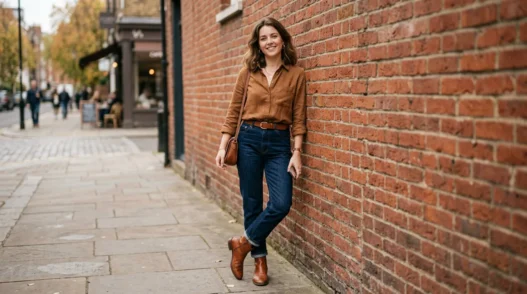
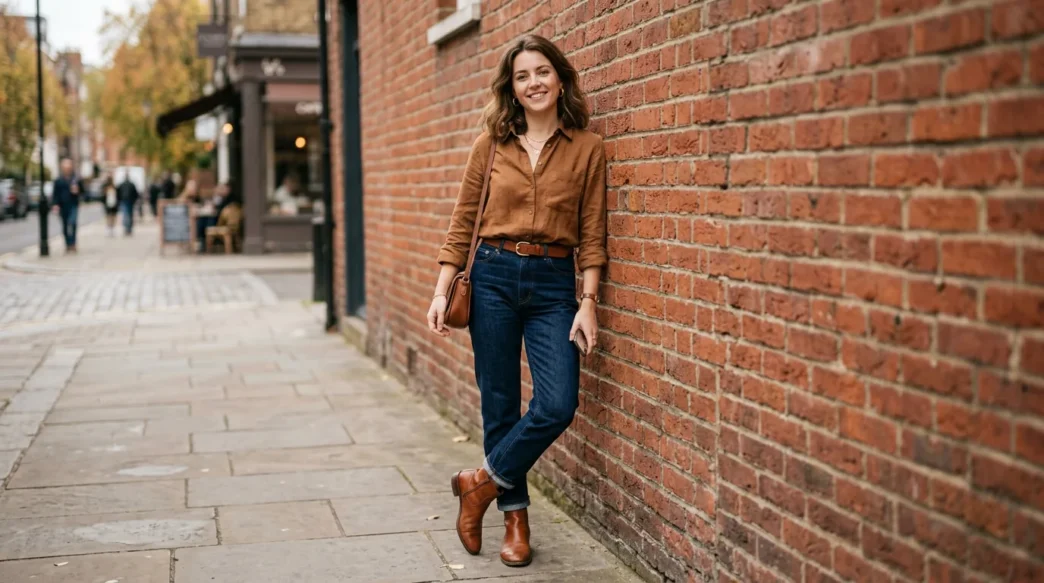
I own — or owned — an embarrassing number of brown shirts. Button-downs, oversized tees, fitted ribbed tanks, a silky blouse I bought on vacation and never wore again. At some point last winter I laid them all out on my bed and genuinely could not remember buying half of them. That’s usually the sign that something has gone wrong in my wardrobe logic. So I did what I always do when things get out of hand: I audited everything.
What I found surprised me. Not because brown is hard to style — it’s actually one of the most wearable neutrals in existence — but because I’d been buying the wrong shades of it for my skin tone, pairing it lazily, and keeping pieces out of guilt instead of actual love. This is the honest version of what happened.
What’s In This Wardrobe Confession
What I Pulled Out First
My rule for a wardrobe audit is simple: everything comes out. No cheating by leaving things on the hanger and telling yourself you’ll deal with them later. I pulled every single brown shirt — every warm neutral top that could loosely qualify — out of my closet, the drawer under my bed, and the canvas bin I pretend doesn’t exist. Fourteen pieces total. Fourteen. For one color family.
The first question I asked about each one was whether I’d worn it in the last six months. Not just owned it. Actually put it on my body and left the house. Six passed that test immediately. The rest I had to interrogate harder.
The second question — and this is the one that does the real damage — was whether I’d ever actually felt good in it. Not fine. Not acceptable. Good. Confident. Like I’d made a choice instead of a compromise. That question cut the pile in half.
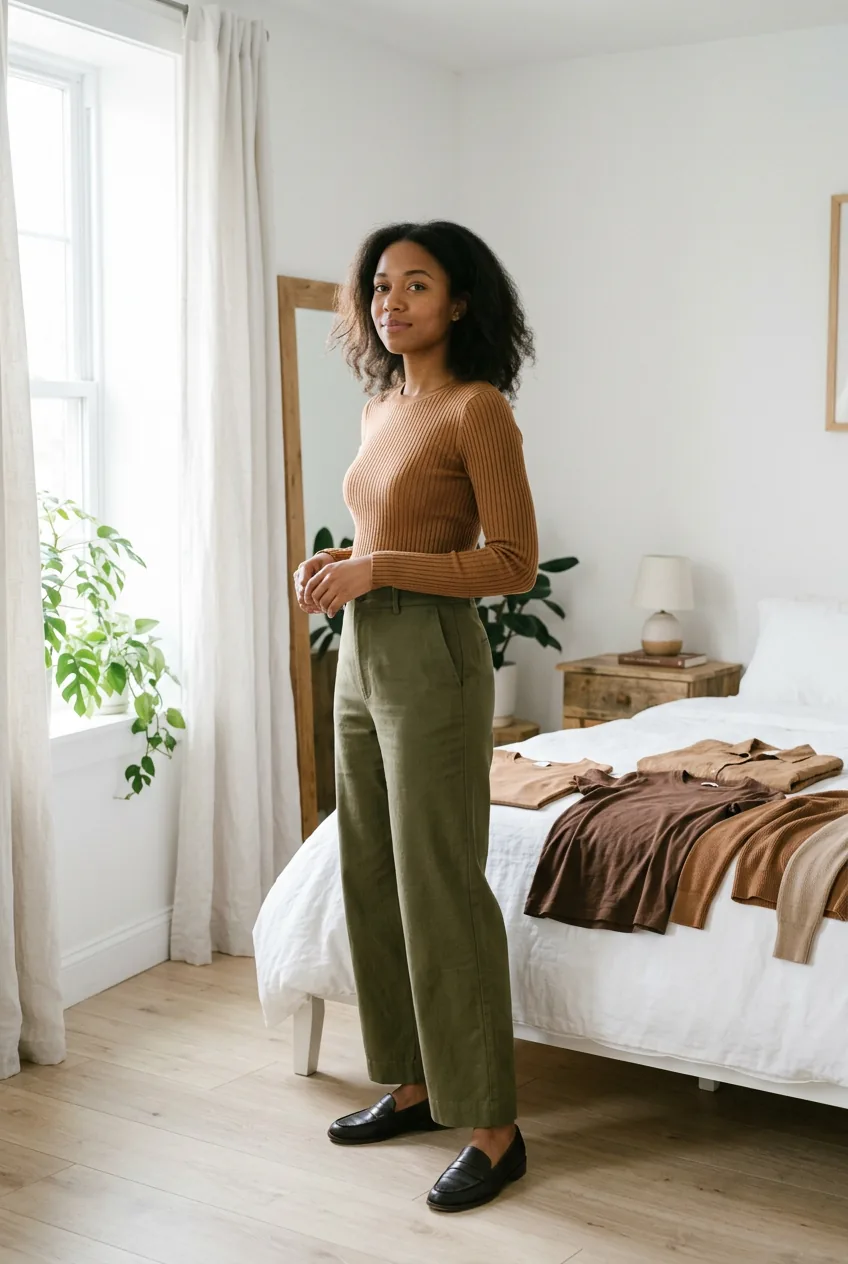
What I noticed in those first ten minutes: I had gravitated almost exclusively toward dark chocolate and espresso browns. Rich, deep, almost-black tones. And while I love that end of the spectrum, I’d completely ignored caramel, toffee, and the warm mid-browns that warm neutrals actually photograph beautifully and pair with so much more. My pulling-out phase revealed a shade bias I didn’t know I had.
The Hardest Pieces to Let Go
There was a slouchy brown linen button-down I bought three years ago. Beautiful fabric, interesting oversized cut, genuine quality. I paid real money for it. And every single time I put it on, it made me look like I was wearing a grocery bag. That specific yellow-undertoned khaki brown just does not work with my complexion — I go sallow and flat, like someone turned the saturation down on my face.
I kept it through two previous cleanouts because of the price tag guilt. This time I donated it. Because here’s the honest truth: an expensive item that doesn’t work is not better than a cheap item that doesn’t work. They both take up space and make you feel bad when you reach for them.
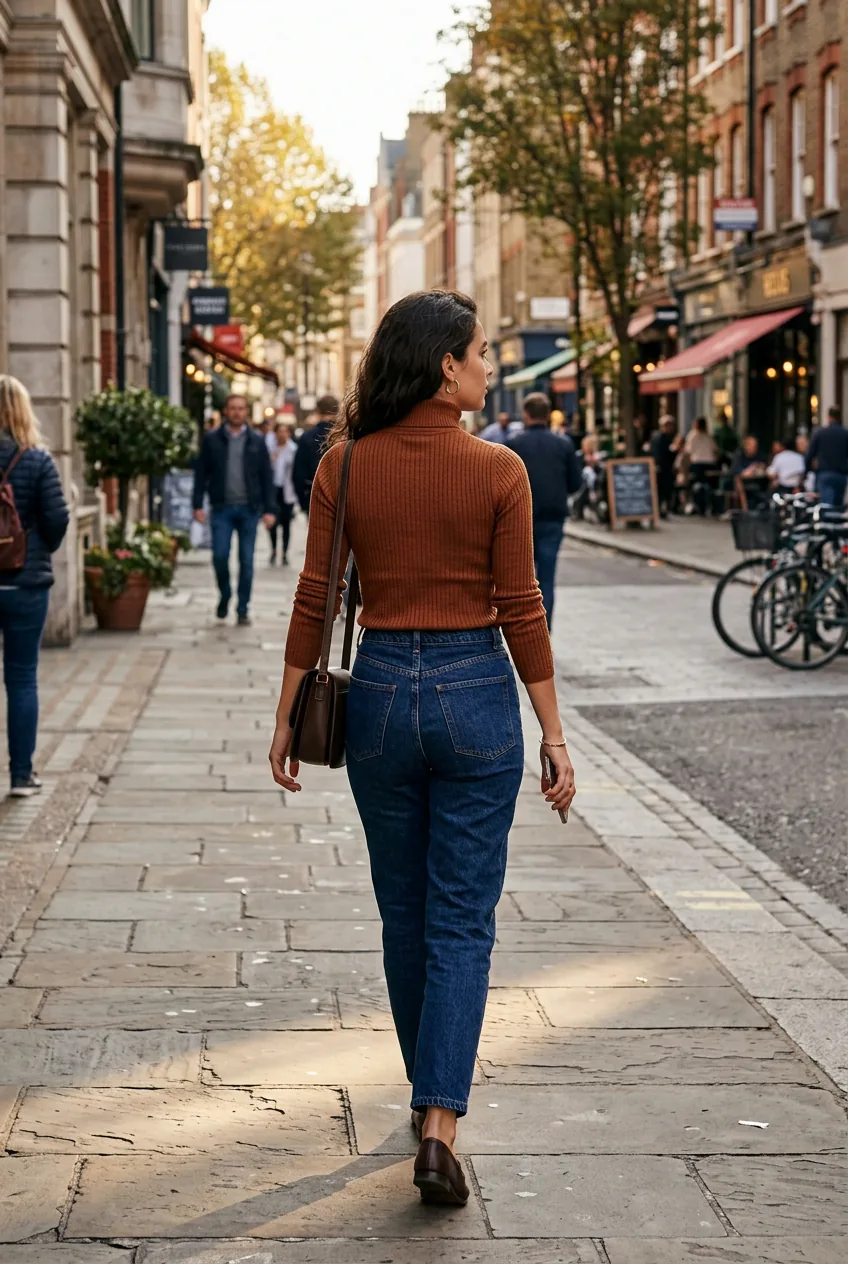
The other hard one was a fitted rust-brown ribbed turtleneck that I truly loved in theory. I’d built so many outfits around it in my head — with wide-leg cream trousers, with dark denim, with a midi skirt for something a little more put-together. Very stylish fall outfit energy. In practice, the ribbing hit awkwardly across my chest and I’d never once left the house in it without pulling at it the entire day. That’s not an outfit. That’s a sensory complaint.
Letting go of aspirational pieces — the ones you bought for the person you imagine being, not the person you actually are — is genuinely the hardest part of any audit. But it’s also the most freeing.
The Surprises That Stayed
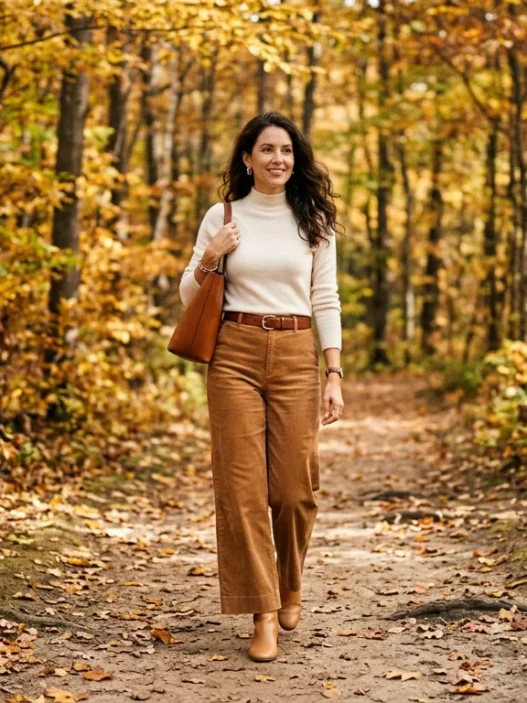
I almost got rid of a caramel-toned fitted long-sleeve I’d written off as “boring.” It had been sitting unworn at the back of my drawer for months. Then I actually tried it on — properly, with real bottoms instead of just holding it up — and paired it with my dark olive wide-legs and a cognac belt. Completely different experience. The warmth of that caramel brown against the olive green created something much richer than either piece does alone.
She’s wearing something close to this in the photo below — notice how the warmth of the shirt reads differently once you add an earthy lower half. It stops looking like a basic and starts looking like an intention.
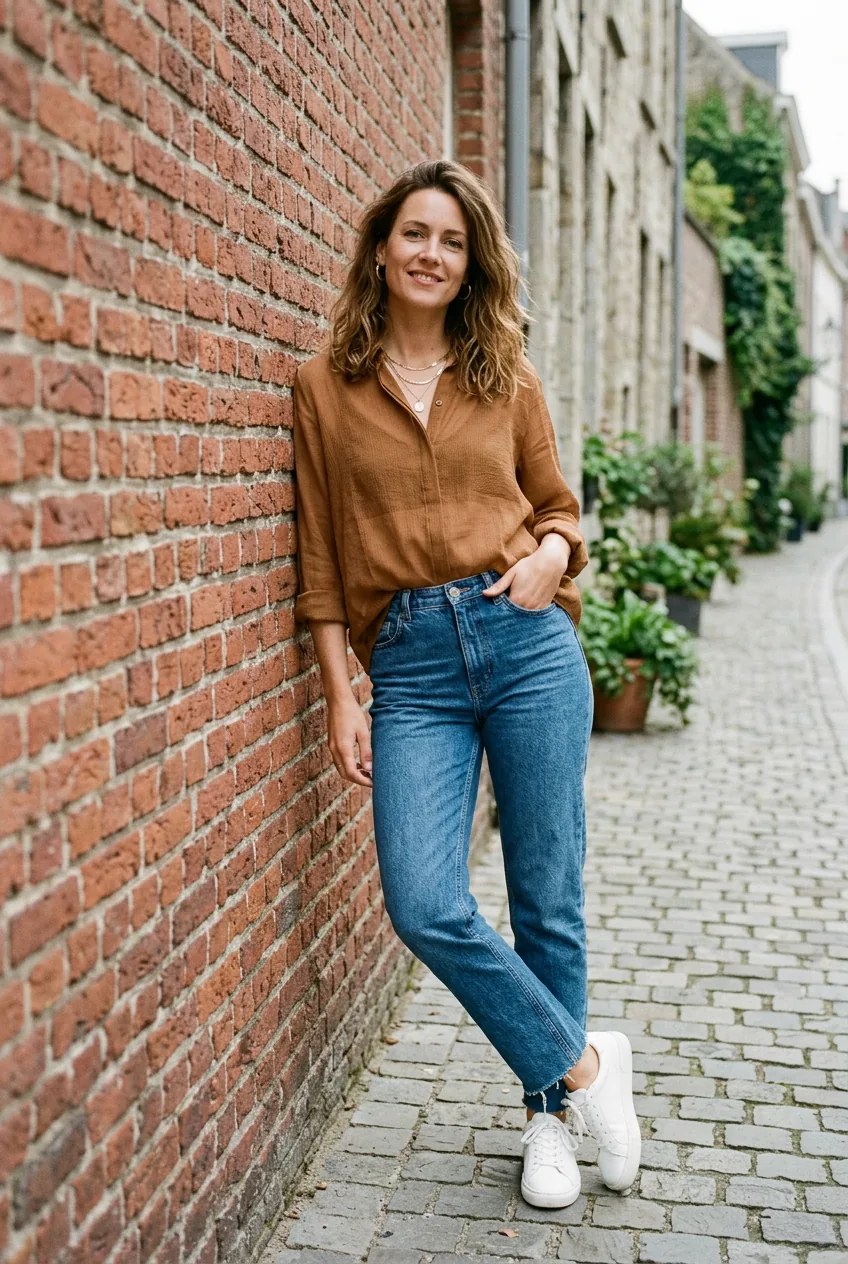
Another survivor: a slightly sheer woven brown blouse I’d convinced myself was “too much” for everyday. I wore it to brunch the week after the audit — just tucked loosely into high-waisted jeans with white sneakers — and got three compliments. Sometimes the pieces we dismiss as special-occasion are actually just waiting for us to be braver on a Wednesday. If you want more brunch outfit inspo along those lines, my perfect brunch outfit post goes deep on exactly this kind of casual-elevated dressing.
The rule I made for myself after this section: if a piece has potential I haven’t actually tested with real styling effort, it gets a 30-day trial period before I donate. Tried it, still bad? Gone. Tried it, actually good? The guilt of almost donating it fades fast.
The pieces that surprised me most weren’t the ones I’d forgotten about. They were the ones I’d never actually tried properly.
Styling Brown the Way I Never Thought To
What I Won’t Buy Again
Okay, this is the slightly controversial part. I know brown is having a sustained moment — it’s been the “it neutral” for a couple of years now and honestly it deserves it — but I think a lot of us have been buying brown pieces without thinking about the specific brown we’re buying. And I’m done doing that.
Here’s my never-again list from this audit:
- Yellow-undertoned khaki brown — specifically when it’s a muted, dusty shade. It flatters almost no one who isn’t a warm olive or deep complexion, and even then it requires careful pairing. I kept buying it because it felt “earthy” and then wondering why I looked washed out.
- Brown basics in fast-fashion fabrics — cheap polyester in warm neutrals looks dingy almost immediately. Brown shows fabric quality more than most colors.
- Brown-on-brown sets that match too perfectly — I know this is a take. But a matchy-matchy brown co-ord, when both pieces are the exact same shade, can look accidental rather than intentional. Mixed browns — toffee with chocolate, rust with caramel — are so much more interesting. Mixing tonal neutrals is actually an art.
- Any brown shirt I’m buying “to go with” something specific — if I can only picture it with one outfit, it’s not a wardrobe piece, it’s an accessory to something I already own.
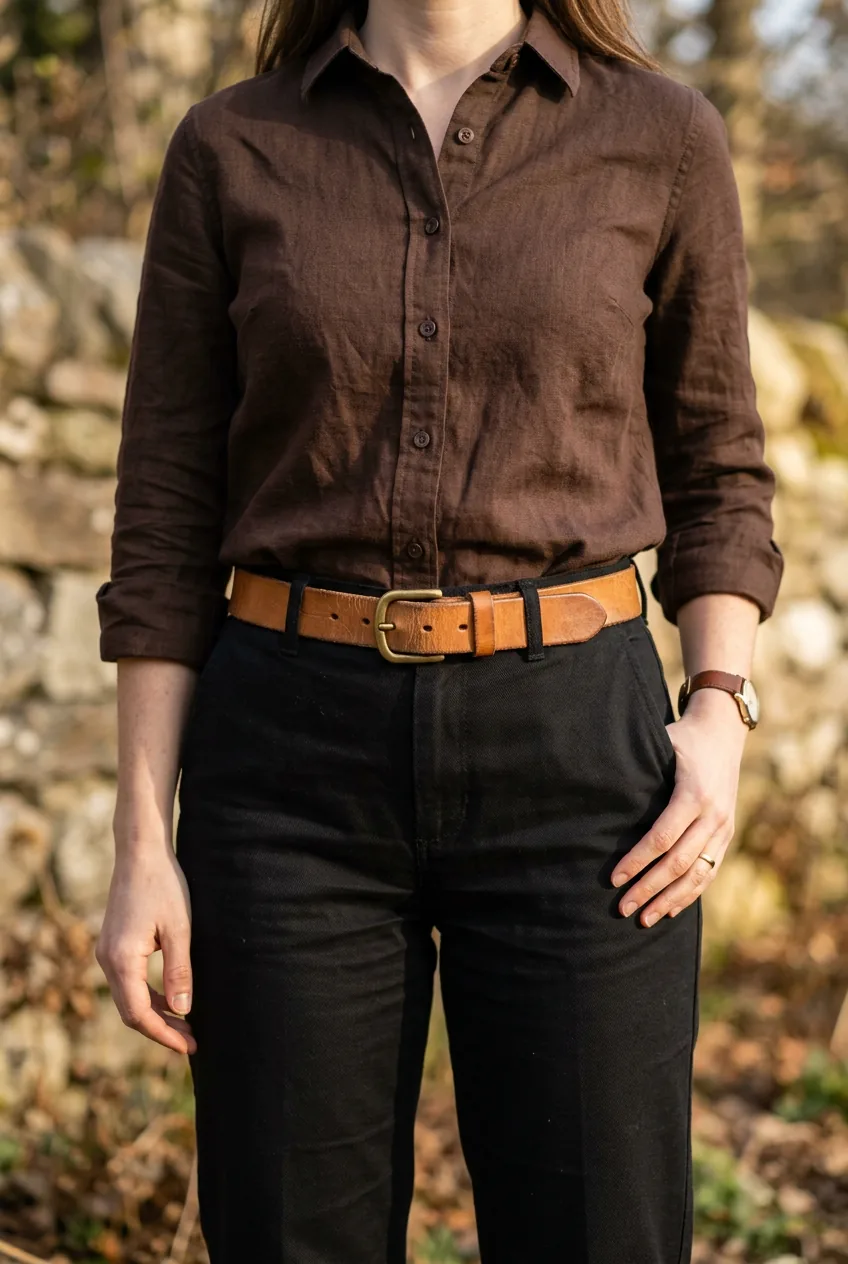
The controversial opinion, properly stated: I think brown is the neutral that requires the most intentionality. More than black, more than white, more than grey. Because it has so many undertones and shade variations, buying it carelessly results in a closet full of pieces that technically belong to the same color family but refuse to work together. A genuinely effortless fall outfit built around brown usually has a lot of thought behind it — it just hides it well.
After the audit, I kept six pieces. Six out of fourteen. And my brown shirt outfit game has been measurably better ever since. I reach for things without hesitation now. I actually wear what I own. Which was, obviously, the point. For more ideas on building outfits this way — especially for transitions between seasons — the fall outfit ideas from pumpkin patches to coffee dates roundup has some genuinely excellent brown-forward styling that influenced how I rethought my own closet. And if you’re building something more permanent, the approach in this capsule wardrobe breakdown is exactly the kind of framework I wish I’d been using all along.
Questions I Get About This
What shades of brown actually work for most skin tones?
Warm mid-browns — think caramel, toffee, and terracotta-adjacent browns — tend to be the most universally flattering because they carry enough red and orange warmth to complement most undertones. True espresso and dark chocolate browns also work broadly because they function almost like a navy or charcoal at that depth. The tricky zone is that dusty, muted, grey-brown range — it tends to flatten complexions more often than not. Finding your best neutrals can help you map this to your own coloring.
How do I style a brown shirt without looking too earthy or muddy?
The easiest fix is contrast — either in tone (pair brown with bright white or cream) or in texture (a smooth brown shirt over a chunky knit layer, or tucked into something with sheen). Black and brown together is also deeply underrated. People fear it because of some outdated fashion rule, but a dark chocolate shirt with black denim is genuinely chic. The muddy effect usually happens when you pile multiple muted mid-tones together without anything to cut through.
Should I do a wardrobe audit for every color, or just problem areas?
I’d say start with whatever color or category feels chaotic — the area where you own the most but wear the least. For me that was clearly brown. For a lot of people it’s black (everyone has seventeen black tops and reaches for the same two). A full wardrobe audit is obviously the gold standard, but if you only have an afternoon, go where the friction is. That’s where the answers live.
What’s the best way to style a brown shirt for everyday wear in 2026?
Right now my go-to formula is: caramel or rust brown shirt + straight-leg dark denim + one unexpected accent (a leopard print belt, chunky silver earrings, a cobalt bag). The brown grounds the whole thing and the accent prevents it from reading as too safe. It’s incredibly wearable, takes about ninety seconds of thought, and works from morning meetings to afternoon errands without adjustment.
That’s really all I’ve got from the other side of fourteen brown shirts and one very cluttered bed. If you do your own audit, I genuinely want to know what surprises you — the answers are usually more honest than you expect.