






I’ve been dressing women for job interviews for a long time — and I will never stop being surprised by what people think is “interview appropriate.” Floral wrap dresses. Jeans with a blazer. One memorable Tuesday, a client showed up to our fitting wearing a sequined bodycon she swore was “classic.” I love her. She did not get the job. When women ask me for my honest opinion on interview outfits for women, I give them exactly that — honest. Not every look is a winner, and I refuse to pretend otherwise.
What We’re Judging Today: 11 Interview Looks, Ranked Without Mercy
- 1. Worth Every Wear: The Classic Tailored Blazer + Trousers
- 2. Worth Every Wear: A Sleek Midi Dress
- 3. The Sleeper Hit: A Well-Fitted Knit Turtleneck + Straight-Leg Trousers
- 4. Great Idea, Tricky Execution: The Matching Set
- 5. Worth Every Wear: A Crisp Button-Down + Pencil Skirt
- 6. Honestly, Skip This: An All-Black Everything Look (When Done Wrong)
- 7. The Sleeper Hit: A Monochromatic Pastel Outfit
- 8. Great Idea, Tricky Execution: The Blazer Dress
- 9. Worth Every Wear: Wide-Leg Trousers + Structured Blouse
- 10. Honestly, Skip This: The Casual Wrap Dress (Most Versions)
- 11. The Sleeper Hit: A Softly Tailored Jumpsuit
1. Worth Every Wear: The Classic Tailored Blazer + Trousers
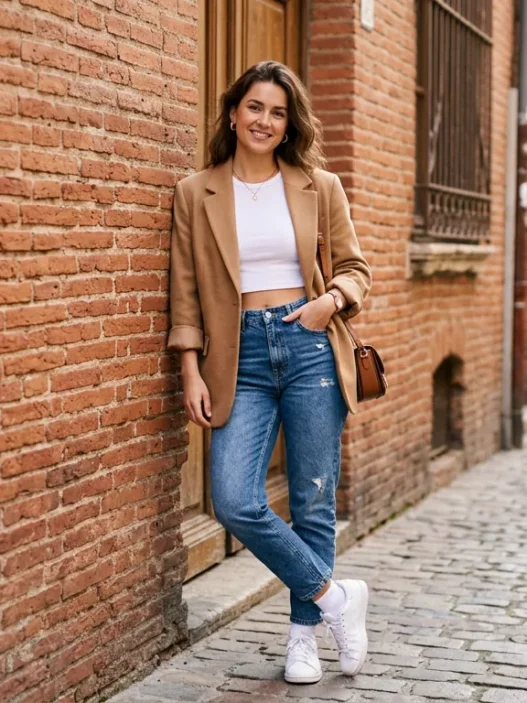
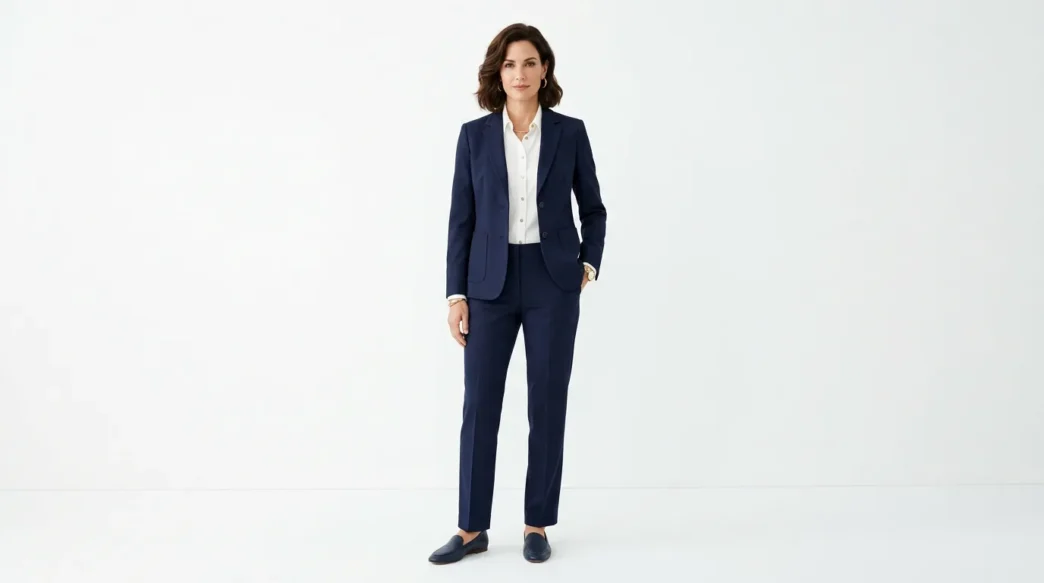
This is the one I come back to constantly when clients ask me what I tell the women who genuinely cannot afford to get it wrong. A well-tailored blazer — not boxy, not too cropped, ideally hitting at the hip — paired with matching or tonal trousers is the closest thing to a guaranteed win in professional dressing. When I tell clients who ask for this look that the secret is the fit, I mean it obsessively. Off-the-rack is fine. But please, take it to a tailor. The difference between a $60 blazer that fits perfectly and a $300 one that’s swimming on your shoulders is enormous.
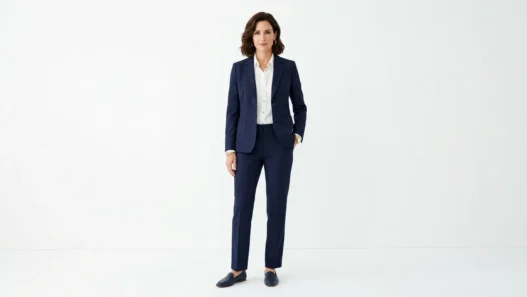
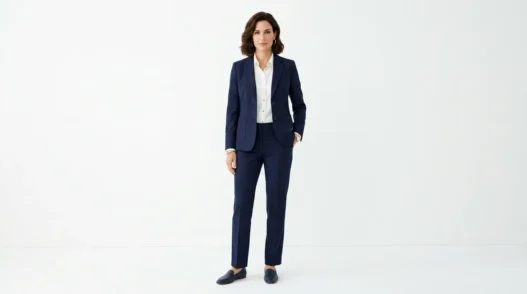
Look at her in the photo below — that’s exactly the silhouette I mean. Shoulders sitting right at the edge of the shoulder, sleeve hitting at the wrist bone, trouser breaking just above the shoe. It’s not flashy. It doesn’t need to be.
Go for navy, charcoal, camel, or a deep burgundy in 2026. Black works but it’s the least interesting choice. You can absolutely read more about how this kind of polished dressing crosses over with business professional outfits — I answered a reader question about exactly that, and my take there is still the same: tailoring is everything.
See the Tailoring Difference Up Close
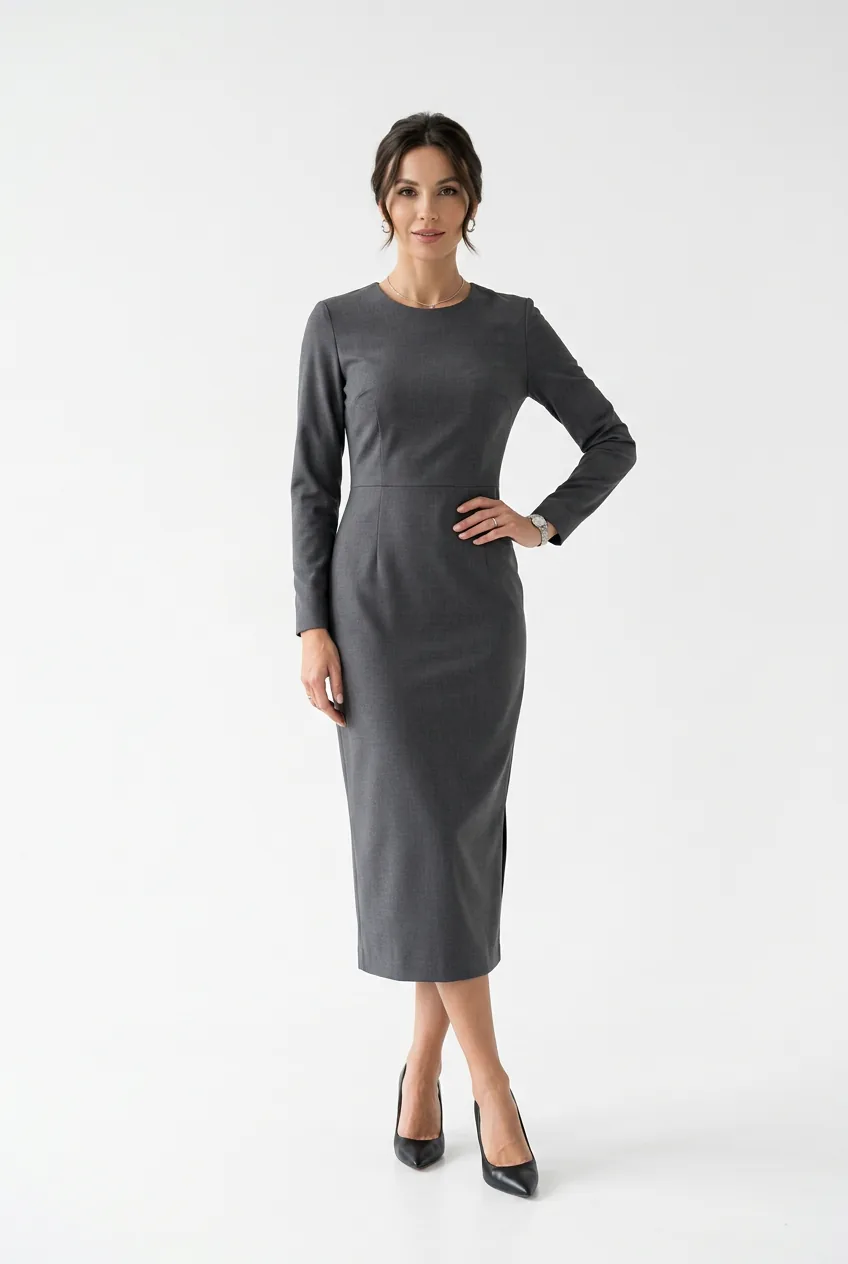
2. Worth Every Wear: A Sleek Midi Dress
A structured midi dress — something with a defined waist, a clean neckline, and a fabric that holds its shape — is one of my personal favorites to recommend. It reads as put-together without looking like you raided a corporate costume department. I love a good V-neck or crew-neck sheath in a ponte or crepe fabric. Something that doesn’t wrinkle in the waiting room, you know?
The key caveat: midi means midi. Below the knee, above the ankle. Not tea-length, not mini. That sweet spot matters more than most people realize. And you want it clean — no excessive ruffles, no cutouts, nothing that shifts when you sit down and suddenly you’re adjusting your hemline mid-sentence with the hiring manager.
3. The Sleeper Hit: A Well-Fitted Knit Turtleneck + Straight-Leg Trousers
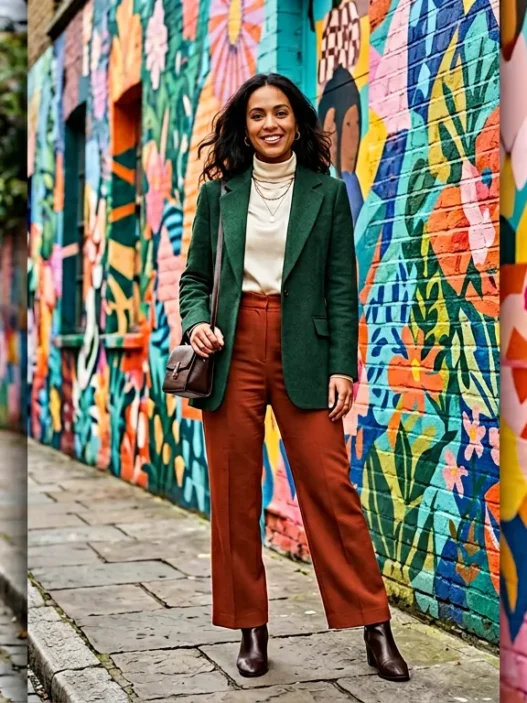
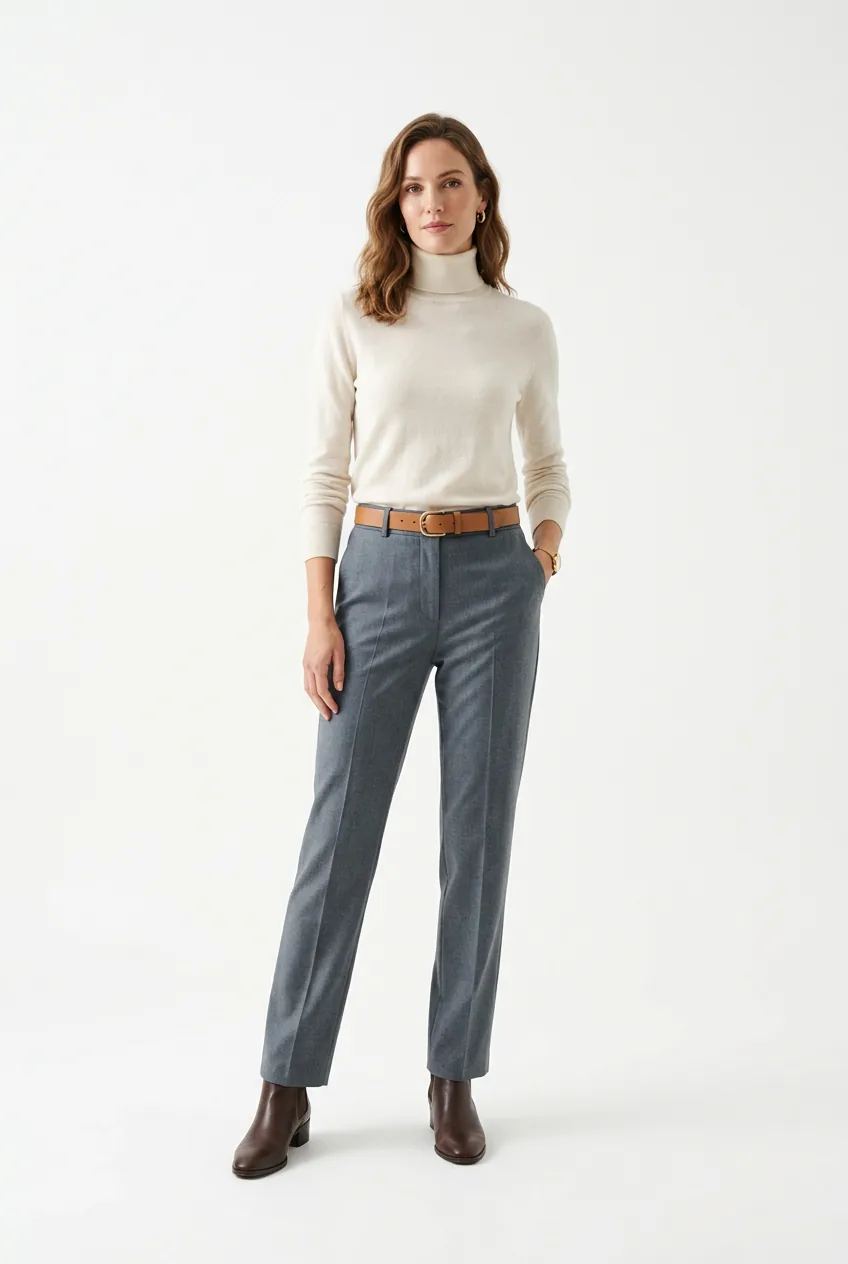
Nobody ever thinks to suggest this one and I don’t understand why. A fine-gauge knit turtleneck in a neutral — cream, camel, slate grey — tucked into high-waisted straight-leg trousers is honestly one of the chicest interview options in existence. It photographs beautifully, it travels well, and it projects a calm authority that blazer-heavy looks sometimes miss.
What I tell clients who ask for this: make sure the knit is fine, not chunky. Chunky reads as weekend. Fine-gauge reads as intentional. See the photo — she’s wearing hers tucked in neatly with just a slight blouse-out at the front, which gives a relaxed-professional vibe that works perfectly for creative industries or tech companies with a more relaxed dress culture.
4. Great Idea, Tricky Execution: The Matching Set
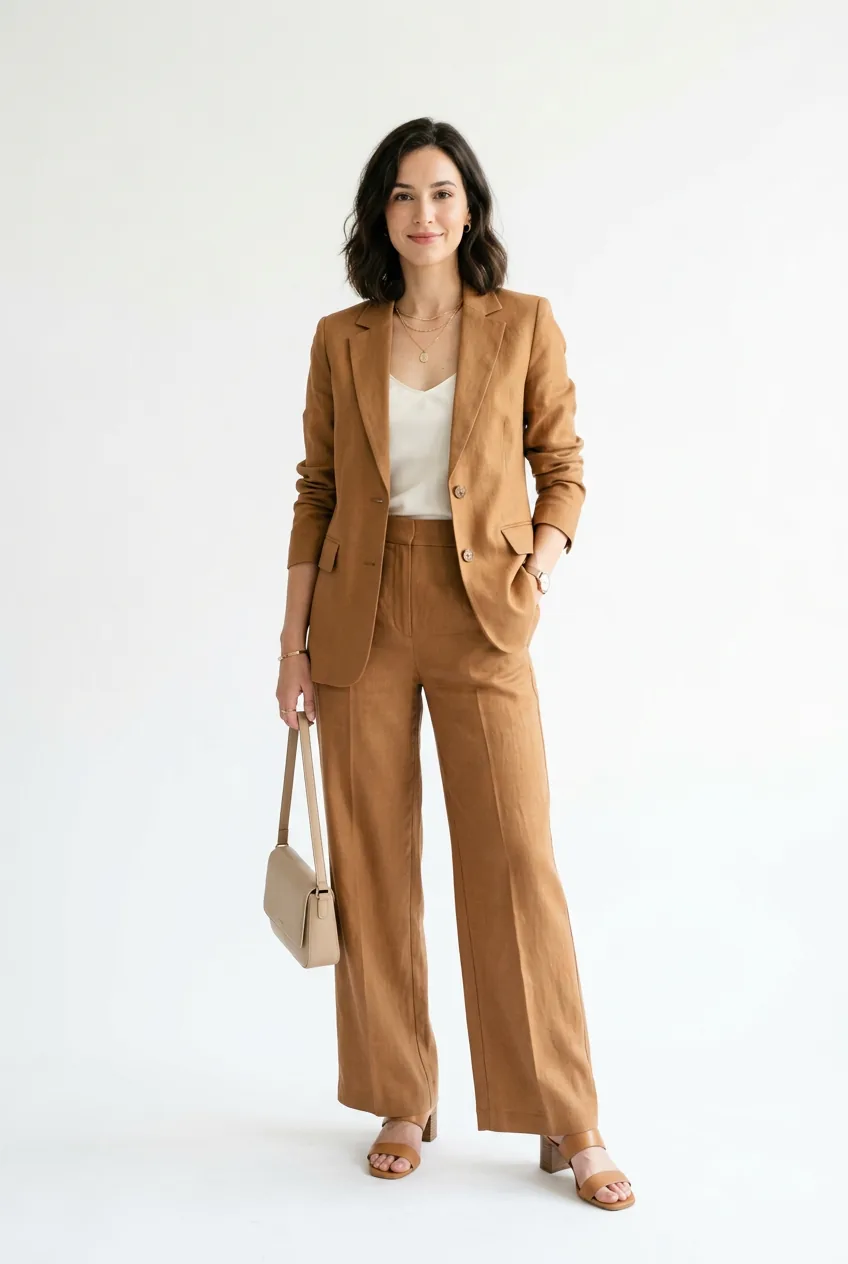
The coordinated set — think a blazer and matching wide-leg trousers in the same fabrication, or a coordinated skirt-and-top combo — is having its moment and I’m mostly into it. The mostly is doing a lot of work in that sentence.
The issue is fit differential. Blazers and trousers that come as a set are cut for an “average” body that doesn’t exist. If you happen to be that average, great. Most women need to separate them and size each piece to their actual measurements. I’ve watched too many clients walk in wearing a set where the jacket fits perfectly and the trousers are straining at the hip, or vice versa. It reads as unfinished. Also, avoid sets in novelty fabrics — boucle, tweed with large checks, anything that photographs as busy. Keep it clean. That client of mine who got it right? She’s wearing a caramel linen-blend set in the photo, and it looks effortless.
5. Worth Every Wear: A Crisp Button-Down + Pencil Skirt
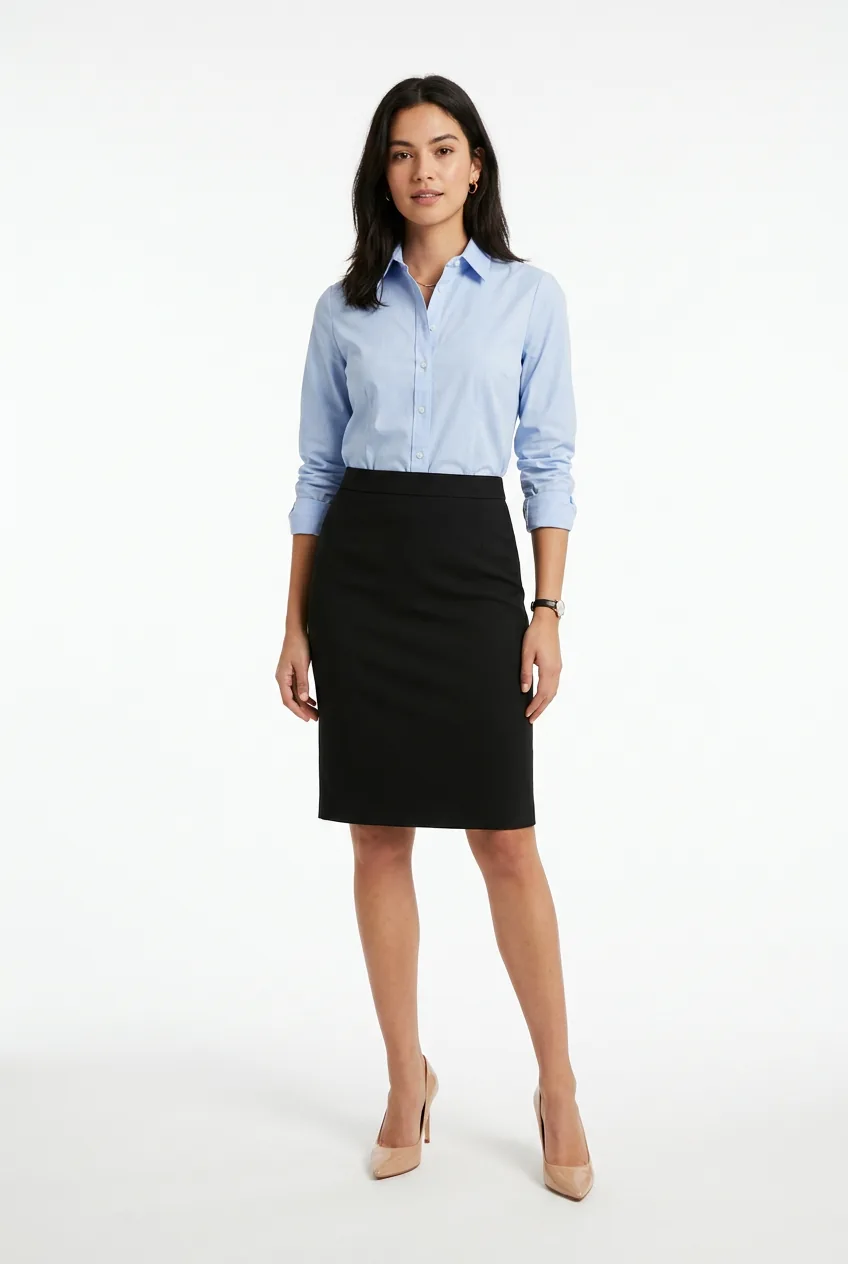
Classic for a reason. A well-pressed button-down — not a blousy one, not one that gaps at the chest — tucked into a knee-length pencil skirt is reliable, readable, and quietly confident. I’d steer clients toward silk, a silk-blend, or a good cotton-poplin over polyester anything. You can feel synthetic fabrics from across a conference table and they don’t drape the same way.
The pencil skirt needs to sit comfortably when you’re seated. Sit down in the dressing room. Sit down when you try it at home. If you’re hiking it up or tugging it straight every time you move, it’s the wrong size — size up and have it taken in at the waist if needed. What I tell clients who ask for this look: the blouse color matters. White, ivory, soft blue, pale pink. Save the prints for after you get the job.
My personal pick for a first-round interview? This one. Every time. I’ve sent women in the button-down and pencil skirt combination to interviews in finance, law, hospitality, and tech — and I have never once heard back that it was the wrong call. It’s not exciting. That’s exactly the point. Let your personality, your answers, and your eye contact do the exciting work. Your outfit’s job is to remove friction, not create it.
6. Honestly, Skip This: An All-Black Everything Look (When Done Wrong)
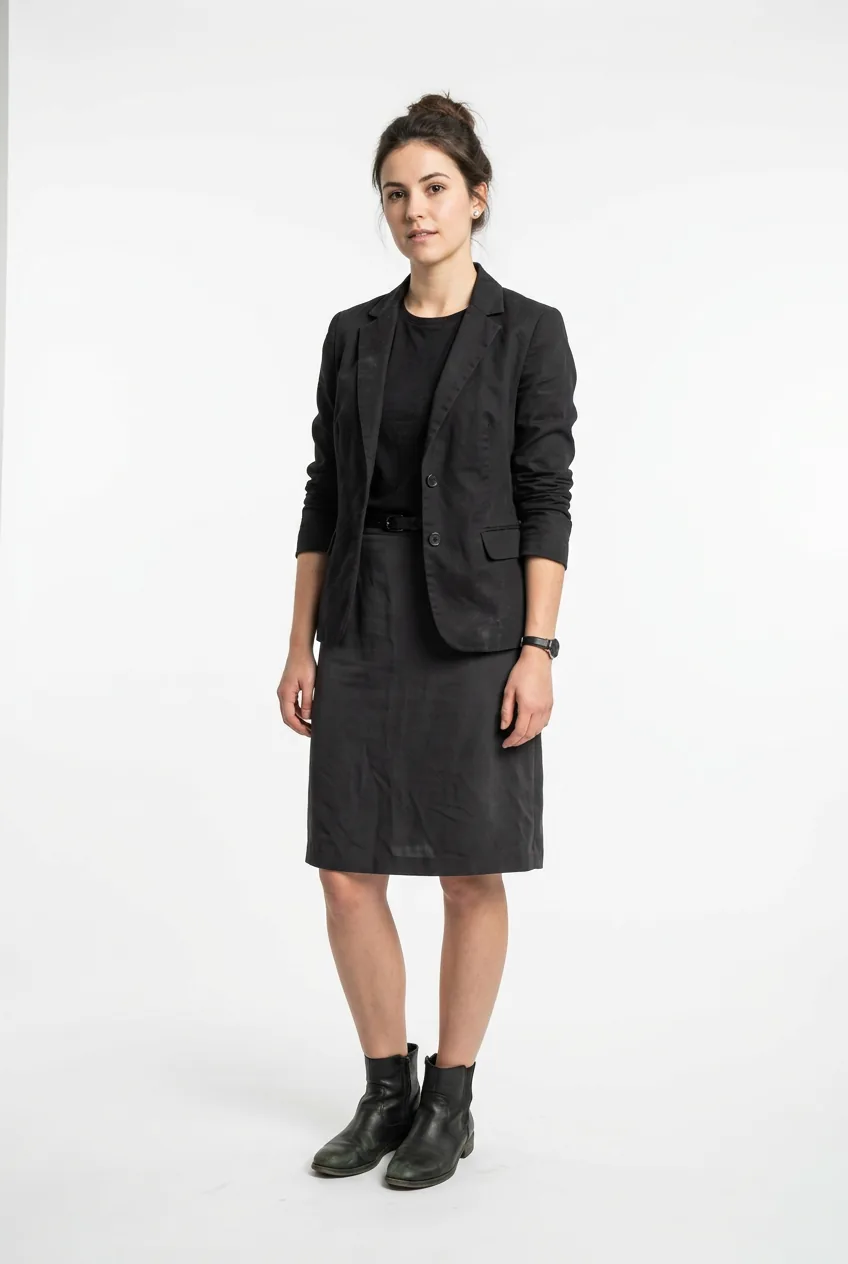
I know, I know. All black is a classic, right? Here’s my issue: when women default to all-black for an interview, they often do it out of anxiety — reach for the “safe” choice — and it ends up looking less polished and more like they got dressed in a rush. Mismatched blacks (one cool-toned, one warm-toned, one faded), heavy fabrics that absorb light and flatten the silhouette, no contrast near the face. It can read as flat on camera and flat in person.
All-black done well — intentional tonal dressing in the same black, statement earrings, interesting shoe, great fit — is actually stunning. But most people are not doing that version. They’re doing the “I panicked at 11pm and grabbed what was clean” version. And I can tell. If you want to wear black, great — but add one deliberate element. A caramel belt. Ivory earrings. Something to signal that the all-black was a choice, not a fallback. Without that, I’d skip this approach entirely.
7. The Sleeper Hit: A Monochromatic Pastel Outfit
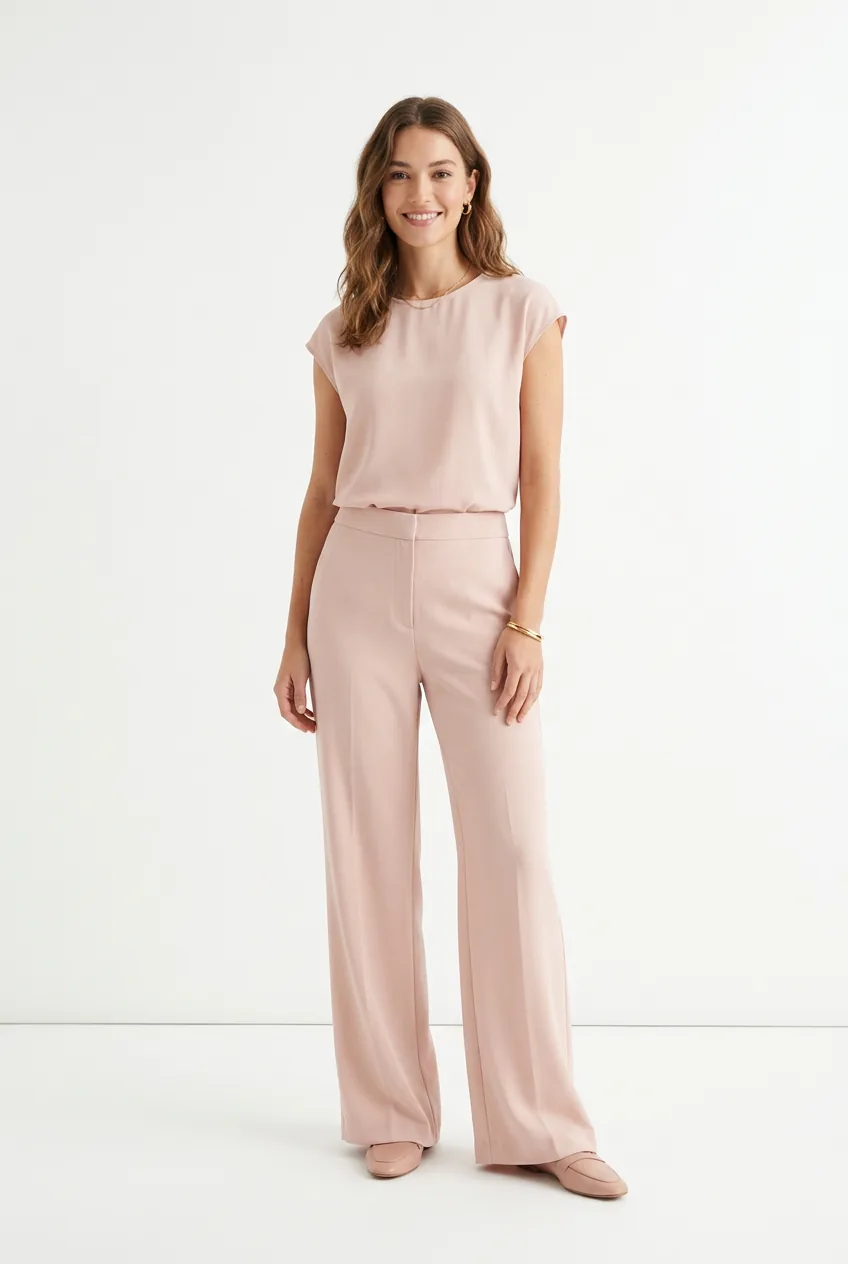
This one surprises people every time I suggest it. A head-to-toe soft sage, dusty blue, or blush look — say, wide-leg trousers in blush with a tucked-in blush or cream shell — photographs beautifully, reads as modern and confident, and is genuinely memorable in a pile of navy and grey interview outfits. That matters more than people think. Hiring managers are interviewing multiple candidates. You want to be the person they picture clearly when they go back through their notes.
The caveat: the fabrics have to be elevated. Pastels in cheap poly-blend can look washed out under office lighting. Stick to matte crepe, satin-backed crepe, or a quality ponte. And keep the silhouette clean — monochromatic works because it reads as one unified shape. The moment you add a busy print or a contrasting bag, you break the whole effect. This look also bridges beautifully into the kind of polish you’d want for conference appearances — which is why I sometimes point clients toward conference outfits for women when they’re dressing for high-stakes professional moments beyond just interviews.
8. Great Idea, Tricky Execution: The Blazer Dress
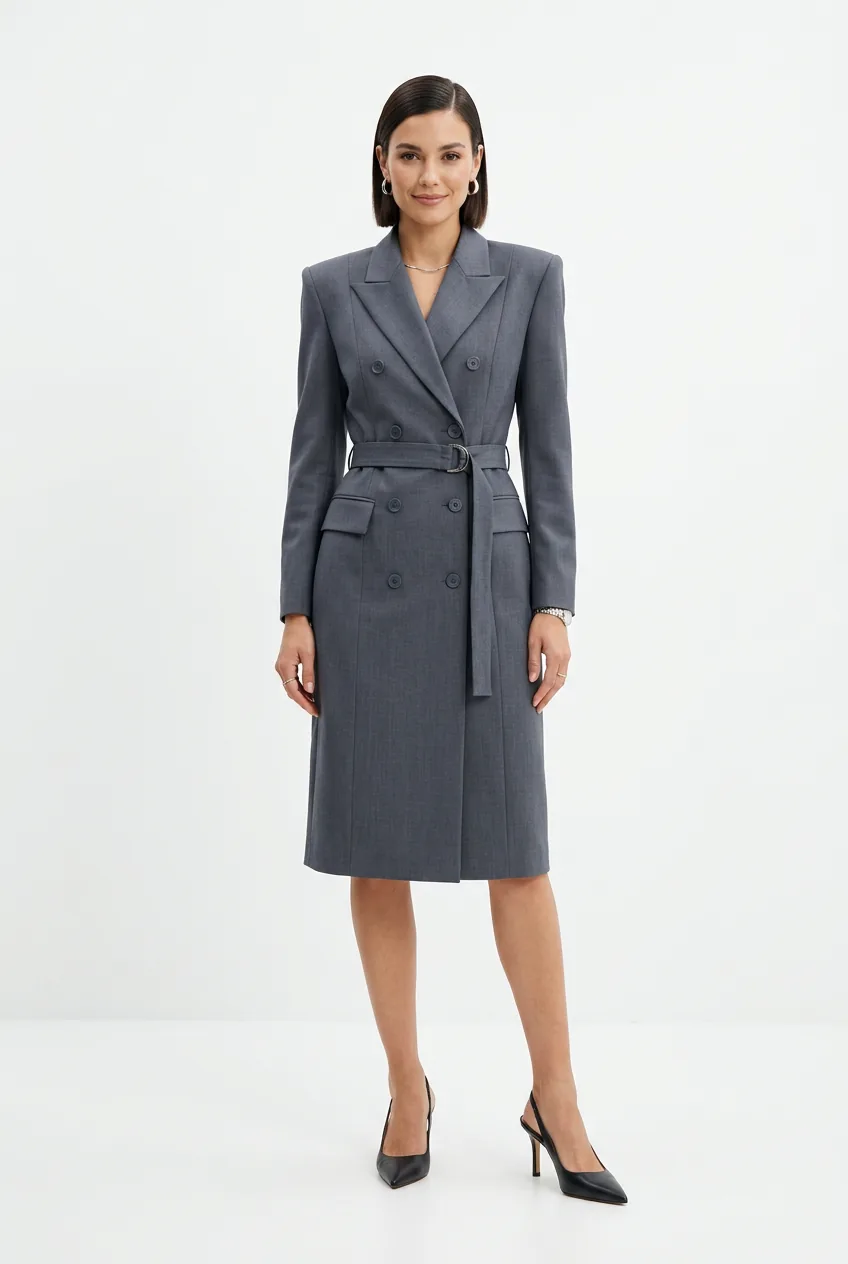
The blazer dress is one of those looks that seems like a slam dunk — the tailored polish of a blazer, the simplicity of a dress — but it demands a very specific body fit to work well. The shoulder seam has to be exact. The length needs careful attention (above-the-knee reads as too casual in most professional environments; below-the-knee works better). And the fabric weight matters enormously — a thin, drapey blazer dress looks half-finished, while a structured double-knit or suiting-weight version looks genuinely sharp.
She’s wearing hers in the photo at just below-knee length in a slate grey suiting fabric — see how structured the shoulders are? That’s exactly what elevates it. Without that structure, it just looks like a long blazer someone forgot to add trousers to. What I tell clients who ask for this: try it on sitting down and standing up five times before you commit. If it rides up even once, leave it on the rack.
9. Worth Every Wear: Wide-Leg Trousers + Structured Blouse
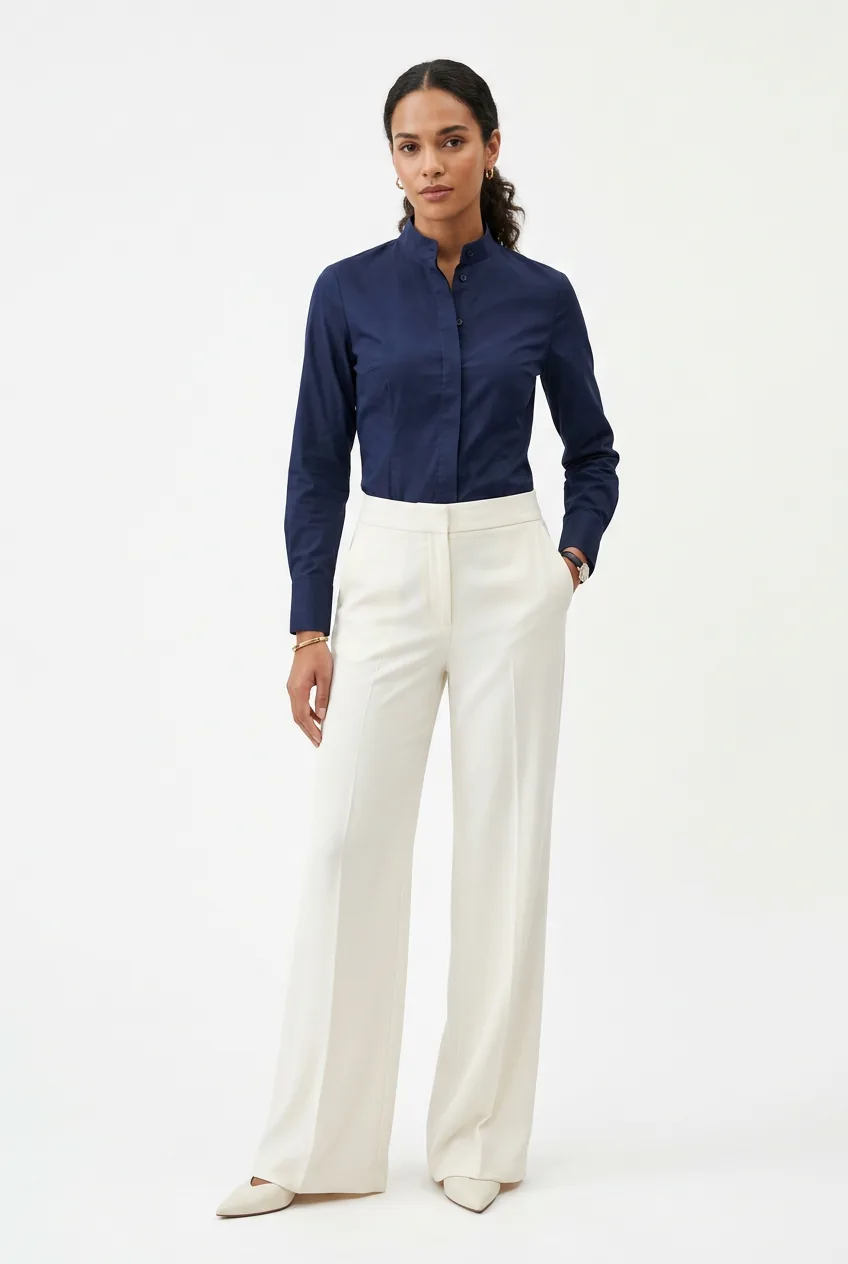
Wide-leg trousers have fully crossed over into professional dressing at this point, and I am so relieved. They’re more comfortable than a pencil skirt, they elongate the leg beautifully, and they’re genuinely flattering across a wider range of body types than the slim-trouser silhouette that dominated for years. Paired with a structured blouse — something with a bit of architecture, a bow tie neck, or a simple mandarin collar — this look reads as polished and modern without trying too hard.
The single rule: the hem has to graze the floor (with your interview shoes on). Wide-leg trousers that hit at the ankle look casual. Floor-length or nearly floor-length looks intentional and editorial. Get them hemmed to the exact shoe you’re wearing. It’s a twenty-dollar alteration that completely transforms the look. You can also read about how professional interview dress codes vary by industry — because what works in finance genuinely differs from what reads as polished in a design studio.
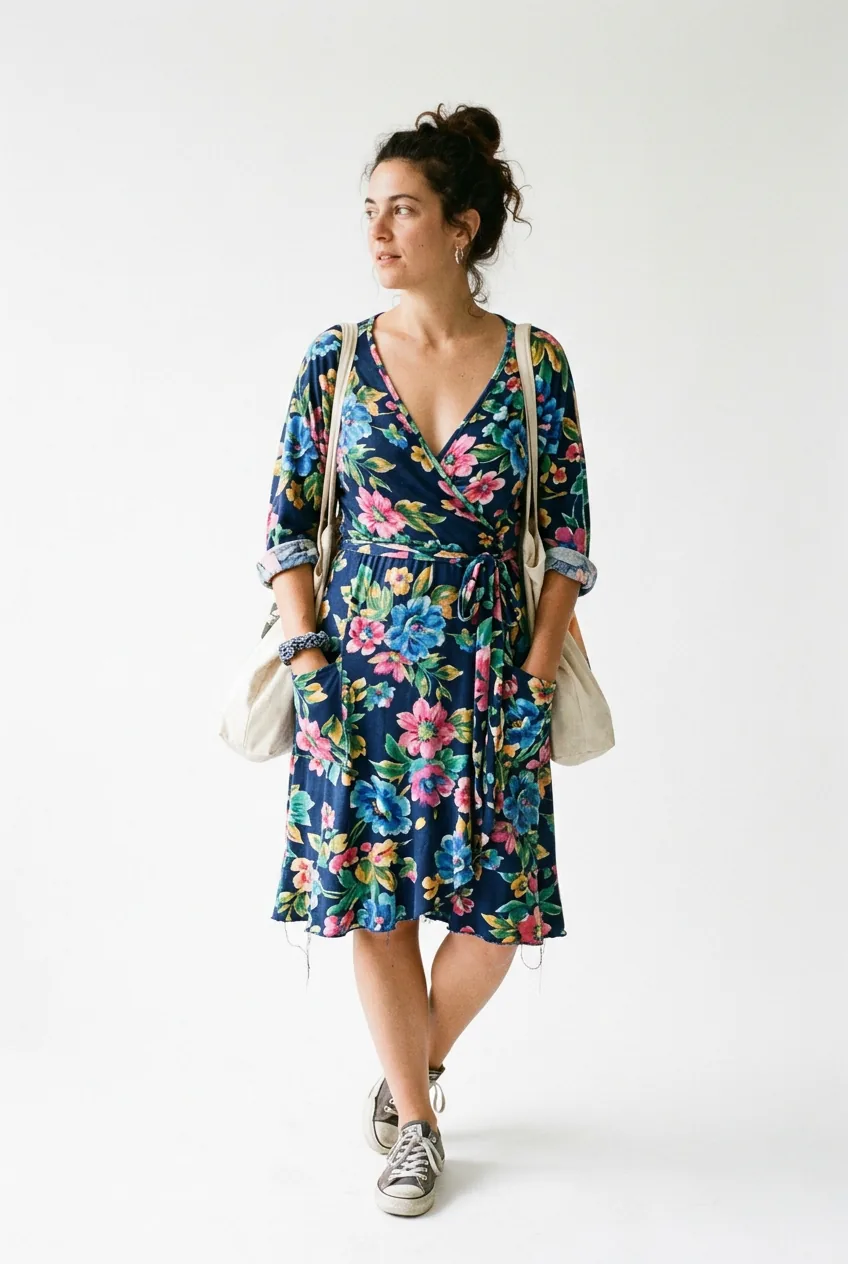
10. Honestly, Skip This: The Casual Wrap Dress (Most Versions)
I feel genuine reluctance every time I have to say this because I love a wrap dress in basically every other context of a woman’s life. But most wrap dresses — the flowy jersey ones, the printed ones, even the beloved DVF-adjacent styles — read as “brunch” or “first date,” not “hire me for this senior position.” The fabric is too casual, the silhouette is too relaxed, and the wrap front tends to gap in ways you cannot predict when you sit down and lean forward across a conference table.
There is a version that works: a wrap dress in a structured suiting-weight fabric, in a solid dark colour, with a hem that hits at or below the knee. It exists. It’s genuinely hard to find. And honestly, for the effort it takes to locate that very specific version, you’d be better served by one of the options above. Save the wrap dress for the company picnic after they’ve hired you. What I tell clients who ask for this: if you already own one and love it and feel amazing in it — try it on in the mirror and ask yourself honestly if you’d be comfortable forgetting it existed for the next three hours while someone evaluates your competence. If the answer isn’t a confident yes, leave it home.
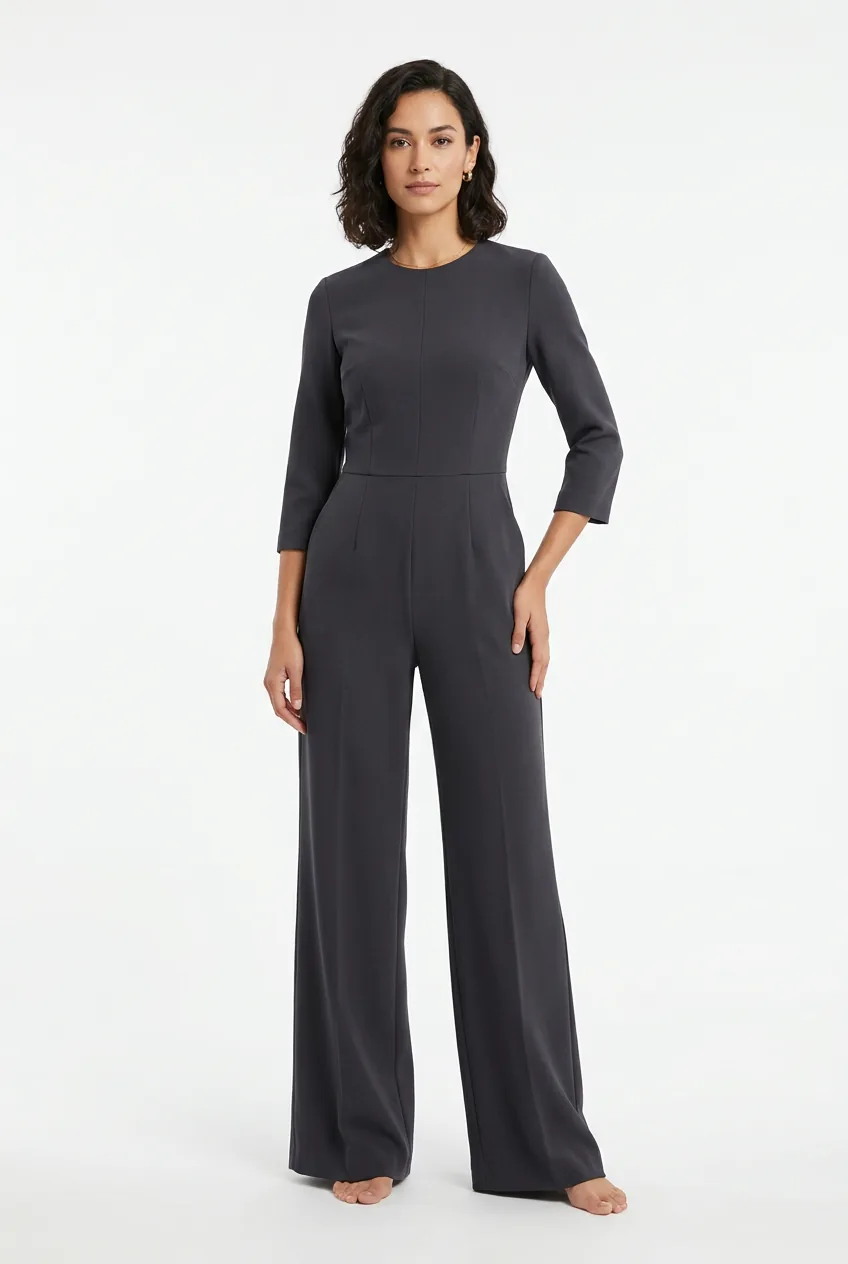
11. The Sleeper Hit: A Softly Tailored Jumpsuit
The one that consistently surprises clients when I suggest it — and then consistently delights them when they wear it. A tailored wide-leg jumpsuit in a structured fabric is a genuinely excellent interview outfit. It reads as intentional, creative, and confident. It’s one piece, so there’s no gap between top and bottom, no shirt coming untucked, no mismatched waistband moments. And because it’s unusual (most candidates are not walking in wearing a jumpsuit), it’s memorable in exactly the right way.
The fabric has to be structured — crepe or suiting weight, not linen, not jersey. The color should stay in the professional range: charcoal, navy, camel, black (with the caveats from item 6). And yes, you will need to think about the bathroom situation. I’m bringing it up because everyone is thinking it. Wear a bodysuit or a tucked-in top underneath so restroom breaks don’t become a performance. Practical, but worth saying out loud.
This kind of bold-but-polished choice also translates beautifully when you’re dressing for auditions or performance-based roles — the confidence reads across very different professional contexts. If that’s your world, take a look at stylish confident audition outfits and perfect casting audition outfits for more in that vein. The throughline is the same: structured, intentional, memorable.
A final thought on shoes before I let you go: whatever outfit you choose, the shoes need to be clean, polished, and comfortable enough that you’re not wincing when you stand up to shake someone’s hand. A low block heel, a clean loafer, or a pointed-toe flat all work across most of these looks. And please, please research the dress culture of the specific company before you finalize your choice — you can look up their company dress culture on LinkedIn profiles and their website imagery, and it tells you a lot. The effort shows.
Questions I Get About This
Can I wear color to a job interview, or should I stick to neutrals?
Color is absolutely fine — and in some cases, genuinely smart. I’d avoid anything neon or extremely saturated for a first interview, but muted tones like sage, dusty rose, slate blue, or burgundy read as professional and memorable. If you’re unsure, keep the color in the outfit and neutralize the accessories.
What about jewelry — how much is too much for an interview?
One statement piece, max. Either a great earring or a great necklace — not both. Stacked rings are fine because they don’t distract visually the way layered necklaces do. The general rule I give clients: jewelry should enhance your face and your outfit, not become the thing people are looking at instead of you.
Is it okay to wear the same interview outfit to multiple interviews at the same company?
Yes, with a slight variation. If you’re going back for a second or third round, keep the same core outfit but change one visible element — different blouse, different shoe, different earring. It shows you have a consistent personal style (good) while signaling that you got dressed with intention each time (also good).
Does the industry really change what I should wear?
Genuinely, yes. A law firm and a startup design agency have almost opposite expectations. For more traditional fields — finance, law, medicine administration — I lean toward the classic blazer and trouser or pencil skirt options. For creative fields, the jumpsuit, the monochromatic pastel, or the matching set with interesting fabrication will land much better. When in doubt, one notch more formal than their apparent dress code is a safe bet.
Okay, that’s my genuinely honest take on the most common interview outfits for women I see. I love this topic because the stakes feel real — clothes actually matter in these moments, and I don’t think it helps anyone to pretend otherwise or to cheerfully tell every woman every look she already owns is a great choice. Some of them aren’t. But the good news is that the looks that do work are not complicated, expensive, or hard to find. Tailoring, fit, and intentionality carry you further than any individual garment. Go get that job.