






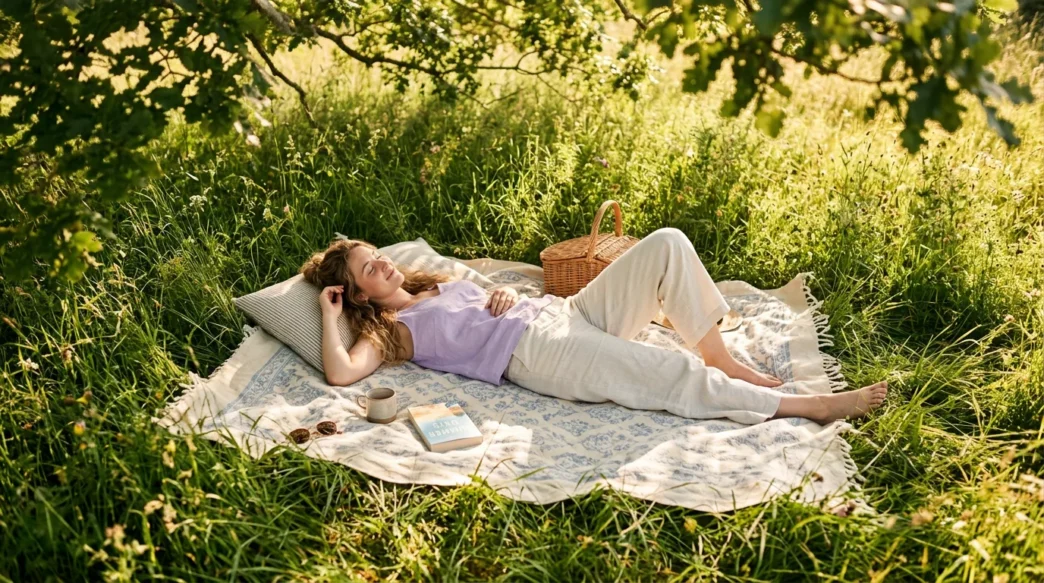
I gave myself a weird dare in late winter: wear a pastel outfit every single day for 30 days. No repeating the exact same combination. No cheating with one dusty-lilac sock and calling it done. I thought it would be easy — maybe even fun. Reader, week two nearly broke me. But something happened around day 20 that I genuinely didn’t see coming, and now I can’t stop reaching for soft mint and barely-there peach even on days I have absolutely no reason to look nice.
Day 1 — Optimistic and Awkward
I started with what felt like a safe, obvious choice: a pale lavender linen button-down tucked loosely into wide-leg cream trousers. I’d seen this combination approximately nine thousand times on Pinterest and figured it was a reliable entry point. It looked lovely hanging on the door. On my body, at 7:45 AM, heading to a grocery run and a work call — it looked like I was dressed for someone else’s life.
The problem wasn’t the clothes. It was the context mismatch. I’d been living in charcoal and navy for months, and suddenly my hands didn’t know what to do. What bag goes with lavender linen? Not my trusty black tote, apparently. I ended up switching to a woven tan crossbody five minutes before leaving and it was better — but barely. My shoes were wrong too. White trainers looked too casual, my nude mules felt too formal for the vibe. I wore the trainers and felt vaguely costumey all morning.
Day 2 was a pale sage wrap dress with a thin camel belt. More intentional. Still slightly off. Day 3: baby blue wide-rib knit with light beige straight-cut trousers. This one actually worked. I got a compliment from my neighbor — the one who once told me my usual outfits looked like I was “always about to attend a funeral,” so I took that as a genuine signal.
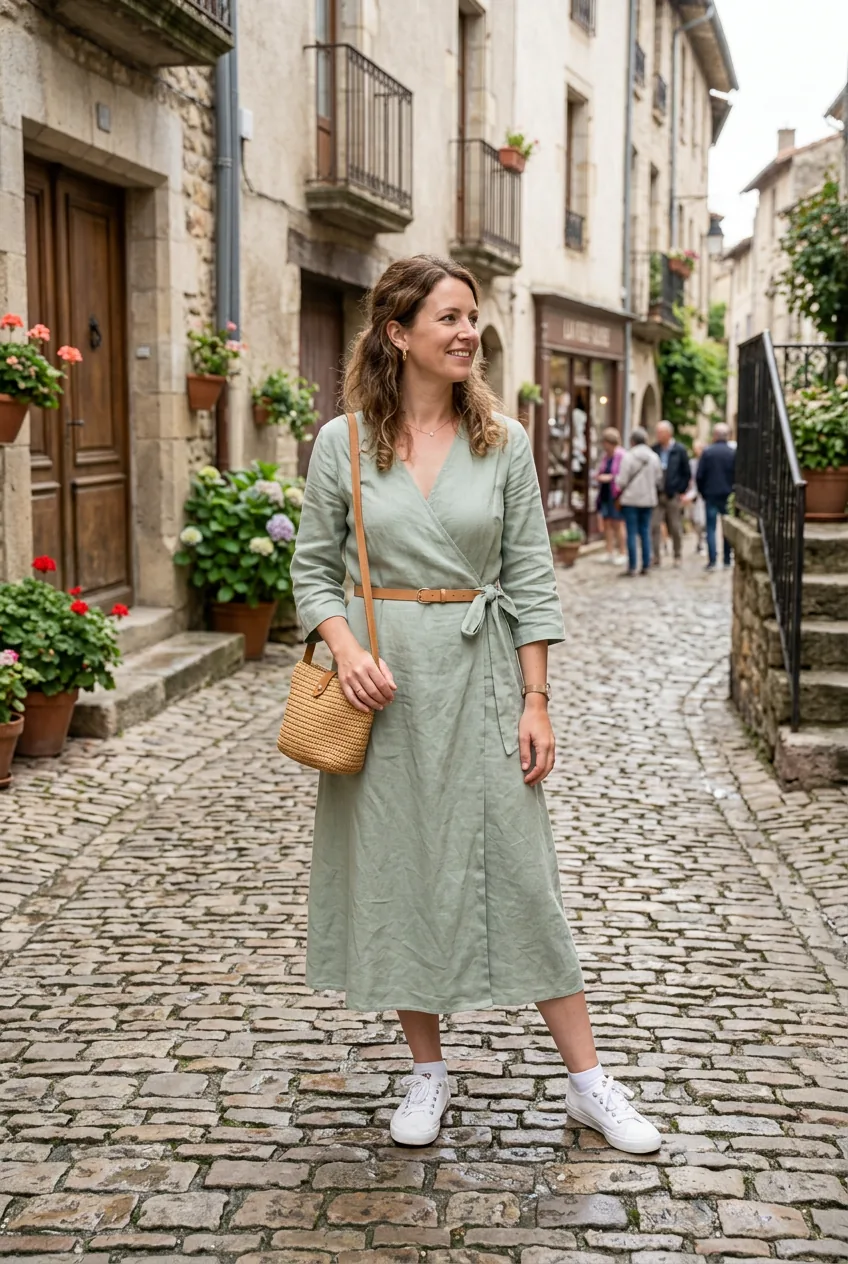
The early days taught me one thing quickly: pastels are unforgiving about fit. A slightly boxy shape in a dark color reads as intentional slouch. The same box in powder blue just looks like you grabbed the wrong size. Everything needed to actually fit. That felt like a revelation and an inconvenience at the same time.
Week 2 — The Frustration
This is the part I almost didn’t write about, because it’s embarrassing. By day 9, I was bored. Not bored of pastels exactly — bored of my pastels. I owned maybe six items that clearly fell into the pale-color category, and I’d already rotated through most of them. I started doing what I can only describe as pastel math: does this dusty rose technically count if it’s mostly salmon? Is this off-white outfit a pastel or am I reaching?
I spent more money than I planned to during week two. Nothing dramatic — a pale yellow linen skirt from a secondhand app, a soft pistachio ribbed tank, a periwinkle oversized blazer that cost more than I’d like to admit. But I was supplementing out of desperation, not intention. That’s a trap I’d warn anyone attempting this kind of challenge about.
The other frustration? People kept asking if I was going somewhere special. Every. Single. Day. “Oh, are you going to a baby shower?” No, Janet, I’m going to the post office. This is just Tuesday now. I started to wonder if pastels carry an inherent occasion bias — like they signal event rather than life. That question genuinely bothered me and ended up shaping the whole second half of the challenge.
Day 11 was my lowest point: a pale peach T-shirt with white jeans and blush sneakers. Technically all pastel. Completely uninspired. I looked like a watercolor that got left in the rain. I didn’t photograph it. I moved on.
Day 15 — Finding My Footing
Halfway. And I had a small but important realization: I’d been thinking about pastel outfits as a single category when they’re actually a whole spectrum of moods. Soft mint with white and gold hardware is clean and modern. Lilac with cream and brown accessories is warm and nostalgic. Dusty rose with denim and chunky sandals is casual-cool. Baby blue with camel is preppy without trying too hard. I’d been treating all of these as interchangeable when they’re actually entirely different looks that just happen to share a palette.
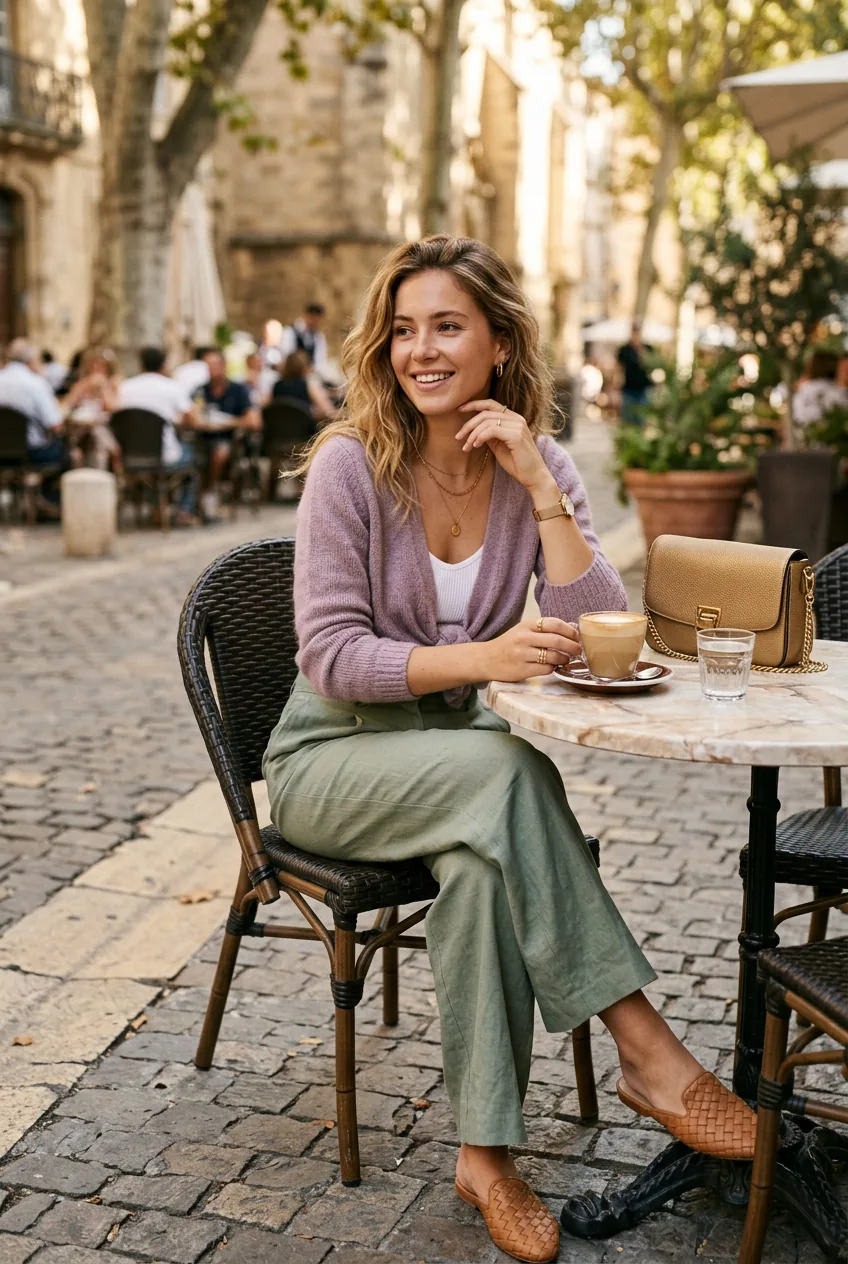
Day 15 outfit: pale sage linen wide-leg trousers, a fitted white cami, and a cropped dusty-lilac cardigan knotted at the waist. Tan woven mules. A gold chain bag. This was the first look where I thought — okay, I actually understand what I’m doing now. The combination of two muted tones (the sage and the lilac) with a white neutral read as intentional rather than accidental. It’s the kind of look I’d now describe as tonal dressing — tonal color dressing is genuinely its own skill set.
If you’re building your wardrobe for spring, pastel spring outfits are a great starting point for understanding which shades actually pair well together — I went back to that kind of reference multiple times during this challenge when I hit a creative wall. And if you want some direction on summer-ready looks, fresh summer outfit ideas gave me a lot to work with once the weather actually shifted.
I also stopped fighting the occasion-coding problem and leaned into it on certain days. Day 16 was a full tea-party-ready moment: a floral midi dress in the softest blush with puff sleeves, white kitten heels, and a structured cream mini bag. It was the most dressed-up I’d been all month and I wore it to work from home, which felt slightly absurd and also completely correct. If you love that aesthetic, elegant tea party outfits are worth exploring as a whole sub-category — there’s more range there than people expect.
Day 20 — The Surprise Breakthrough
Here’s my hot take, and I’m standing by it: the best thing you can do for a pastel outfit is add something that has absolutely no business being pastel.
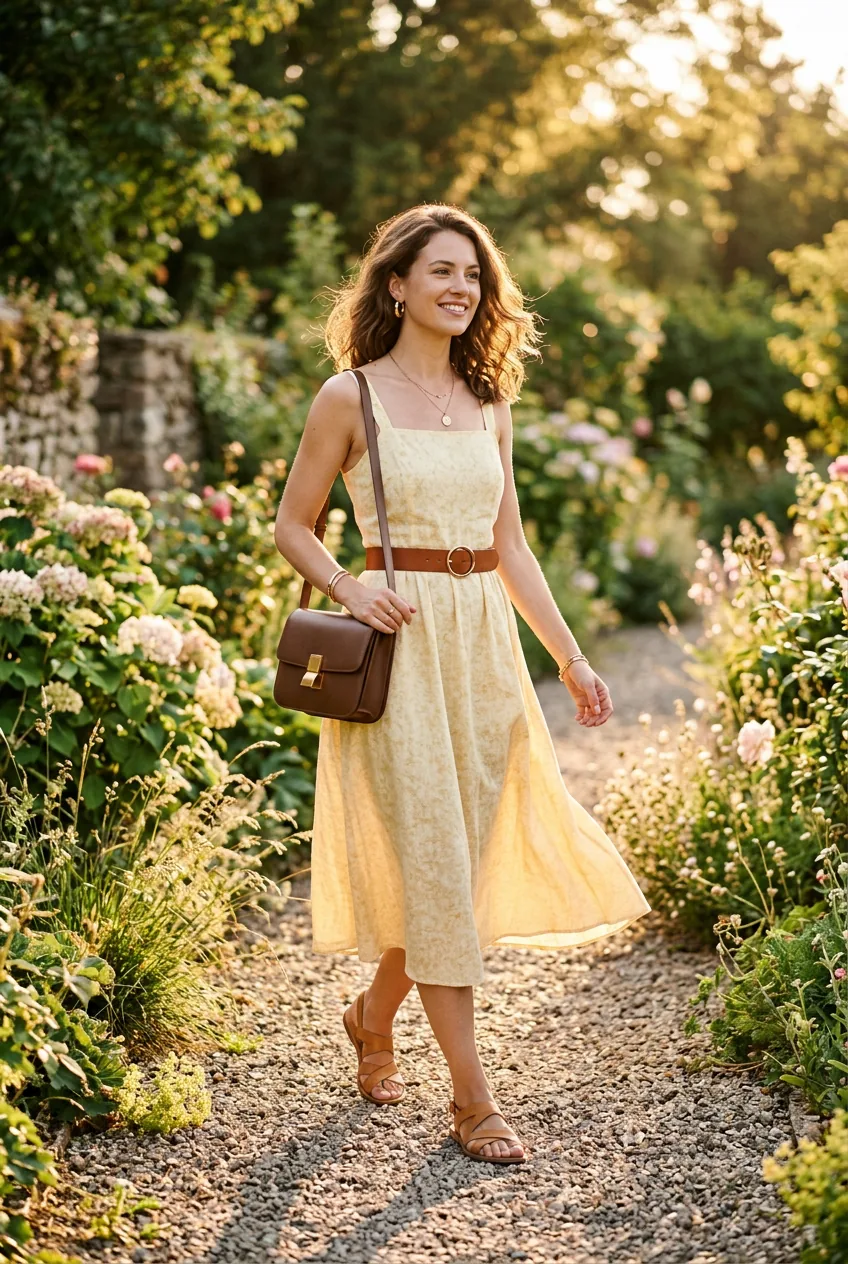
Day 20 was an accident. I’d planned a classic pale yellow sundress with white sandals. Elegant. Safe. Fine. Then I grabbed my worn-in cognac leather belt on the way out because I was cold and needed the blazer I’d slung over my shoulder to stay put — and the whole look transformed. The dark, warm leather against the bright yellow felt like a contrast that actually made both things look better. I started testing this theory obsessively.
Day 21: soft periwinkle midi skirt, a lavender-striped blouse, and dark tortoiseshell sunglasses with a chocolate brown structured bag. Day 22: baby blue linen set with caramel slide sandals and a thick woven belt in tan. Day 23: pale mint blazer over a white tee and light-wash denim, with vintage-gold hoop earrings heavy enough to anchor the whole thing.
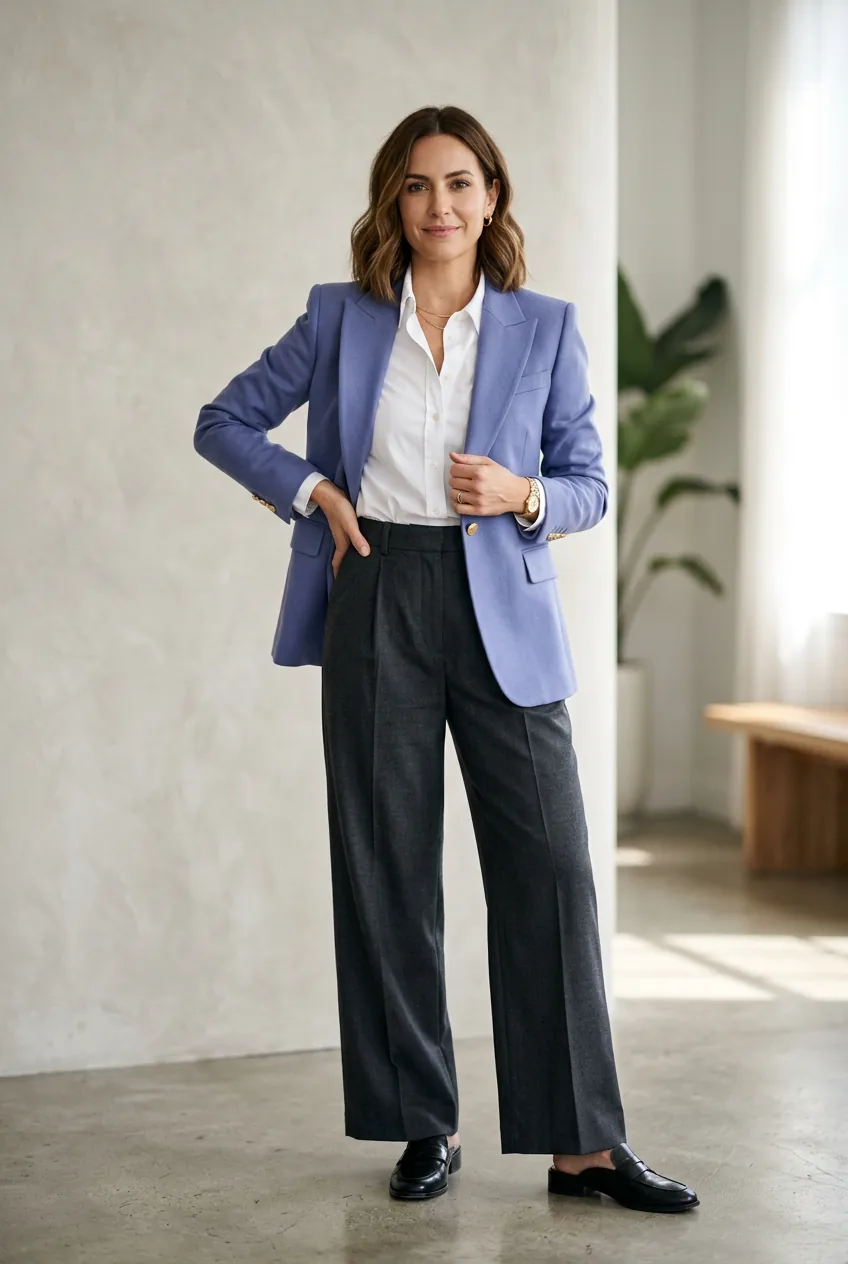
Every single time, the warm, grounding accessory made the pastel look intentional instead of delicate. It’s almost a rule now: if a pastel outfit feels floaty or too soft, add something with weight — a dark leather bag, a chunky metallic watch, a tan or cognac shoe. How to accessorize pastels is something I genuinely wish I’d researched before I started this whole experiment rather than during it.
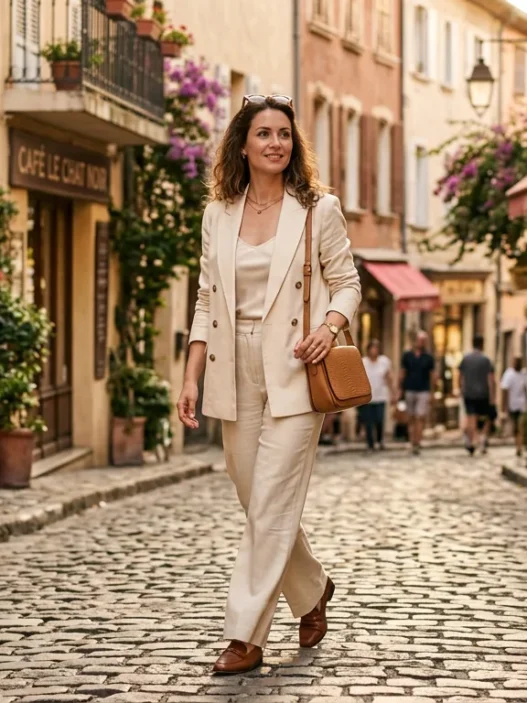
Look at the photo here — she’s wearing pale lavender and cream together, which could easily read as washed out, but the caramel mule and structured cognac clutch she’s carrying bring the whole thing into focus. That weight-and-contrast principle is exactly what I stumbled onto on day 20.
The Contrast-Styling Trick That Actually Makes Sense
Day 27 — When Pastels Got Complicated
Okay, real talk — not every pastel look translated to every context, and pretending otherwise would be a disservice to anyone actually trying this.
Days 25 through 28 were professionally hectic. I had three video calls, a long presentation, and a meeting that required me to look credible and not vaguely like I was on my way to a garden picnic. Here’s what worked versus what didn’t:
- Worked: The periwinkle blazer over a crisp white shirt and charcoal wide-leg trousers. Professional, pulled-together, and the pastel read as a color choice rather than a whole personality.
- Worked: Dusty rose silk blouse tucked into navy trousers. The navy anchored it completely.
- Didn’t work: The full pale mint co-ord on a big presentation day. It felt like too much softness when I needed to feel sharp. I changed ten minutes before the call.
- Didn’t work: Head-to-toe baby blue on a day I was already anxious. Something about wearing a color that registers as gentle when you want to feel armored was psychologically wrong for me. Your experience may vary.
- Surprisingly worked: The soft lilac knit set — straight-leg trousers and a fitted crewneck — which felt structured enough to be taken seriously while still being completely pastel.
The lesson from this week: pastels aren’t inherently casual or soft in terms of formality. The silhouette does that work. A sharp, tailored cut in powder blue is more authoritative than a slouchy anything in dark gray. I kept forgetting that, then re-learning it.
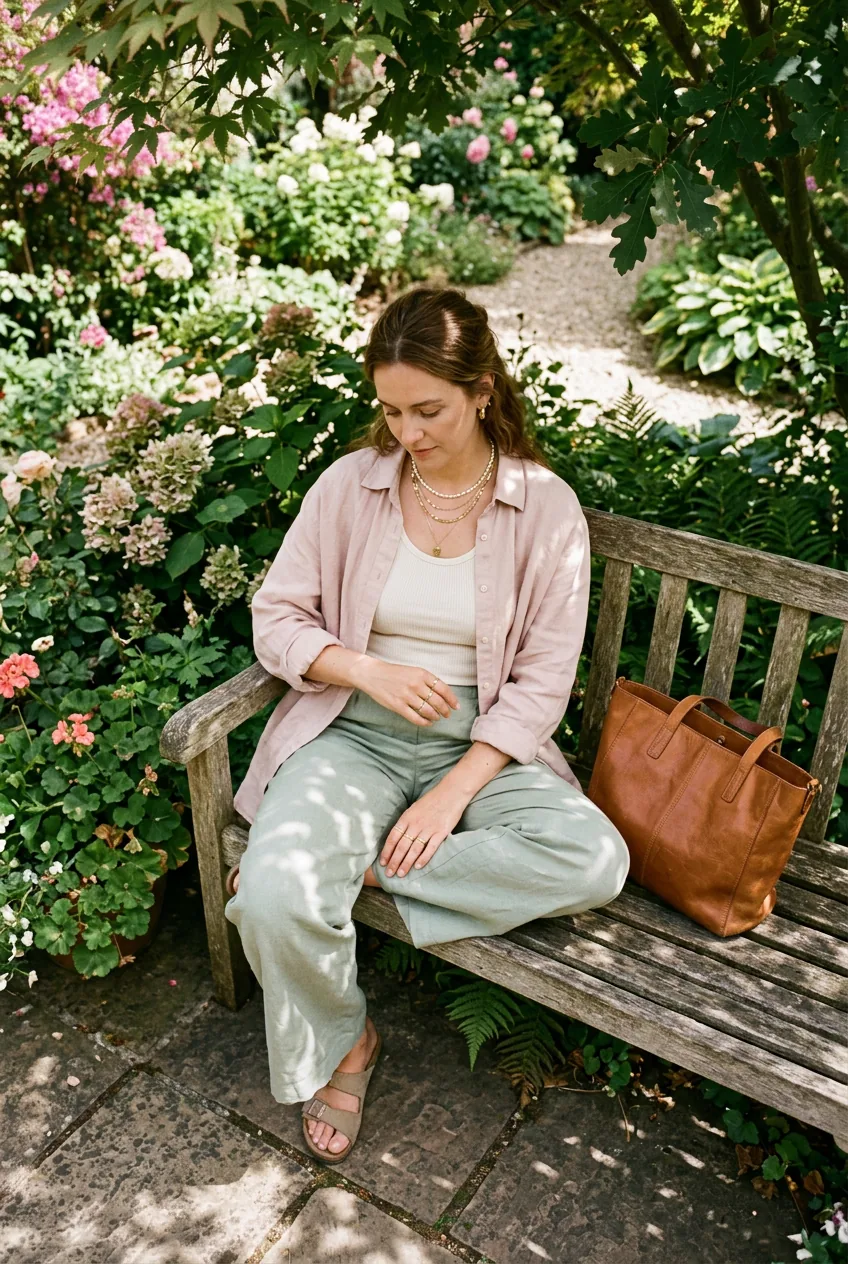
On day 26, I wore a pale blush floral wrap dress to a casual dinner, accessorized almost identically to some of the looks you’d find exploring floral dresses for tea party occasions. And you know what? It was perfect for exactly that setting. Context really is everything. And spring floral dress styling helped me remember that floral and pastel aren’t the same thing — they just overlap really, really often.
Day 30 — How It Settled
Day 30 outfit: pale sage loose trousers with a fitted white ribbed tank, a barely-there blush linen overshirt worn open, tan leather sandals, a gold paperclip chain layered with a thin pearl strand, and a caramel leather tote I’ve had for four years. No drama. Very easy. Looked exactly like someone who wears pastels because she genuinely likes them — not because she’s challenging herself to.
That’s the shift. Somewhere between the awkward day-one lavender linen situation and the accidental cognac-belt revelation on day 20, pastels stopped being a category I was performing and became a register I understand. I know which shades work with my skin. I know which cuts need to be sharper and which can float. I know when to add a dark anchor and when the whole soft palette is actually the point.
Would I recommend a 30-day style challenge to anyone? Yes — with the caveat that weeks two and three are genuinely uncomfortable and you should expect to buy at least two or three things you wouldn’t have otherwise. The discomfort is where the actual learning happens, which is exactly the kind of thing that sounds like a fortune cookie but turns out to be completely true. If you want a more timeless framework for building from here, timeless elegant tea party outfits as a style anchor is a great long-game move — it’s basically a masterclass in keeping pastels from reading as trendy-fleeting.
The version of me on day 1 — confused about bags, wearing the wrong shoes, feeling vaguely costumey — couldn’t have told you what a pastel outfit actually means as a style language. The version on day 30 knows. That’s worth four weeks of slightly chaotic dressing.
Questions I Kept Getting Asked
Do pastels actually work year-round or only in spring?
Genuinely year-round — but the weight and texture of the fabric matters more than the season. A pale sage wool blazer in November reads entirely differently than the same color in linen in May. Winter pastels need structure and heavier fabric to avoid looking washed out in low light. I wore a dusty rose oversized cashmere crewneck in the coldest week of my challenge and it was one of my most successful days.
What if pastels wash me out?
This is real — certain shades genuinely don’t work near certain skin tones, and it’s not a universal problem to solve, it’s a filtering problem. The trick is staying away from pastel shades that are very close to your own skin tone. If you’re very fair, icy blue and mint tend to read better than pale peach. If you’re deeper in complexion, lavender, periwinkle, and sage usually sing while true baby pink can disappear. Wear the shade near your face first and see what happens — context elsewhere in the outfit matters less than what’s happening at the neckline.
How do you keep pastel outfits from looking too casual or too formal?
Silhouette control is everything here. Sharp tailoring in a pastel shade reads professional. Flowy and unstructured reads relaxed. The actual technique is to mix registers — pair a structured pastel blazer with relaxed wide-leg trousers, or wear a floaty pastel skirt with a clean fitted knit top. When both pieces are at the same formality level in a soft palette, the look tips one way or the other. When they contrast slightly, it lands in that sweet middle ground that works almost everywhere.
Can you wear multiple pastel shades in one outfit without it looking like a mistake?
Absolutely, and this became one of my favorite discoveries during the challenge. The rule I settled on: keep the shades in the same temperature family. Cool pastels together (lavender, periwinkle, mint, icy blue) work seamlessly. Warm pastels together (peach, pale yellow, blush, soft coral) feel cohesive. Mixing a warm and a cool pastel in equal measure is where things can look accidentally mismatched — though a deliberate contrast piece like one warm and one cool shade can work if there’s a neutral to bridge them.