









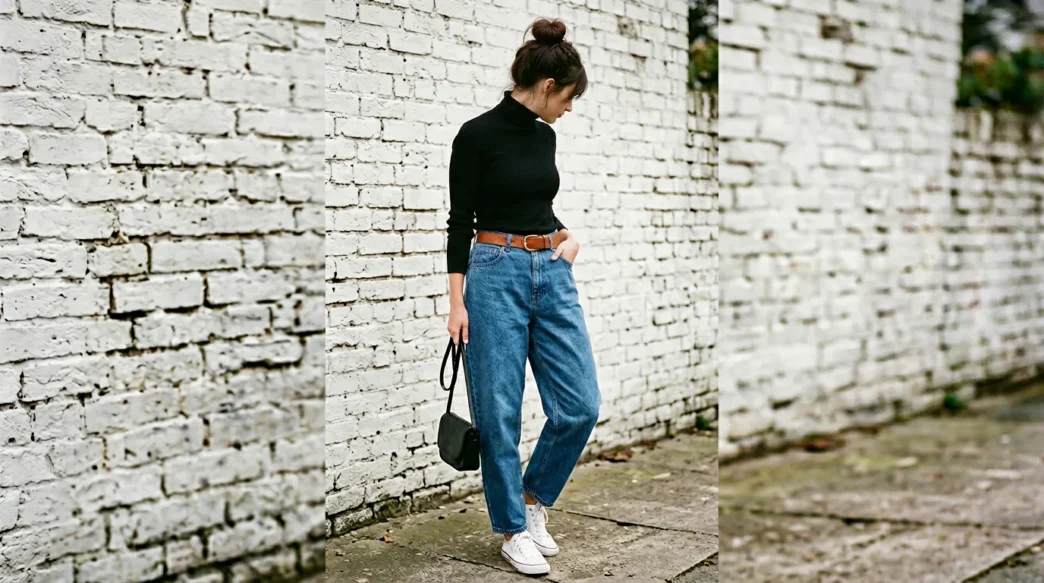
I used to think baggy jeans just weren’t for me. Every time I tried them, I looked like I was drowning in fabric — shapeless, frumpy, completely overwhelmed. But I kept seeing women who looked absolutely incredible in oversized denim, so I knew I was missing something crucial about how to style them properly.
Your Complete Baggy Jeans Styling Blueprint
What You’ll Need
Before we dive into the actual styling steps, let me tell you what I keep on hand for nailing this look every time:
- A well-fitted belt (leather or fabric, depending on your vibe)
- Fitted or cropped tops in your arsenal
- Shoes with some visual weight — chunky sneakers, boots, or substantial flats
- A blazer or structured jacket for layering
- Hair ties or clips (trust me on this one)
What Was Going Wrong With My Proportions
Here’s what I wish someone had told me years ago: baggy jeans aren’t just about finding the right size. They’re about understanding how volume works on your body and creating intentional balance.
I was making the classic mistake of treating oversized jeans like regular jeans — just bigger. I’d pair them with whatever top felt comfortable and call it a day. But baggy denim has its own rules. When you add volume to your lower half, you need to think strategically about your entire silhouette.
The women who looked amazing in baggy jeans weren’t just lucky with their body type. They were creating visual anchors — points where the eye could rest and make sense of all that fabric. Without these anchor points, you just look lost in your clothes.
The Fit Issue Most People Miss
Most people focus on the waist and length when shopping for baggy jeans, but they completely ignore the most important measurement: the rise. And this is where everything goes wrong.
Low-rise baggy jeans are a recipe for disaster on most body types. They create this weird situation where you have all this fabric hanging off your hips, making you look wider and shorter. Your torso gets cut in half visually, and there’s no clean line anywhere.
The rise determines where your waistline appears to be, and with baggy jeans, you want that waistline as high as feels comfortable. This creates the longest possible leg line and gives you a clear point of definition before all that volume kicks in.
I spent months trying to make low-rise baggy jeans work because they were on sale. Biggest styling mistake ever. I looked like I was wearing my older brother’s hand-me-downs from 2003.
Step 1: Choose Your Rise Strategically
Start with high-waisted or mid-rise baggy jeans — never low-rise. The waistband should sit at your natural waist or just above your hip bones, creating a clear definition point before the volume begins.
When you’re trying them on, pay attention to where the waistband hits when you’re standing naturally. If you have to keep pulling them up, they’re too low. If they’re digging into your ribcage, they’re too high. You want them to sit comfortably right at that sweet spot where your waist naturally indents.
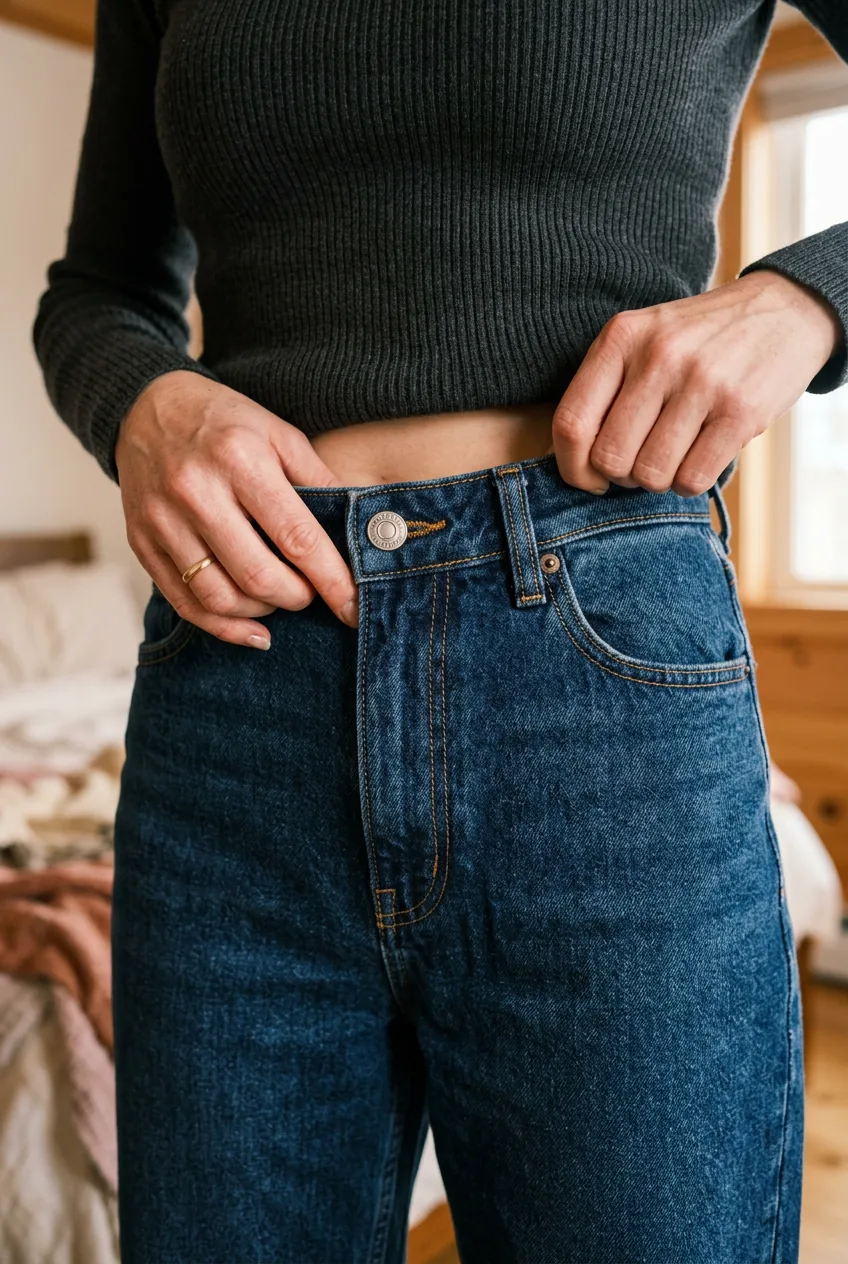
The rise isn’t just about comfort — it’s about creating the foundation for your entire outfit. Everything else we’re going to do builds off getting this placement right. Too low, and you’ll never achieve the effortless, put-together look that makes baggy jeans so appealing.
Step 2: Master the Cuff Game
This is where most people either nail it or completely miss the mark. The cuff on your baggy jeans isn’t just about hemming — it’s about creating visual weight and a clean finish that grounds the entire look.
I roll mine up 2-3 times, creating a substantial cuff that’s about 1.5 to 2 inches wide. This serves two purposes: it shows off your shoes (which we’ll talk about) and it creates a horizontal line that stops the eye, preventing that endless fabric effect.
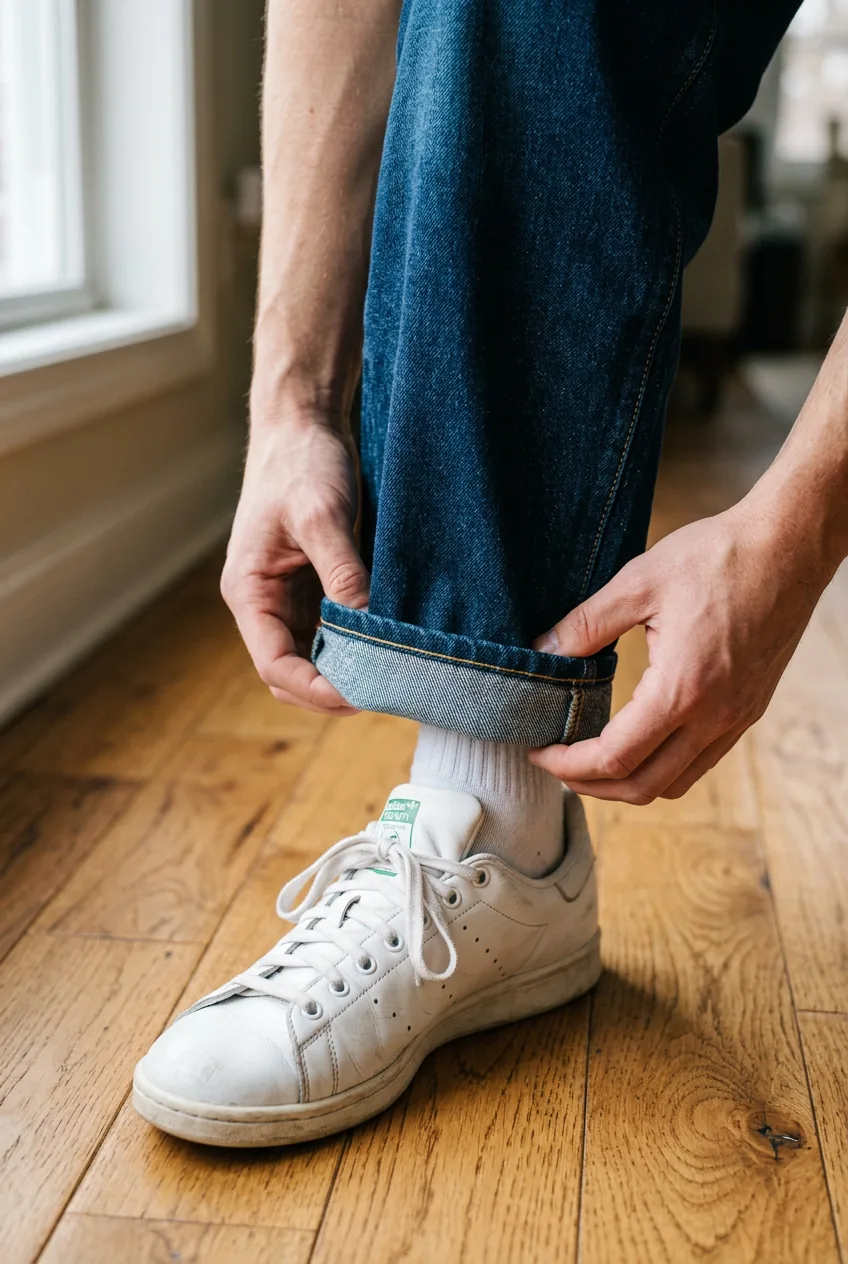
The key is making the cuff look intentional, not like you just rolled them up to avoid tripping. Take your time with this step. Smooth out any wrinkles in the fabric before you roll, and make sure both sides are exactly the same width. It’s these little details that separate a polished baggy jeans look from a sloppy one.
If your jeans are already the perfect length, you can create a fake cuff by folding the hem under itself. Professional tailoring tricks can also help you achieve the exact length you want permanently.
Watch the Cuffing Technique in Action
Step 3: Balance With Your Top Half
Here’s where the magic happens. With all that volume on your bottom half, your top needs to provide contrast — not more volume. I learned this the hard way after months of pairing baggy jeans with oversized sweaters and looking like I was wearing a tent.
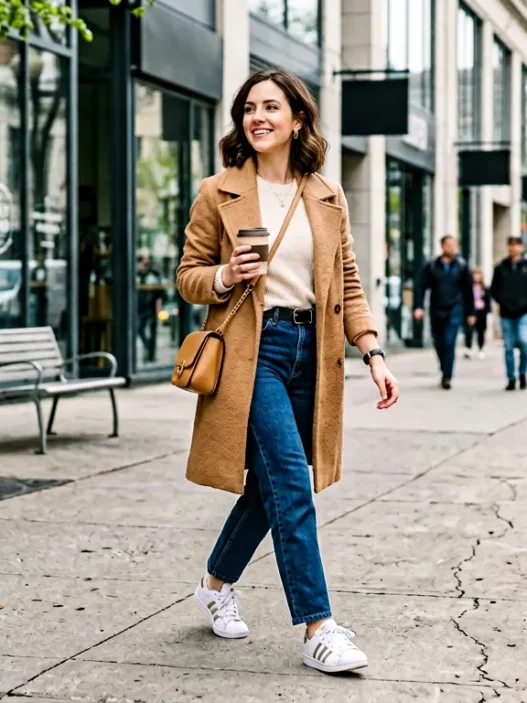
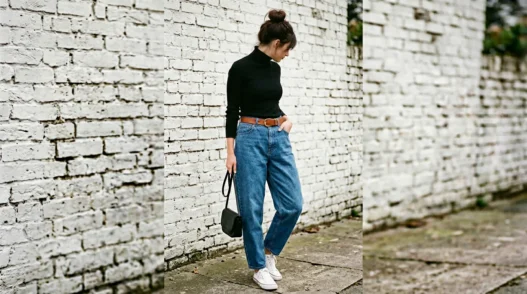
Fitted tops work beautifully, but so do cropped styles that show a sliver of skin at your waist. The goal is to create definition somewhere in your upper body that balances out the relaxed fit below. A fitted long-sleeve tee, a cropped sweater, or a tucked-in blouse all work perfectly.
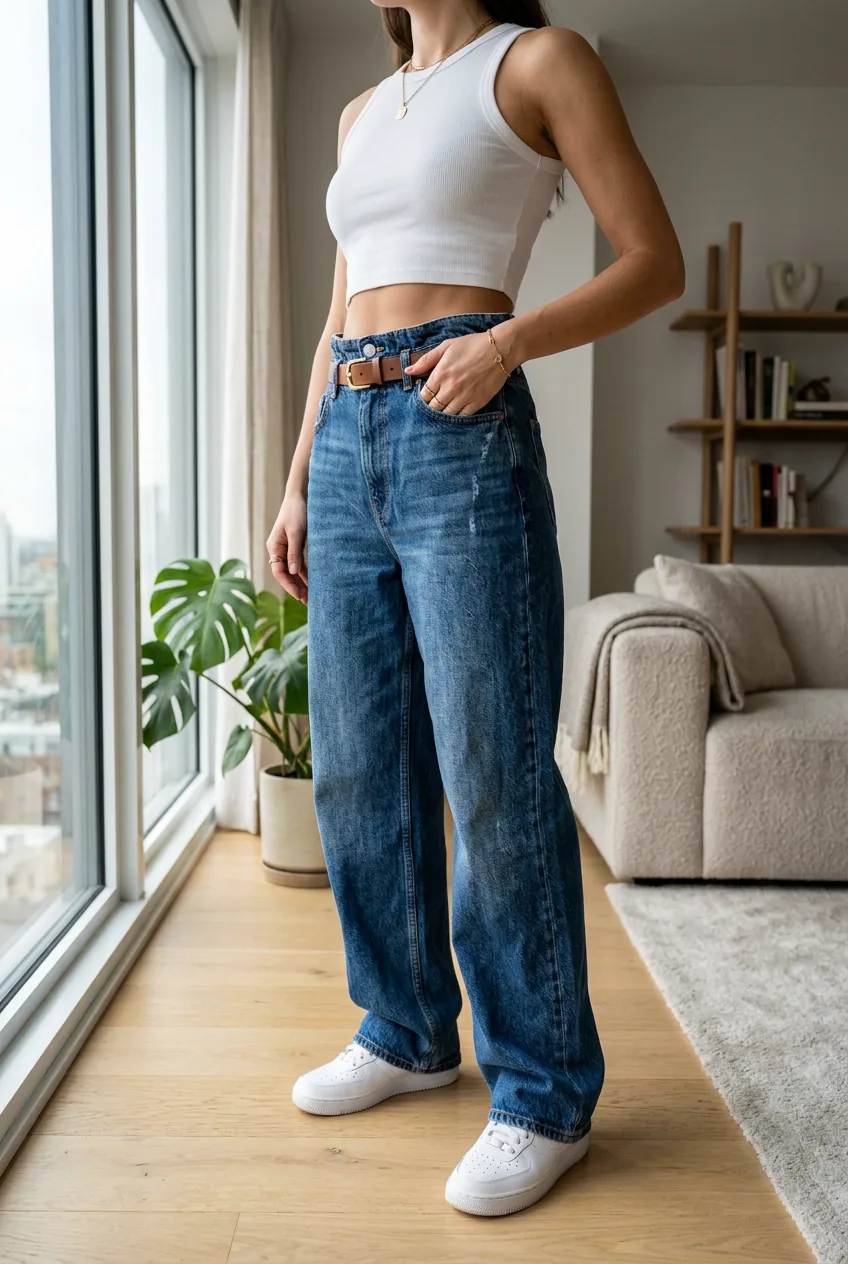
If you want to wear something with more volume up top, make sure it’s tucked in or cropped. An oversized button-down shirt can look incredible with baggy jeans, but only if it’s either fully tucked in to show your waist or cropped short enough to hit at your natural waistline.
The proportions matter more than the specific pieces you choose. As long as you’re creating contrast between fitted and relaxed elements, you’re on the right track.
Step 4: The Belt Placement That Changes Everything
This is the step that completely transformed how I wear baggy jeans. A belt isn’t just an accessory here — it’s a crucial styling tool that creates structure and defines your waist even when your jeans are relaxed.
But placement is everything. The belt should sit right at the waistband of your jeans, not below it. This reinforces that waistline we established in step one and creates a clear separation between your torso and the volume of the jeans.
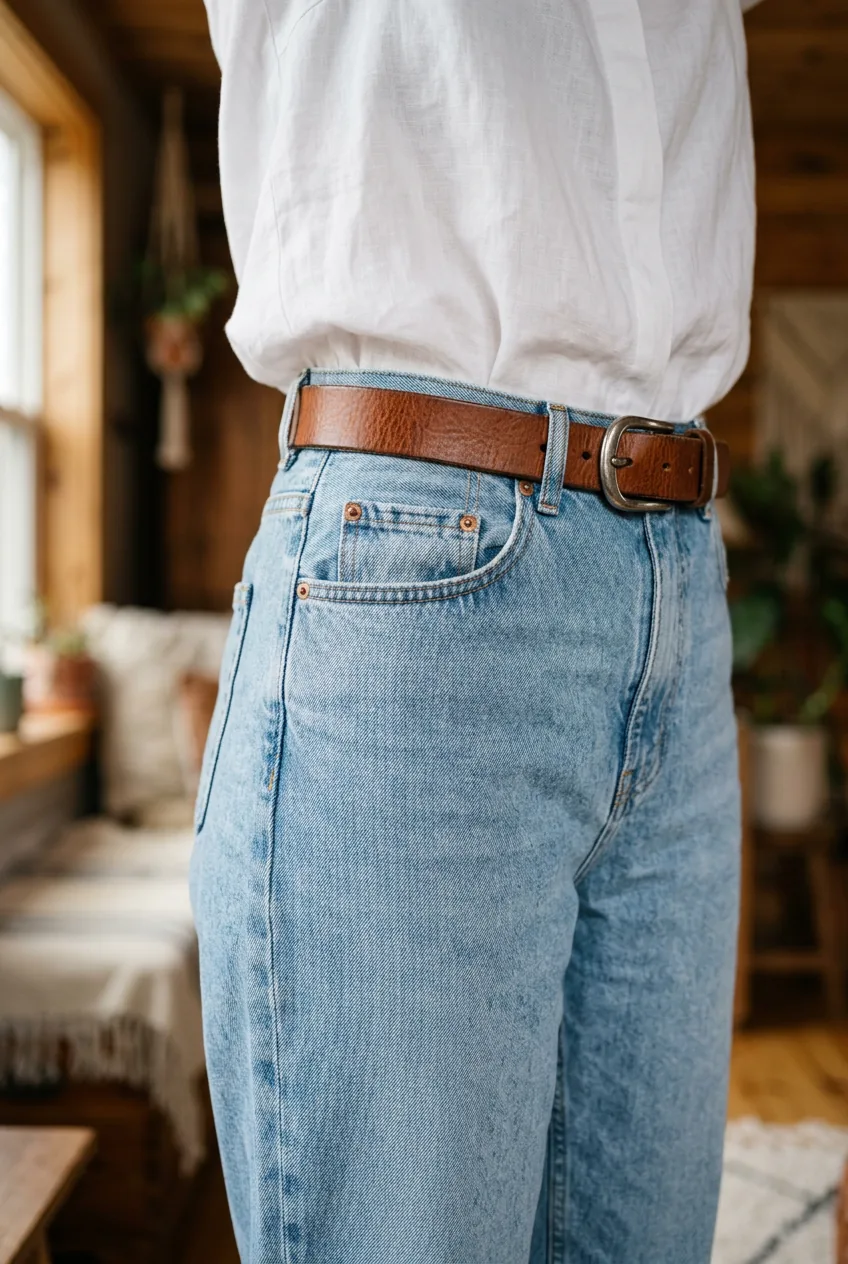
I prefer medium-width belts for this — thin belts get lost in all the fabric, and super wide belts can look too formal. Leather works well for a classic look, while fabric belts give you more casual options. The key is choosing something with enough visual presence to actually be seen and do its job.
Don’t cinch the belt too tightly. The goal isn’t to create an hourglass silhouette, just to provide definition. You want the jeans to maintain their relaxed shape while still showing that you have a waist.
Step 5: Get Your Shoe Proportions Right
This is where I see so many people go wrong. They’ll nail everything else about styling baggy jeans and then pair them with delicate sandals or tiny flats. The proportions are all off, and the shoes disappear under all that fabric.
You need shoes with some visual weight to balance the volume of baggy jeans. Chunky sneakers are obviously perfect, but so are combat boots, substantial flats, or even heeled ankle boots. The key is choosing something that can hold its own against all that denim.
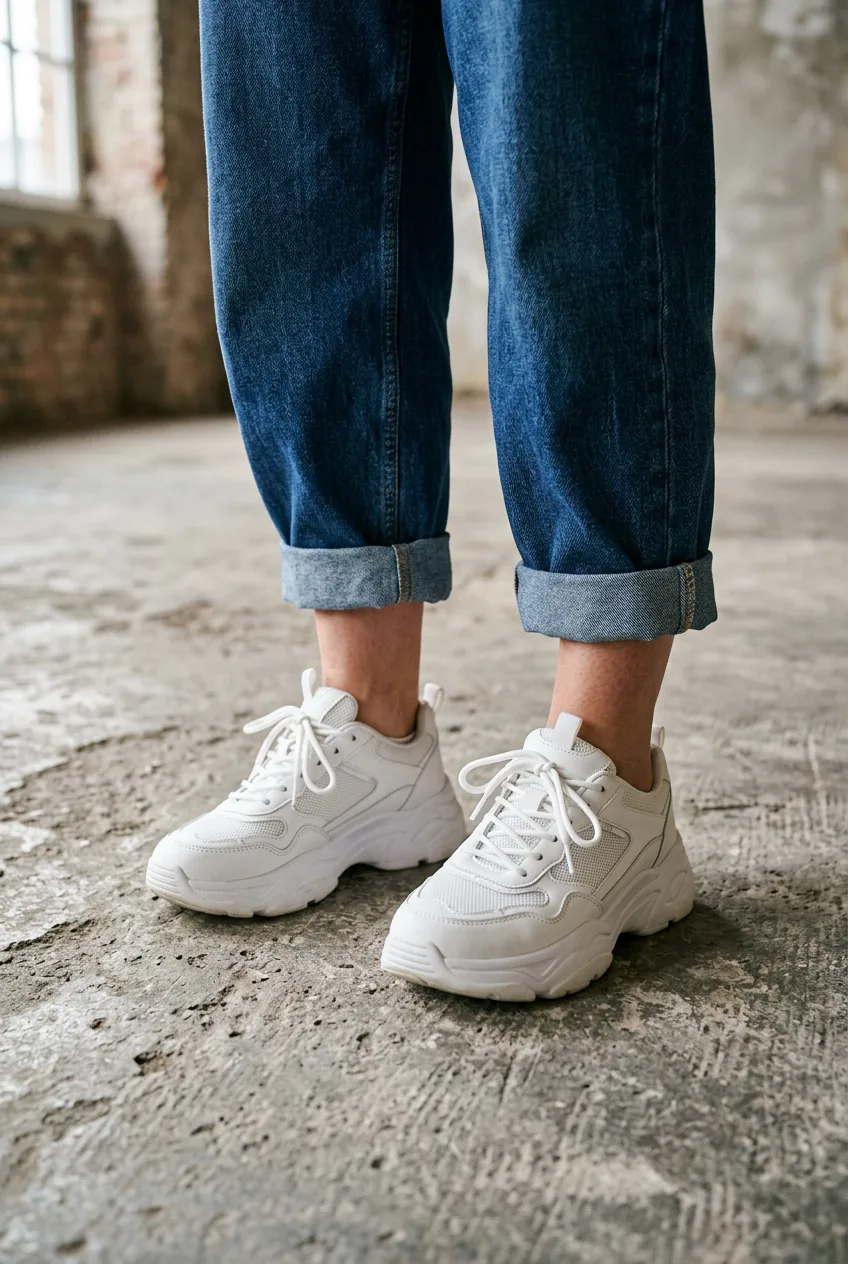
This is also why that cuff we created in step two is so important. It frames your shoes and gives them a stage to shine on. Without the cuff, even substantial shoes can get lost under the hem of baggy jeans.
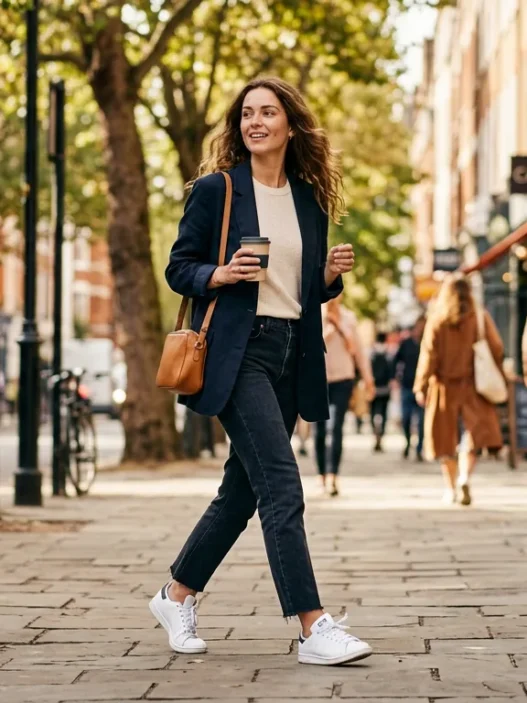
Color matters too. If your jeans are a standard blue denim, white sneakers or black boots create nice contrast. But don’t be afraid to try unexpected colors — cognac leather boots or burgundy loafers can add personality to an otherwise neutral look.
Step 6: Add Structure Where It Counts
The final step is adding one structured element to elevate the entire baggy jeans outfit from casual to intentionally stylish. This could be a blazer, a structured bag, or even just pulling your hair back into a sleek ponytail.
My go-to is a well-fitted blazer thrown over whatever fitted top I’m wearing. It adds instant polish and creates another point of structure in the look. The blazer should fit well through the shoulders and arms — we don’t want any additional volume up top.
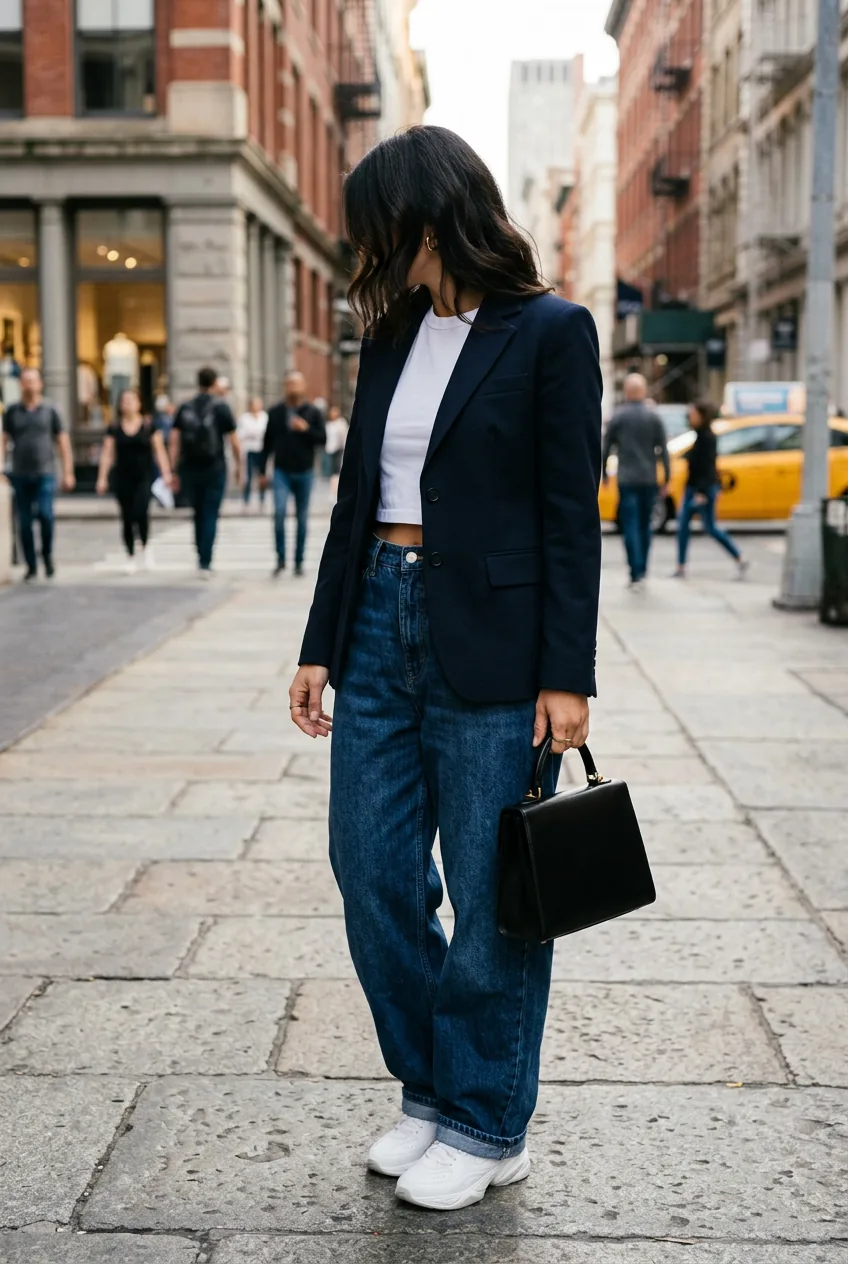
A structured handbag works beautifully too. While a slouchy crossbody might seem more appropriate for the casual vibe, a crisp tote or geometric clutch provides the perfect contrast to all that relaxed denim. Looking at trendy outfit combinations can give you more inspiration for mixing structured and relaxed elements.
Even something as simple as sleek jewelry or polished makeup can serve as your structured element. The goal is to include something sharp and intentional that shows you put thought into the look, not just threw on the first comfortable clothes you found.
Questions I Get About This Method
Will this work if I’m petite?
Absolutely, but pay extra attention to the rise and cuff. High-waisted baggy jeans are especially important for petite frames because they create the longest possible leg line. Make sure your cuff isn’t too wide — 1-1.5 inches is perfect for shorter legs.
What if I don’t like wearing belts?
Try a cropped top instead. The key is creating definition at your waist somehow. A fitted crop top or a regular top tucked into high-waisted jeans achieves the same proportional balance as a belt would.
Can I wear this to work?
Depends on your workplace, but the structured blazer route makes baggy jeans surprisingly office-appropriate. Pair with a silk blouse, pointed-toe flats, and minimal jewelry for a polished take that still feels current.
How do I know if the jeans are too baggy?
If you can’t create any semblance of shape even with a belt, they’re probably too oversized. The goal is relaxed fit, not drowning in fabric. You should still be able to see some hint of your body’s silhouette when styled properly.
This method completely changed my relationship with baggy jeans. What used to be my most intimidating piece of clothing is now something I reach for when I want to look effortlessly put-together. The key was understanding that “baggy” doesn’t mean “shapeless” — it just means you need to be more strategic about creating structure and balance in other ways.