








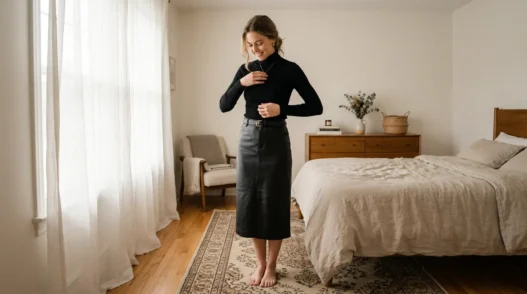
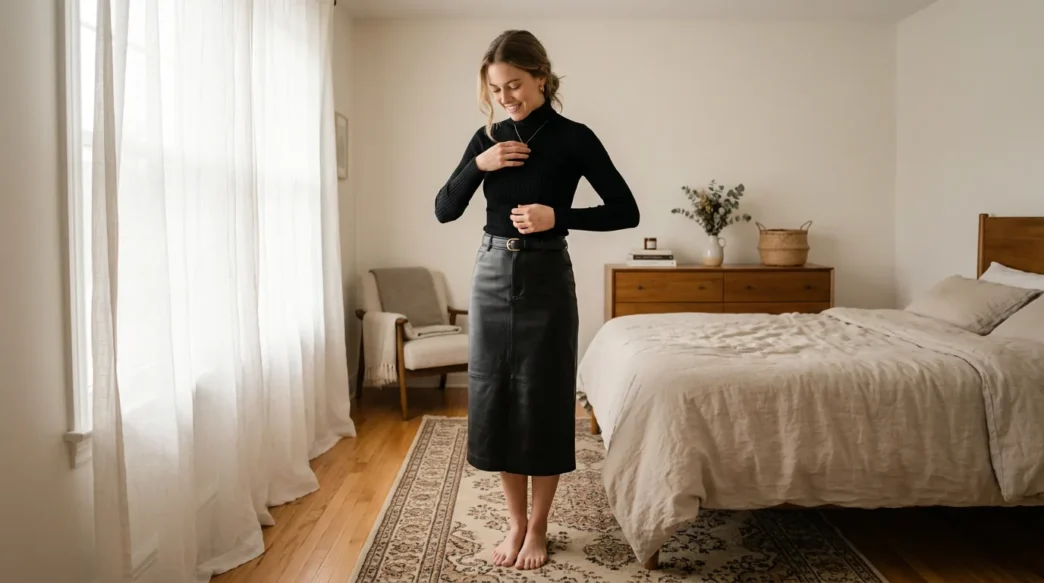
I used to buy leather skirts and then stare at them in my wardrobe for six months. Not because I didn’t love them — I genuinely did — but because every time I tried to style one, something felt off. Too costume-y. Too heavy on the bottom. Too try-hard. It wasn’t until I stopped chasing outfit inspiration online and started thinking about shape first that everything clicked. This guide is what I wish someone had handed me three years ago.
Shape Your Way Through This Post
- Why Silhouette Beats Trend
- Picking Your Base Shape
- Step 1: Choose Your Skirt Silhouette
- Step 2: Decide Your Top Volume
- Step 3: Anchor the Look with Footwear
- Step 4: The Shape-First Styling Move
- Step 5: Balancing Volume Top and Bottom
- Step 6: Finish With One Intentional Layer
- Questions I Get About This
Why Silhouette Beats Trend
Trends are seasonal. Silhouette is structural. When you understand the shape you’re building — whether that’s an A-line, a column, an hourglass, or a balloon — you can apply that logic to any leather skirt you own, no matter what year the fashion cycle says it’s supposed to be. That’s why silhouette-first dressing is genuinely the most transferable styling skill you can develop.
A pencil skirt in black leather and a midi wrap skirt in caramel leather are completely different shapes. They don’t get styled the same way — and pretending they do is exactly where most outfit formulas fall apart. Trend-based advice tells you “tuck in your top and add ankle boots.” Silhouette thinking asks first: what overall shape am I creating, and is it intentional?
Body shape styling is a great rabbit hole to go down alongside this, because once you understand your natural shape, you can start making decisions about when you want to echo it and when you want to contrast it. Both are valid. The key is that it’s a choice, not an accident.
Picking Your Base Shape
Before you even open your wardrobe, you need to decide which overall silhouette you’re going for. I think of them in four categories when it comes to leather skirt outfits specifically:
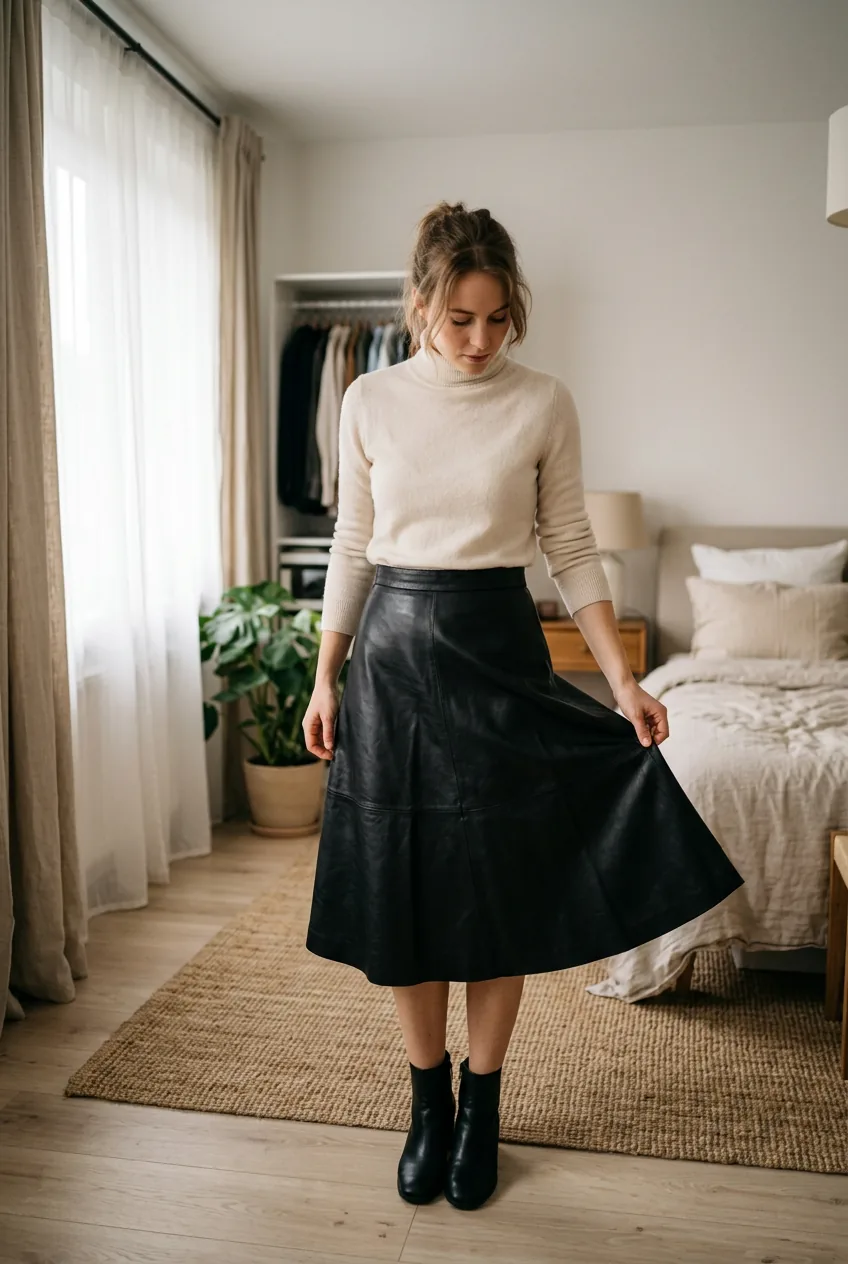
- A-line / flared: Volume at the hem, fitted at the waist. Creates a triangular shape that’s incredibly flattering and easy to wear.
- Column / straight: Minimal volume top and bottom, clean vertical line. Very editorial, a bit harder to pull off without intention.
- Hourglass: Defined waist with volume both above and below. Think fitted top, fuller midi skirt.
- Balloon / cocoon: Voluminous skirt with a deliberately narrow top. Dramatic. Bold. Not for the faint-hearted but absolutely stunning when done right.
Pick one. Commit to it before you pick a single other item. That’s the base shape you’re dressing around for the rest of this process.
What you’ll need to work through this guide:
- Your leather skirt (any length, any colour — yes, even brown or burgundy)
- A full-length mirror
- At least 2–3 top options in different fits (cropped, relaxed, fitted)
- Footwear in at least two heel heights
- One layering piece — a blazer, long cardigan, or leather jacket
- A belt, preferably in a neutral
Step 1: Choose Your Skirt Silhouette
Put the skirt on. Stand in front of your full-length mirror and look at just the skirt — not the outfit, not the shoes, just the skirt shape. Where does it sit on your waist? Where does the hem fall? Is it pulling the eye inward (pencil) or outward (flared)? Notice what shape the garment alone is creating from the waist down.
This matters because the skirt’s inherent shape is your starting constraint. A skirt with heavy structure — like a stiff faux-leather A-line — already has strong visual opinions. A softer, draping skirt is more flexible. You’re not fighting the skirt. You’re working with what it wants to do.
If you have a pencil or column skirt, write down “narrow bottom” in your mental notes. If you have a flared or pleated style, write “wide bottom.” This single data point controls everything that comes next.
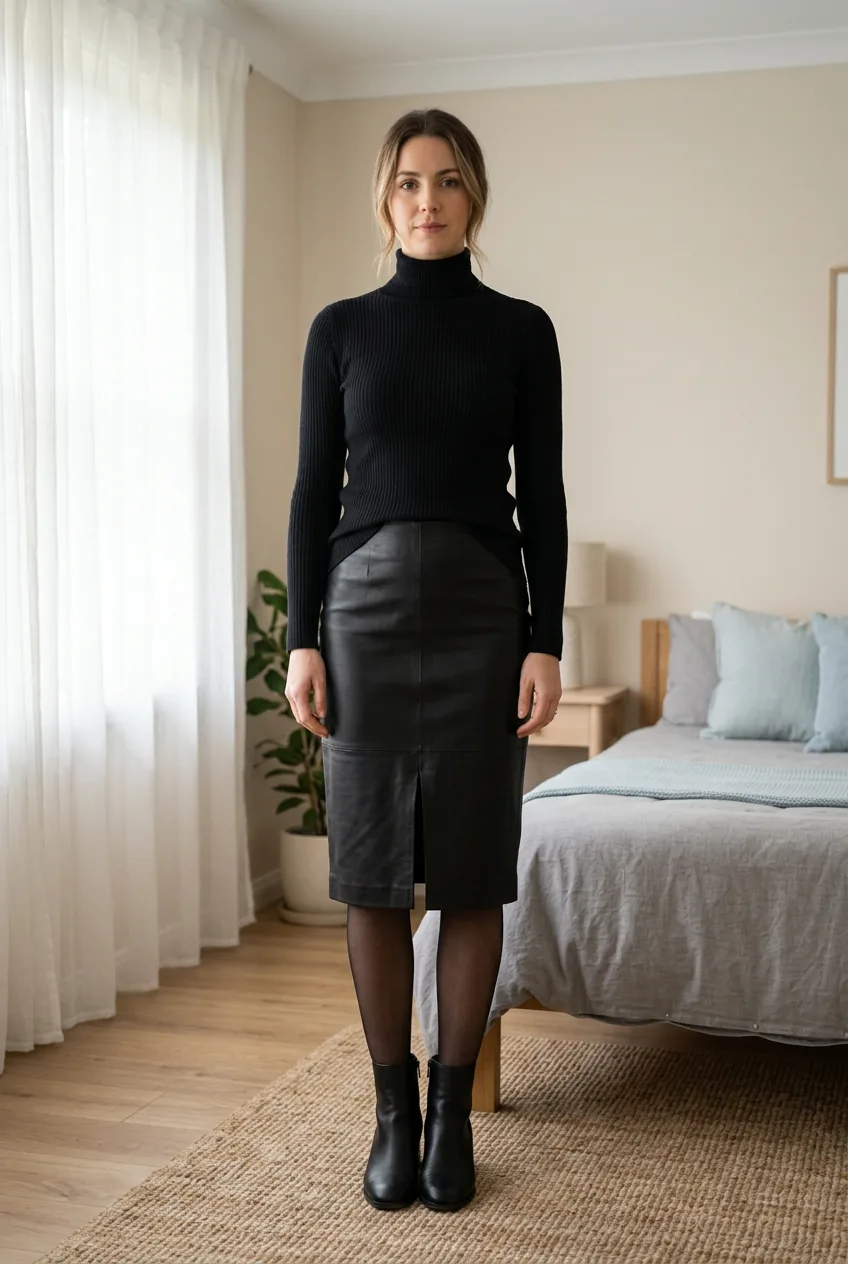
Mistake I made endlessly: I kept trying to style my pencil leather skirt with oversized sweaters because I’d seen it on Pinterest. The shape was a disaster — wide top, narrow bottom, no waist definition, just a triangle pointing the wrong direction. I looked like I was melting. Once I understood I needed to balance a narrow bottom with a fitted or slightly tucked top, the whole thing made sense.
Step 2: Decide Your Top Volume
Now that you know what your skirt is doing, you can make an informed decision about your top. The rule is simple but non-negotiable: volume on the bottom means less volume on top, and vice versa. You’re always working toward a shape that looks deliberate — not accidental.
If you’ve got a flared or A-line leather skirt, reach for something fitted or semi-fitted on top. A ribbed tank, a slim-fit button-down, a body-con long-sleeve. The goal is that the widest point of the outfit is the hem, not your torso. She’s wearing hers in this photo with a simple fitted ribbed turtleneck — see how clean that A-line reads from the waist down? That silhouette sings precisely because nothing above the waist is competing.
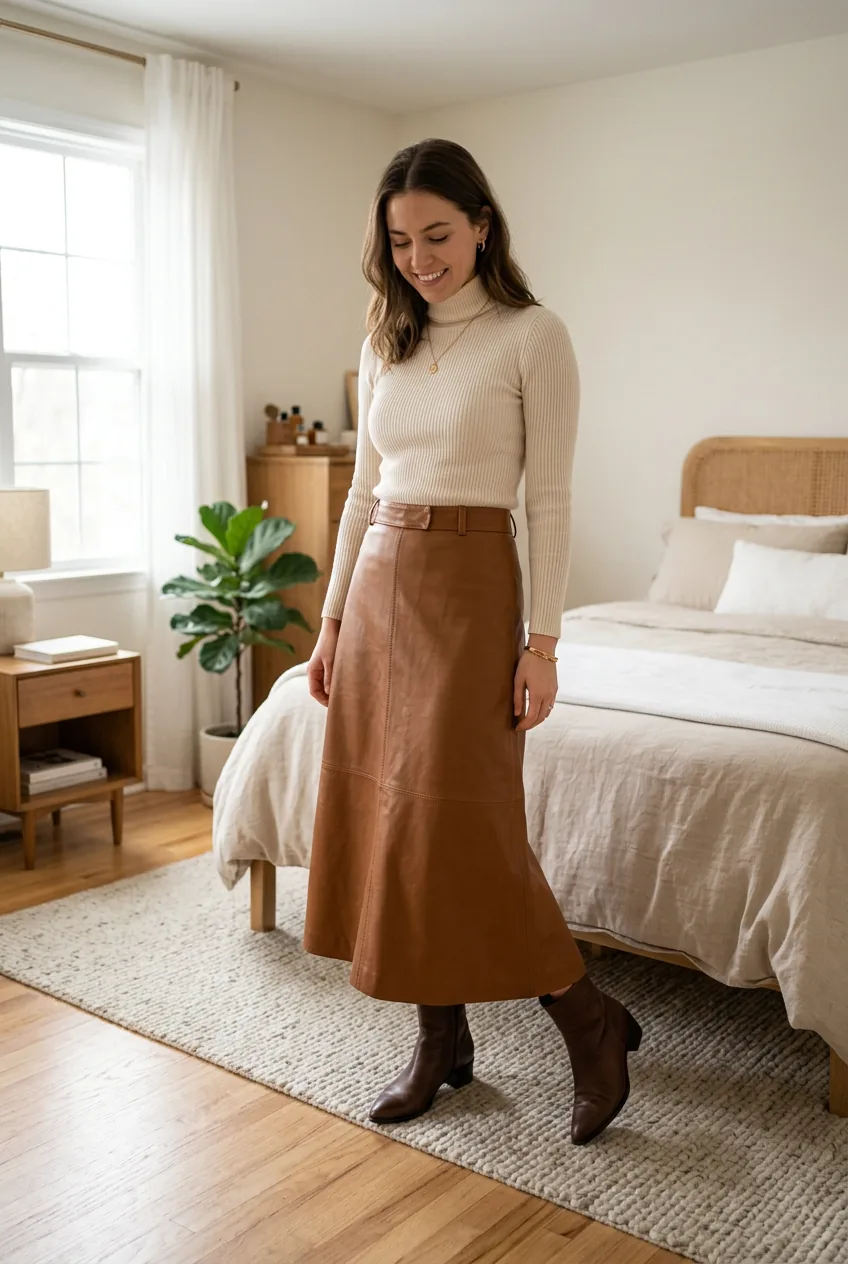
If you have a pencil or straight skirt, you have a little more freedom up top — but “more freedom” doesn’t mean “anything goes.” A slightly relaxed blouse, softly tucked, works beautifully. A fully oversized puffer-style top does not. The goal is still a clear waist point. Try a half-tuck, or tuck the front only, to keep the waist visible.
Step 3: Anchor the Look with Footwear
Footwear isn’t just a style choice here — it’s a structural one. The shoe you pick determines where the eye ends up, which affects the perceived length of the whole silhouette. This is especially important with leather skirts because leather already has visual weight. You want shoes that feel like they belong to the same shape story.
For a column or pencil skirt: a pointed-toe heel or a knee-high boot keeps the vertical line unbroken. That elongation is the whole point of a column silhouette — don’t interrupt it with a chunky platform sandal unless you’re deliberately going for contrast (and you’d need to be really confident in that choice).
For an A-line or flared skirt: you have more shoe options, but the hem length is your guide. A midi A-line pairs beautifully with a block heel ankle boot or a strappy heel that shows some ankle — creating a visual break that makes the leg look longer. A mini A-line leather skirt can handle chunky sneakers or loafers and still look completely intentional.
Interestingly, leather skirts and Western-influenced boots are having a serious moment in 2026. If you want to go that direction, check out how Western cowgirl outfits use boot height and toe shape to control the silhouette — the same principles apply directly here.
Step 4: The Shape-First Styling Move
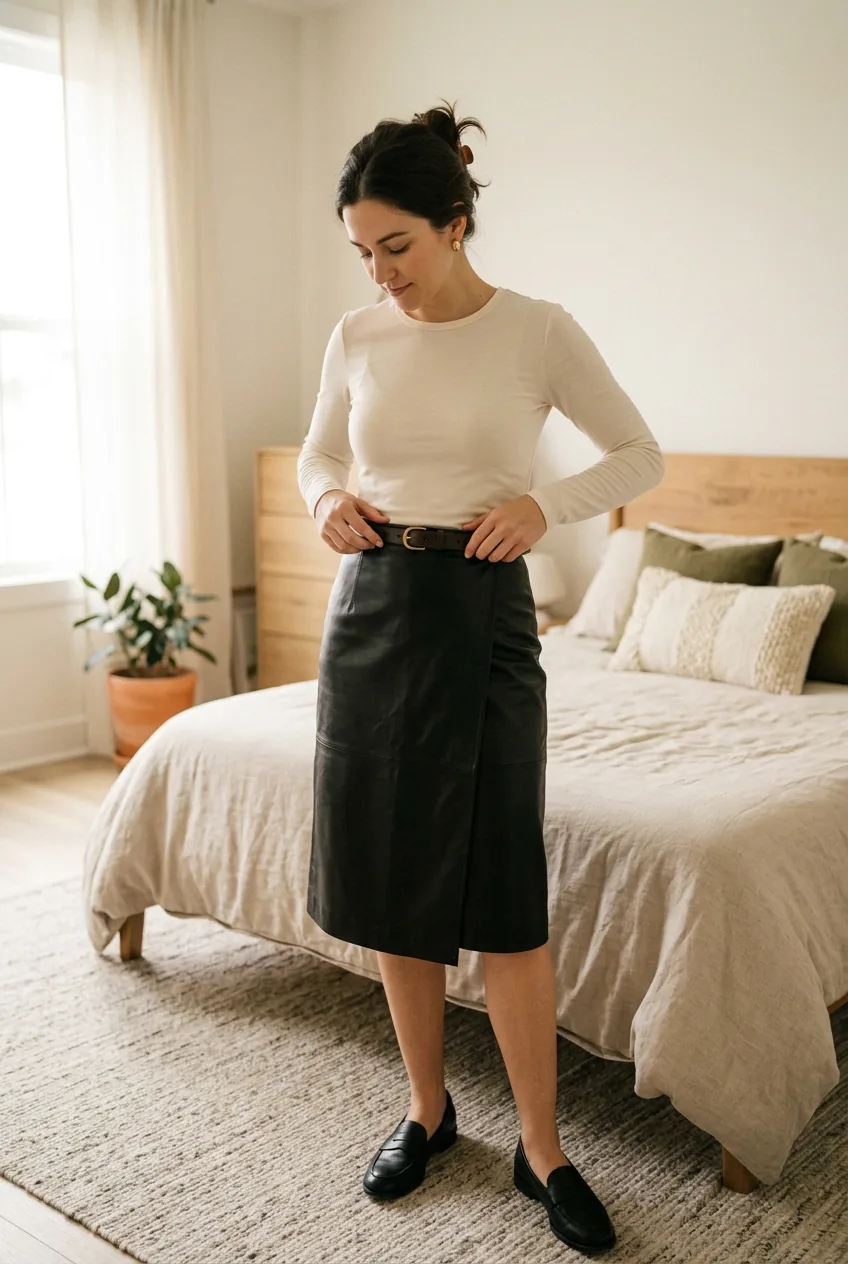
This is the step that changed everything for me. After you’ve got your skirt, your top, and your shoes sorted by shape logic — before you add anything else — you need to define your waist. Even if your skirt already sits at the natural waist, this step is about making that waist point read from a distance.
How? A belt. Or a tuck. Or both.
Stand back from the mirror and squint. (Yes, actually squint.) When you reduce visual detail, what shape are you seeing? If you can’t immediately identify a clear waist — if the outfit reads as one big rectangle — that’s a problem. The leather skirt needs a waist point to anchor the whole silhouette. Without it, no matter how good each individual piece is, the overall shape falls flat.
A thin belt over a tucked blouse. A statement belt cinching a slightly oversized top. Even just the waistband of the skirt worn higher than usual with a fully tucked slim tee. All of these create the waist point. Pick the one that fits your chosen silhouette and do it deliberately.
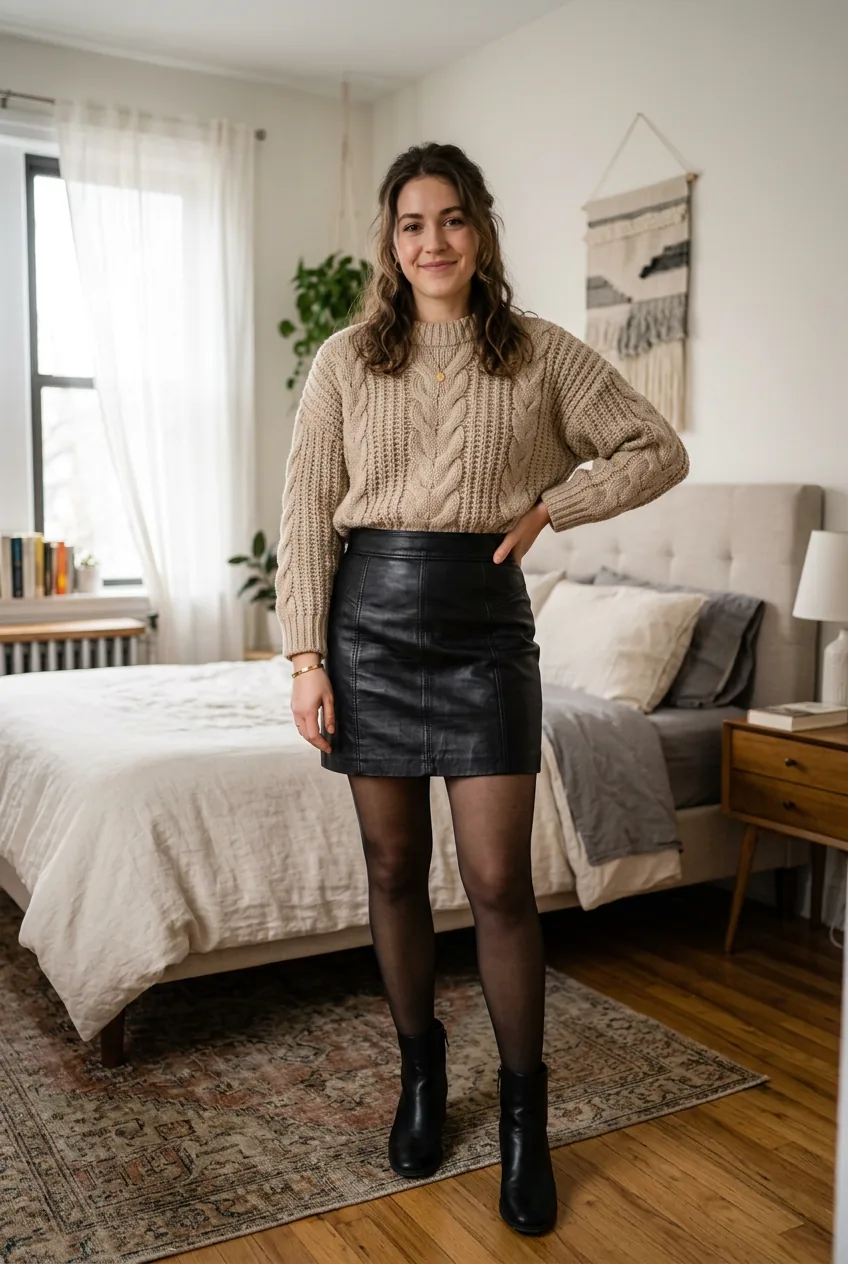
See the Waist-Point Trick in Action
Step 5: Balancing Volume Top and Bottom
Now you do a full shape audit. Stand in front of the mirror — full body, not just the top half — and look at the whole picture. The question you’re answering is: does this look like one intentional shape, or does it look like two separate outfits that ended up on the same person?
This is where most leather skirt outfits go wrong, honestly. The top is styled for one occasion, the skirt for another, and they never quite unite. The way to fix this is to check your visual weight distribution. Leather is heavy visually — even a matte, soft leather reads as substantial. So you almost always want something lighter above to balance it.
Visual weight in outfits is a concept that fashion stylists talk about constantly, and it applies so directly here.
A chiffon blouse over a structured leather pencil skirt. A fine-knit ribbed top over a leather midi. A simple cotton fitted tee over a leather mini. The lighter, less visually dense fabric sits on top — and gravity, visually, does the rest. The eye is drawn down to the leather, which is exactly what you want.
If your whole outfit is heavy — leather skirt plus chunky knit plus leather jacket — it can work, but you need to be even more intentional about the waist point from Step 4, and your footwear needs to be either very sleek or very deliberately chunky. No ambiguity.
Outfits with this kind of deliberately bold layering remind me of the approach behind glam cowgirl outfits with bold styling — texture on texture, but always with a strong silhouette holding it together.
Step 6: Finish With One Intentional Layer
Here’s where the outfit gets its personality. One layer — not two, not three, one — added with your silhouette in mind. And the word “intentional” is doing real work in that heading. The layer should either reinforce the shape you’ve built or create a deliberate, considered contrast. It should never be an afterthought thrown on because you felt cold.
For a column silhouette: a long open-front cardigan or a longline blazer maintains the vertical line and adds elegance without disrupting the shape. A cropped leather jacket, worn open, also works beautifully — it frames the waist without adding volume above it.
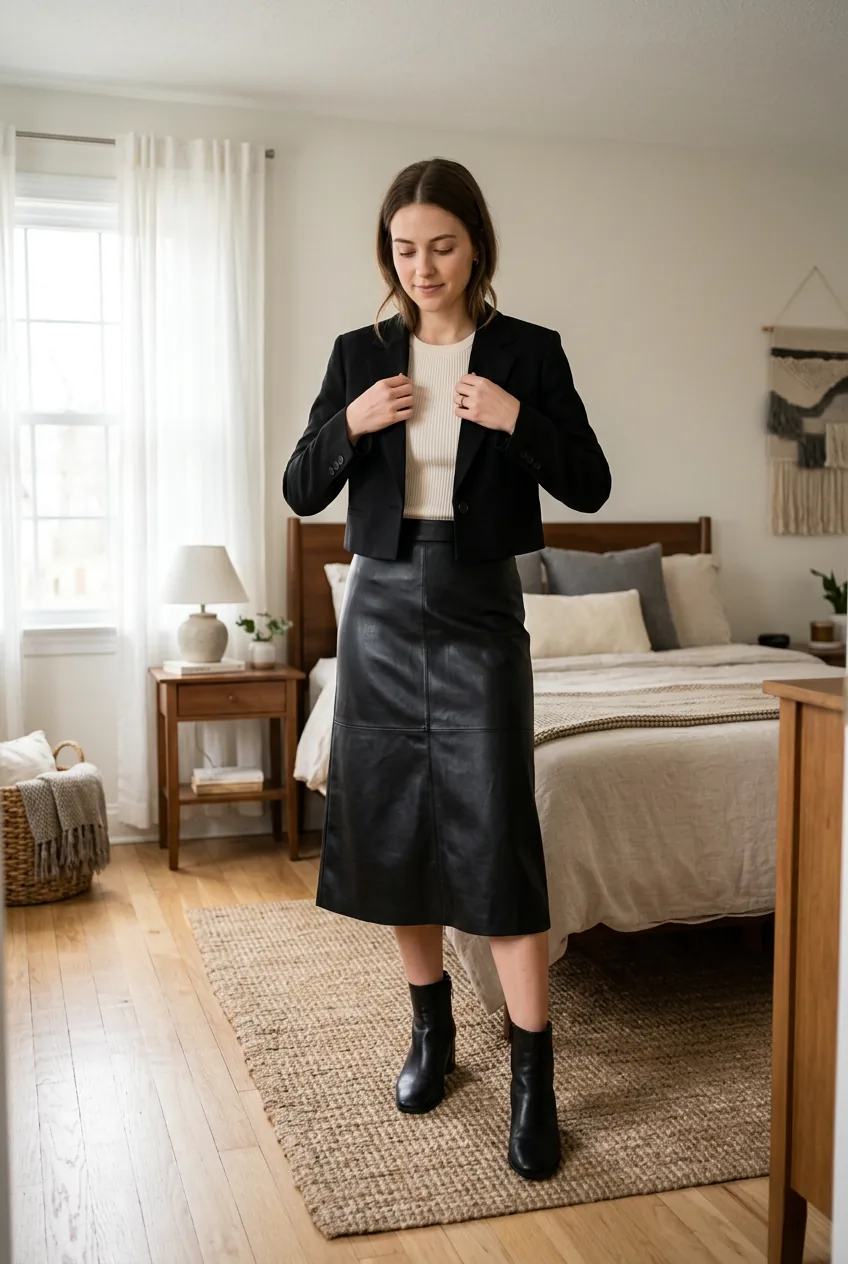
For an A-line or hourglass silhouette: a cropped layer is your best friend. A bolero, a short blazer, a cropped moto jacket — anything that ends at or just above the natural waist keeps the flared hem as the focal point. A long layer over an A-line will fight the shape and muddy the whole silhouette.
Look at how she’s wearing hers in this image — that cropped leather jacket sitting just at the waist is the exact decision that makes this outfit read as complete rather than assembled. The jacket doesn’t just add warmth. It closes the shape.
If you want to play with something more vintage in feel, a structured cropped blazer over a leather midi sits firmly in retro glamour outfit territory — and it works across seasons because the leather grounds it and the blazer gives it structure. Seasonally speaking, this kind of layer swap is also exactly how cute cowgirl outfits shift across seasons — same base shape, different outerwear weight.
blazer over skirt styling is worth reading before you invest in a new blazer — cut and length matter more than colour here.
Questions I Get About This
Does this silhouette method work for faux leather skirts too?
Completely. The silhouette principles here are about shape, not fabric authenticity. Faux leather often has slightly less structure than real leather, which can actually make it easier to work with — it drapes a little softer and pairs well with flowy tops in a way that stiffer real leather sometimes doesn’t. Apply exactly the same steps.
What if my leather skirt is a colour other than black — does that change anything?
The silhouette logic stays identical. Where colour does matter is in visual weight — a white or pale leather skirt reads lighter than a black one, so you can actually get away with a slightly heavier top without the balance tipping too far. Dark burgundy or chocolate leather skirts read as heavier, so lean toward lighter tops. But the shape principles? Exactly the same.
Can I wear a leather skirt outfit to work?
Yes — and honestly, a leather midi in a column silhouette with a fitted turtleneck and pointed-toe heels is one of the most polished things you can wear to an office. The key is keeping the silhouette clean and uncluttered. Save the moto jacket and chunky boots for a weekend version of the same skirt.
How do I make a leather skirt outfit feel less edgy and more relaxed?
Soften one element significantly. A relaxed linen shirt half-tucked into a leather skirt immediately tones down the edge — the contrast between casual fabric and structured leather is what creates the balance. White trainers instead of boots does the same job. You’re still building an intentional silhouette, just with softer ingredients above the waist.
After I started working through leather skirt outfits with this shape-first approach, I stopped dreading the process entirely. My black midi pencil skirt — the one that sat unworn for nearly a year — now gets pulled out constantly. It’s the same skirt. I just finally understood the shape it wanted to be part of. Go slow through Step 4 especially. That waist point is genuinely the thing that makes or breaks the whole look.