








I used to think baggy jeans were either effortlessly cool or a complete disaster — with no middle ground. Then I spent three months looking like I was drowning in denim, wondering why other women could pull off the relaxed look while I just looked… lost. Turns out, the secret isn’t about finding the perfect pair. It’s about understanding how proportions actually work on your body.
Your Complete Guide to Proportional Baggy Jean Styling
Understanding Why Baggy Jeans Look Off
Here’s what I wish someone had told me earlier: baggy jeans fail when they create visual confusion about where your body actually is. The loose fabric can make you look shorter, wider, or just… shapeless. But it’s not the jeans’ fault — it’s about proportion disruption.
When you wear fitted clothes, your silhouette is obvious. With baggy pieces, you’re essentially creating a new silhouette that may or may not relate to your actual body underneath. The trick is making that new silhouette intentional and flattering.
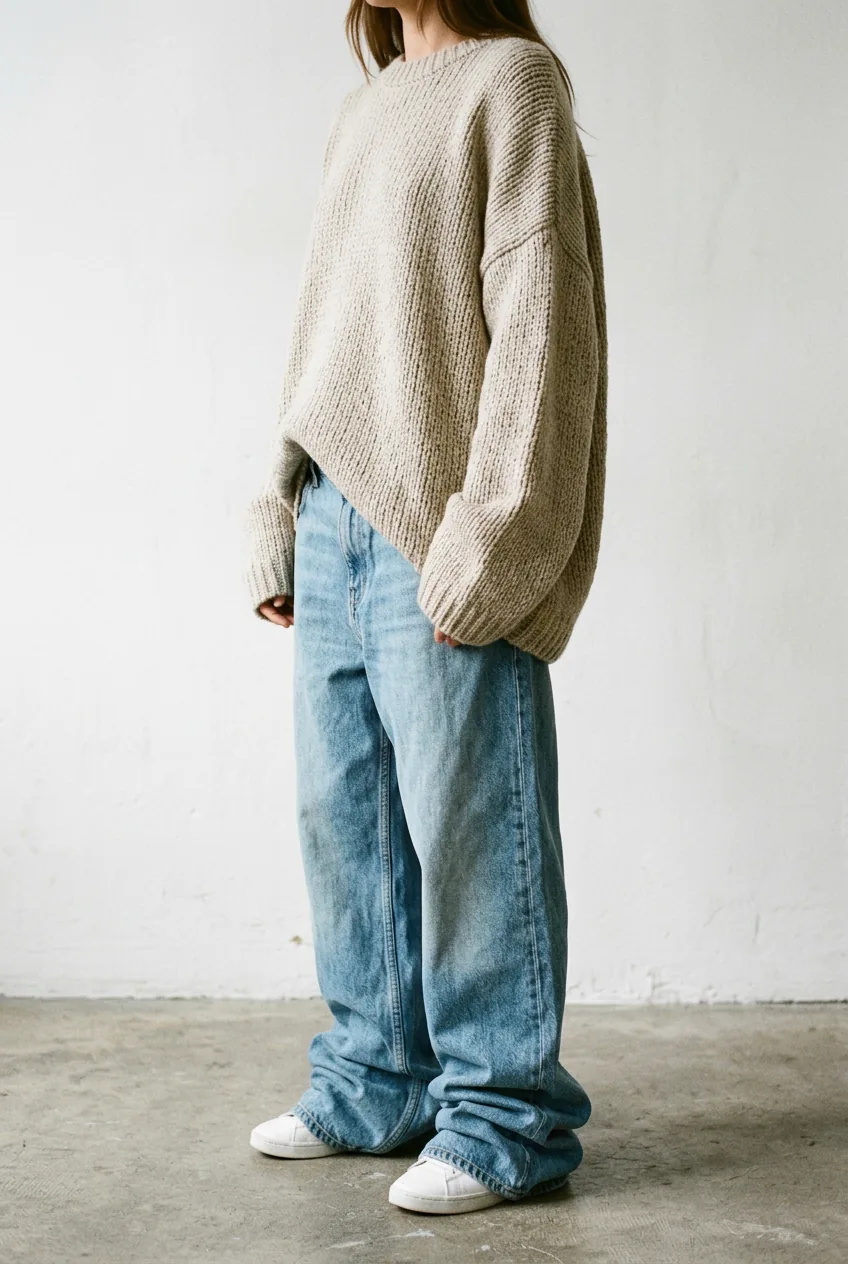
I learned this the hard way after buying three pairs of effortlessly styled baggy pants that looked amazing on the hanger but terrible on me. The problem wasn’t the jeans — it was that I was treating them like fitted jeans and expecting the same styling rules to work.
The Rule of Thirds for Your Silhouette
You know how photographers use the rule of thirds to create balanced, interesting compositions? The same principle works for outfits. Instead of cutting your body in half with equal proportions (which can look static), you want to create a 1:2 or 2:1 ratio.
With baggy jeans, this typically means making your upper third smaller and more defined, while your lower two-thirds get the relaxed, flowing treatment. Think crop top with high-waisted baggy jeans, or a tucked fitted tee that hits at your natural waist.
But here’s where it gets interesting: you can flip this ratio depending on your body type and what you want to emphasize. The key is being deliberate about which third gets the attention and which two-thirds provide the balance.
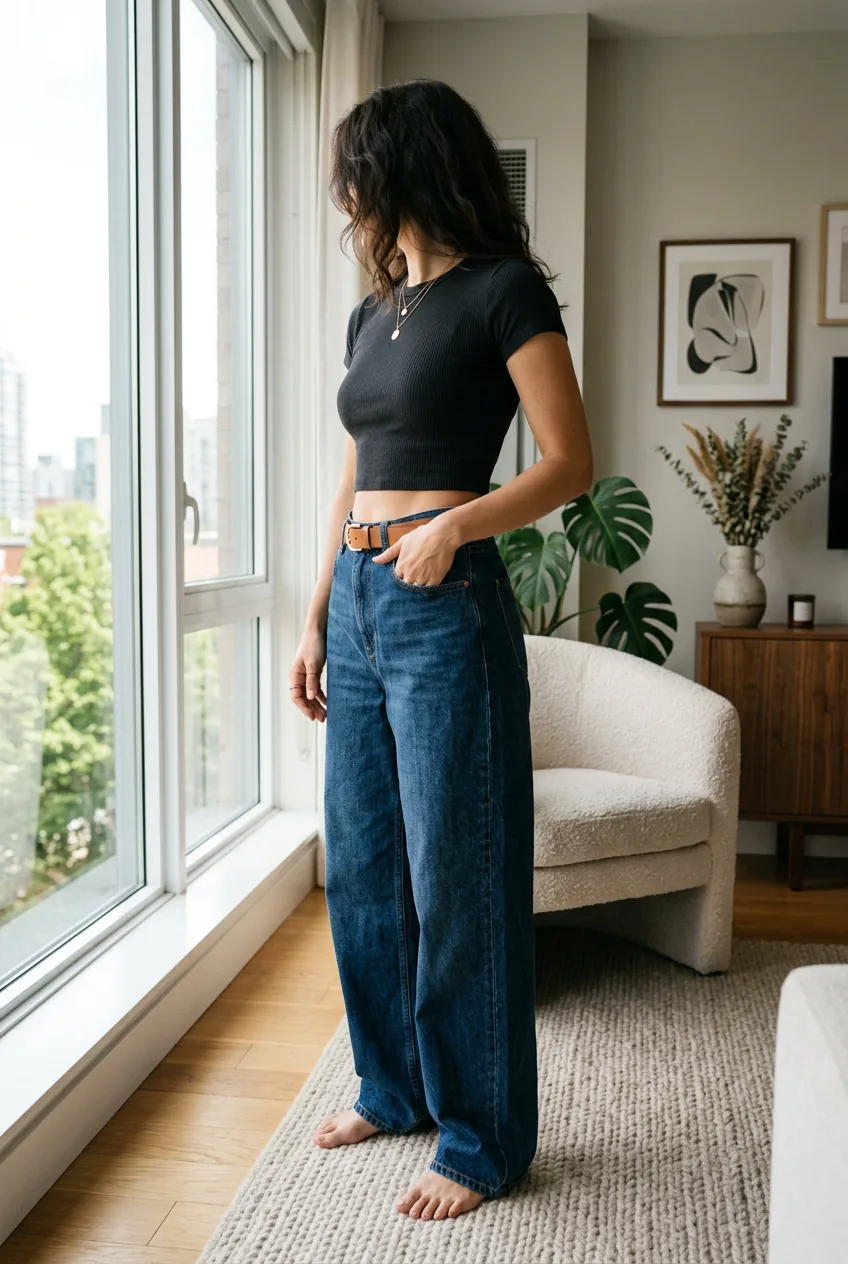
Step 1: Map Your Body’s Natural Thirds
Before you put on a single piece of clothing, you need to understand your body’s natural division points. Stand in front of a full-length mirror and identify three key lines: your shoulders, your natural waist (the narrowest point), and your hips.
Your upper third typically runs from your shoulders to just above your natural waist. Your middle third goes from there to your hip bones. Your lower third covers everything from your hips to your ankles.
Now here’s the crucial part: when you wear baggy jeans, you’re going to blur that middle and lower division. So your styling needs to work with just two clear sections — upper and lower. This is why the high waistline becomes so important.
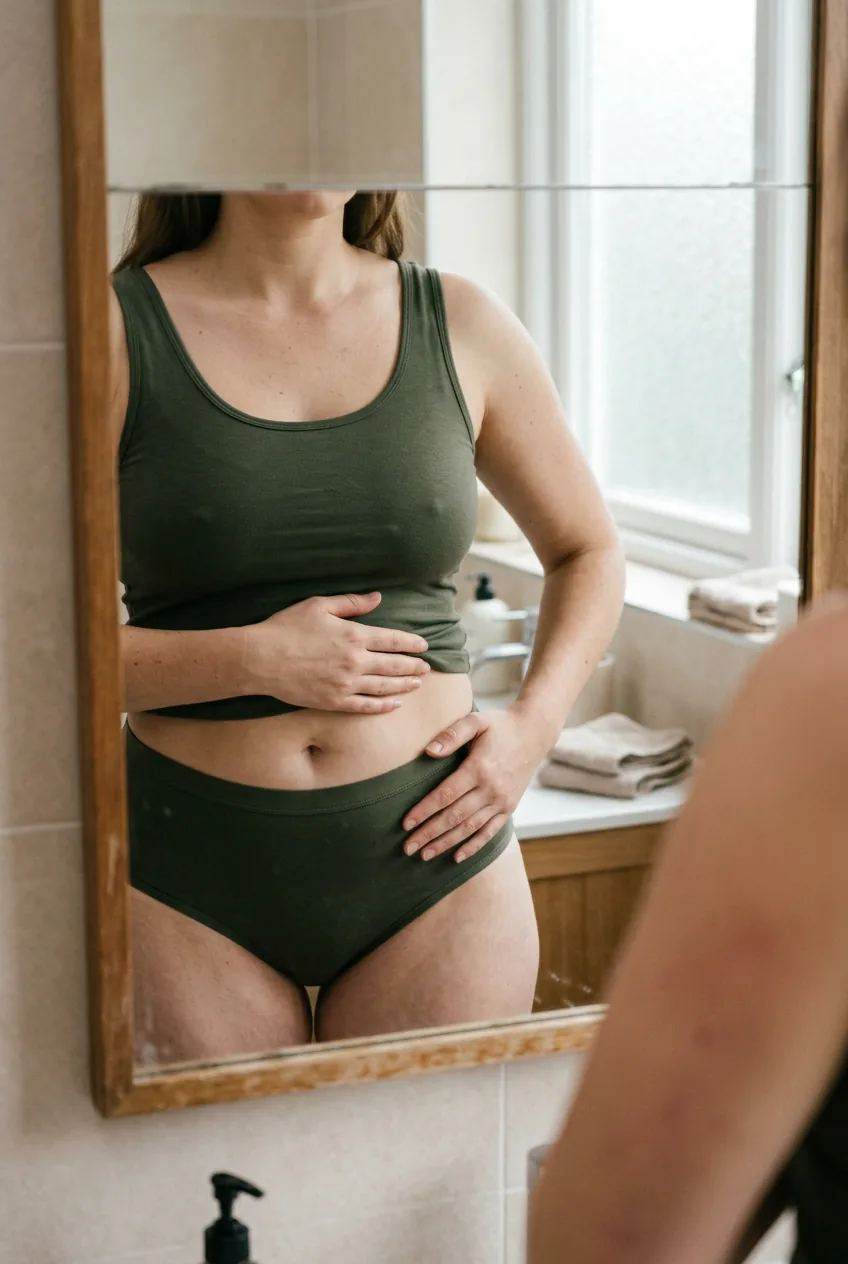
Step 2: Choose Your High-Waisted Foundation
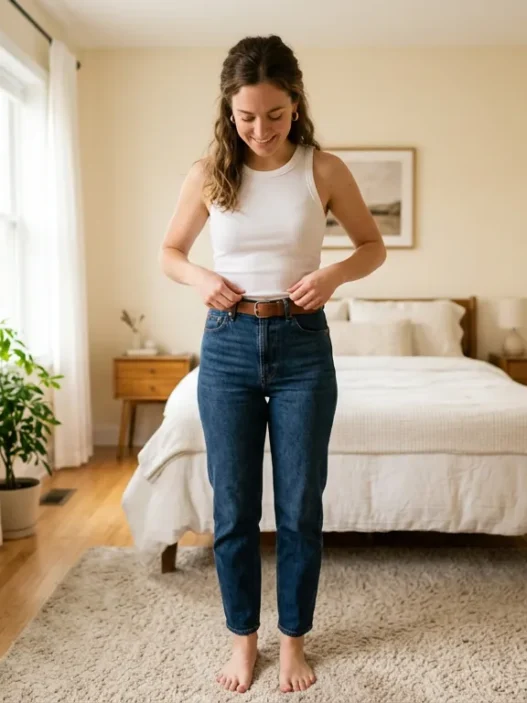
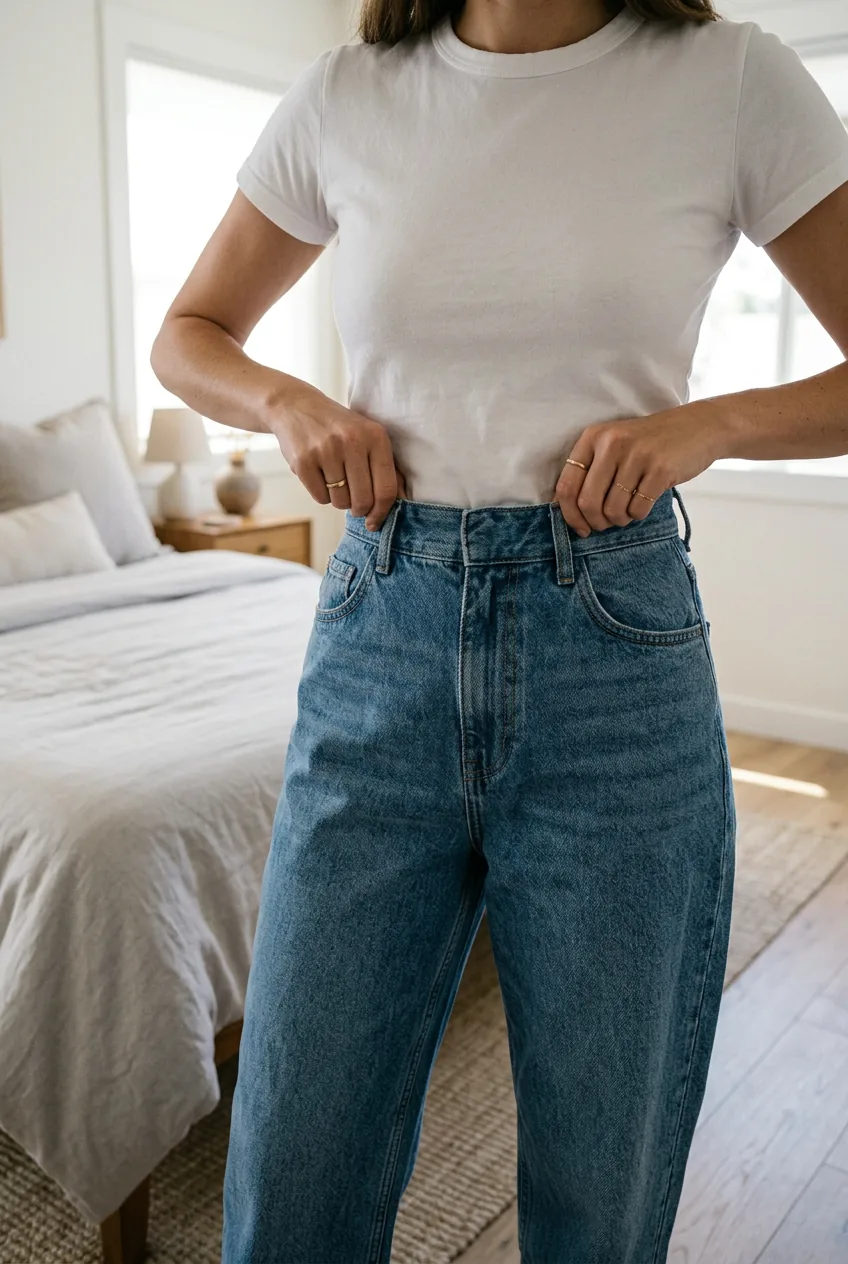
This step makes or breaks the entire outfit. You want baggy jeans that sit at or slightly above your natural waist — not at your hips, not at your ribcage. The waistband should be visible and create a clear division between your upper and lower sections.
I made the mistake of buying mid-rise baggy jeans thinking they’d be more comfortable. They weren’t. They created this awkward no-man’s-land around my midsection that made my torso look longer and my legs look shorter.
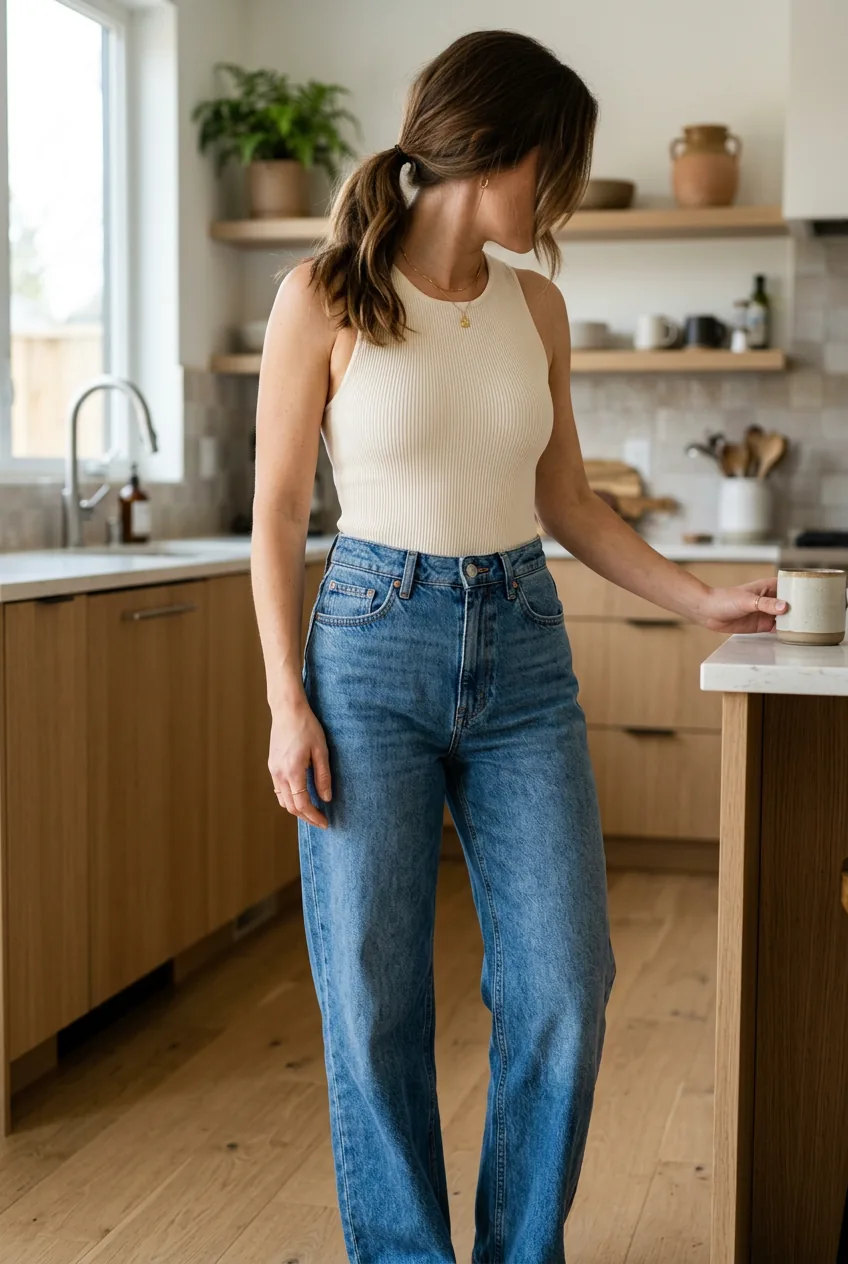
Look for jeans with a structured waistband that won’t gap or fold over when you sit. The rise should be high enough that when you tuck in a fitted top, there’s a clear waist definition. This creates your 1:2 proportion automatically.
Step 3: Master the Tuck and Hem Game
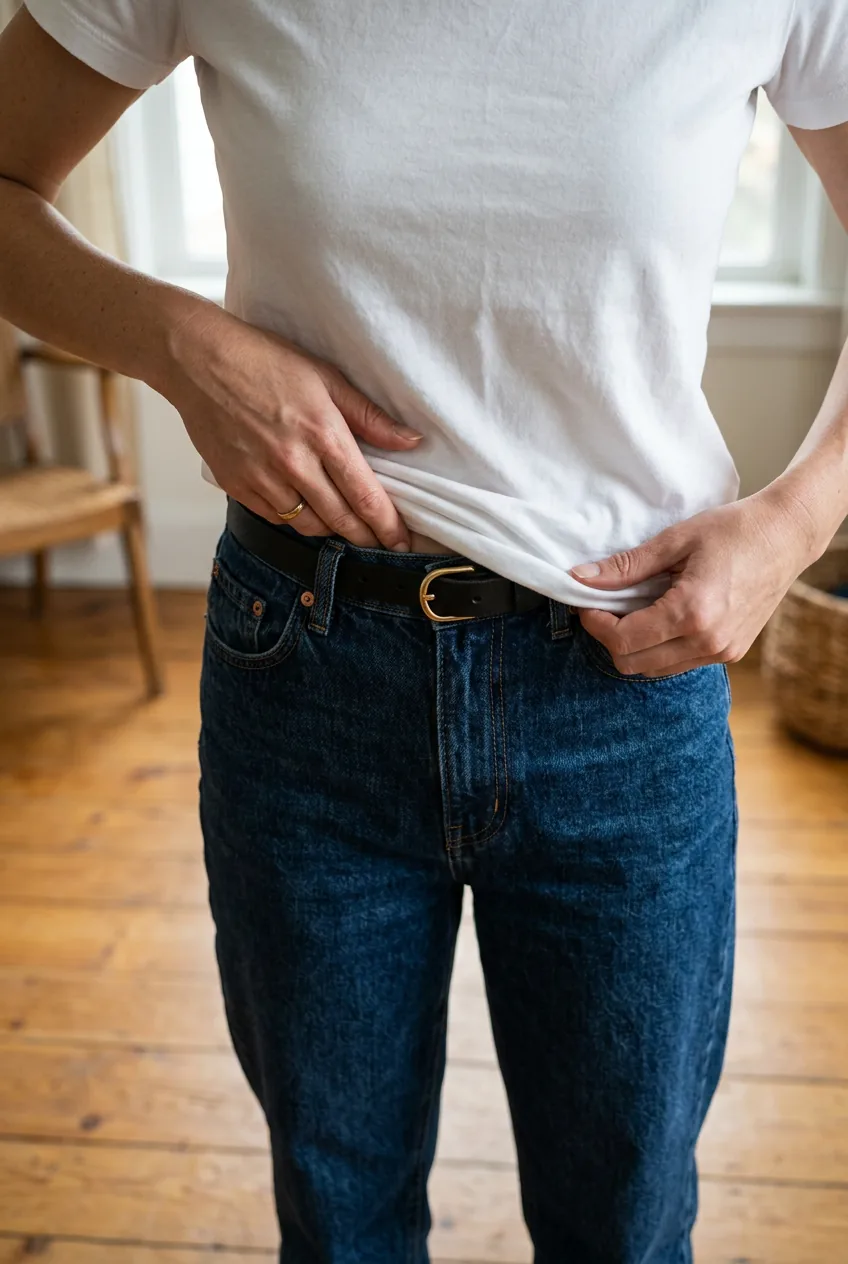
The tuck isn’t just about keeping your shirt in place — it’s about creating that crucial upper-third definition. But not every tuck works the same way with baggy jeans.
A full tuck works best with fitted or semi-fitted tops. Tuck the entire shirt into the waistband, then pull it out slightly at the sides to create a gentle blouson effect. This softens the line while maintaining the proportion.
For oversized tops, try a front tuck — just tuck the front center section into the jeans, leaving the sides loose. This creates visual interest and still defines your waist without looking too structured.
I spent weeks doing what I call the “messy tuck” — basically shoving fabric randomly into my waistband and hoping for the best. It never looked intentional. The game-changer was learning to smooth the fabric down first, then adjust the amount of blouson deliberately.
Step 4: Balance Your Upper Third
Since your baggy jeans are providing all the volume on the bottom, your top needs to be the counterbalance. This doesn’t mean skin-tight — it means fitted enough to show that you have a shape under there.
Fitted tees, bodysuit-style tops, and cropped sweaters work beautifully. The key is that the silhouette should skim your body rather than hide it. You want to see where your waist is, where your shoulders are, and get a sense of your actual proportions.
This is where trendy casual winter styling really shines — layering fitted pieces gives you so many options for creating that perfect upper-third balance.
Step 5: Nail the Shoe-to-Jean Transition
The hem length of your baggy jeans determines everything about how your legs look. Too long, and you’ll look stumpy. Too short, and the proportions get weird.
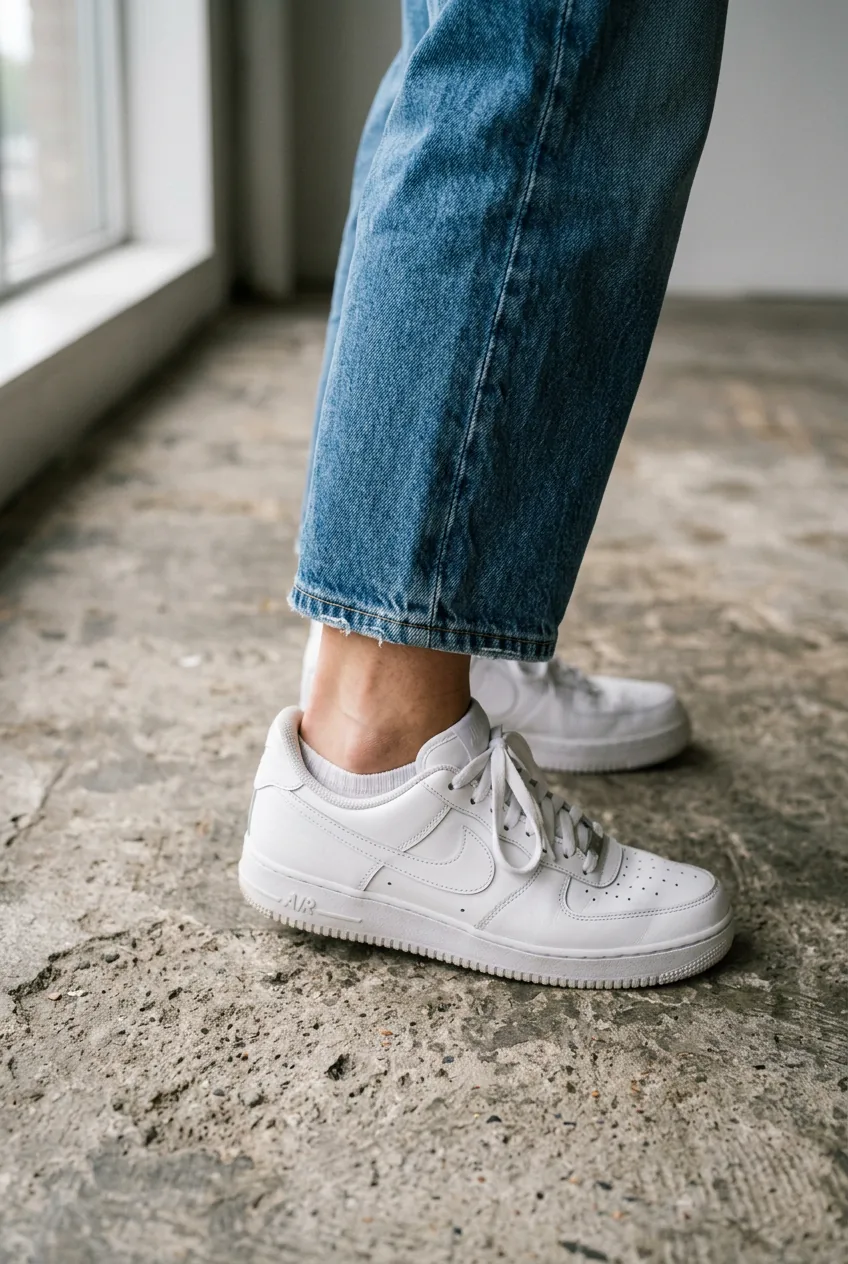
For sneakers and flat shoes, aim for the hem to hit just at the top of your shoe — you want maybe a quarter-inch break in the fabric. This creates a clean line without looking cropped.
With heels or boots, you can go slightly longer — the heel adds height, so you can afford a bit more fabric pooling at the ankle. But avoid the full puddle effect unless you’re going for a very specific editorial look.
Hemming techniques can completely transform how baggy jeans look on your body. It’s worth investing in professional alterations for your favorite pairs.
Step 6: Add Strategic Structure
The final step is adding one structured element that grounds the whole outfit. This could be a belt, a structured blazer, pointed-toe shoes, or a structured bag.
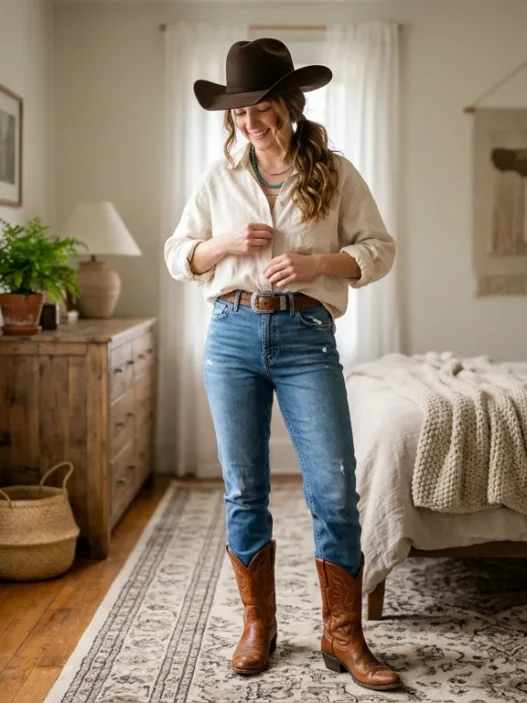
A belt is the most obvious choice, but it has to be the right belt. Thin belts can get lost in the proportions. Medium-width belts (about 1.5 inches) work best — substantial enough to be seen but not so wide that they overwhelm your upper third.
Alternatively, a structured blazer over your fitted top creates instant sophistication. The sharp lines of the blazer contrast beautifully with the soft lines of the baggy jeans. Just make sure the blazer hits at your waist or slightly below — you don’t want it competing with your jean waistline.
I love how versatile this approach is for casual winter outfit combinations — adding a structured coat or cardigan instantly elevates the whole look.

What People Usually Ask
Can petite women wear baggy jeans?
Absolutely, but the proportions become even more critical. Stick to a cropped or ankle-length baggy jean, and make sure your upper third is very fitted and defined. The 1:2 ratio is your best friend here.
What if I have a larger midsection?
High-waisted baggy jeans can actually be incredibly flattering because they skim over your midsection without clinging. Focus on a very smooth tuck and consider a longer top that just barely tucks in — this creates a clean line without emphasizing your waist.
How baggy is too baggy?
If you can’t see any suggestion of your leg shape at all, they’re probably too baggy. You want relaxed, not shapeless. The jeans should skim your thighs and have some taper toward the ankle.
Can I wear baggy jeans to work?
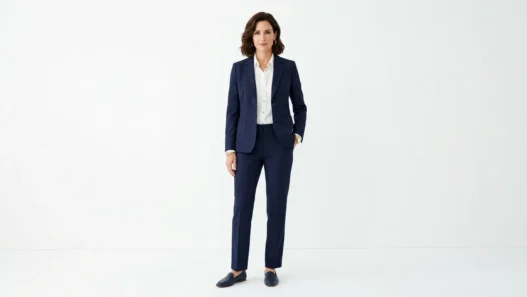
In many casual workplaces, yes — but styling becomes crucial. Pair them with a fitted blazer, structured top, and polished shoes. The key is making the outfit look intentional rather than like you just rolled out of bed.
After implementing this proportion-based approach, my baggy jeans went from “weekend only” to regular rotation pieces. The difference isn’t just in how they look — it’s in how confident I feel wearing them. Understanding the why behind the styling rules makes all the difference between looking effortlessly put-together and looking like you’re wearing someone else’s clothes.