







It started with a Tuesday morning and a pile of clothes I genuinely hated. I stood in front of my wardrobe, late for work, in that familiar spiral of having nothing to wear despite owning what felt like a small boutique’s worth of tops. Something clicked — or maybe snapped — and I made a decision that felt dramatic at the time but turned out to be the quietest, most clarifying thing I’ve ever done for myself. I would spend an entire year building only around casual hijabi outfits. Nothing elaborate. Nothing performative. Just real clothes for real days.
The Morning That Started Everything
I should back up. I’ve worn hijab for over a decade, so this isn’t a story about starting to cover. This is a story about what I wore underneath — or rather, what I piled around it without thinking. For years my approach to dressing was reactive. An event? Panic-buy something. A casual day? Dig out whatever was least wrinkled. The hijab was considered, intentional, beautiful. The rest of the outfit was chaos.
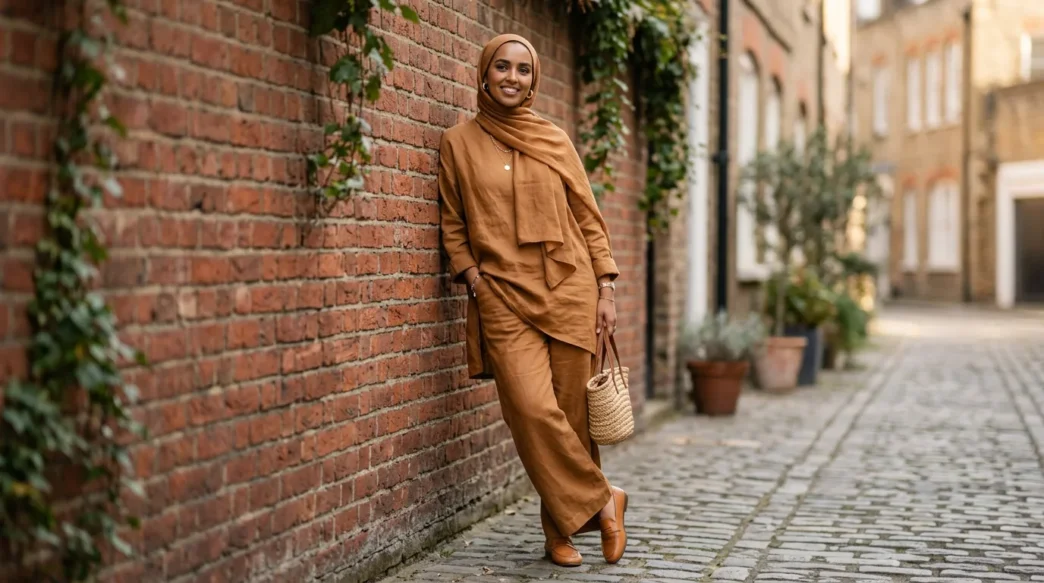
A friend of mine — someone whose wardrobe I’ve always quietly envied — once said something that lodged itself in my brain. She said, “I dress the same on Monday as I would if someone asked me to lunch unexpectedly. That’s the goal.” She wasn’t talking about anything fancy. She was wearing wide-leg linen trousers and a boxy linen shirt in the same caramel tone as her hijab. She looked effortless in the literal sense. Unforced.
That was the image I kept coming back to on that chaotic Tuesday. Not a trend, not a mood board — just a real person dressed in a real way that required no apology. I wanted that. I started that week.
The Pieces That Felt Right Immediately
Some things I tried didn’t work at all. An oversized blazer phase that made me look like I was drowning. A brief, unfortunate love affair with palazzo pants that were technically beautiful and practically impossible to walk quickly in. But a few pieces clicked from the very first wear — and those became the bones of everything.
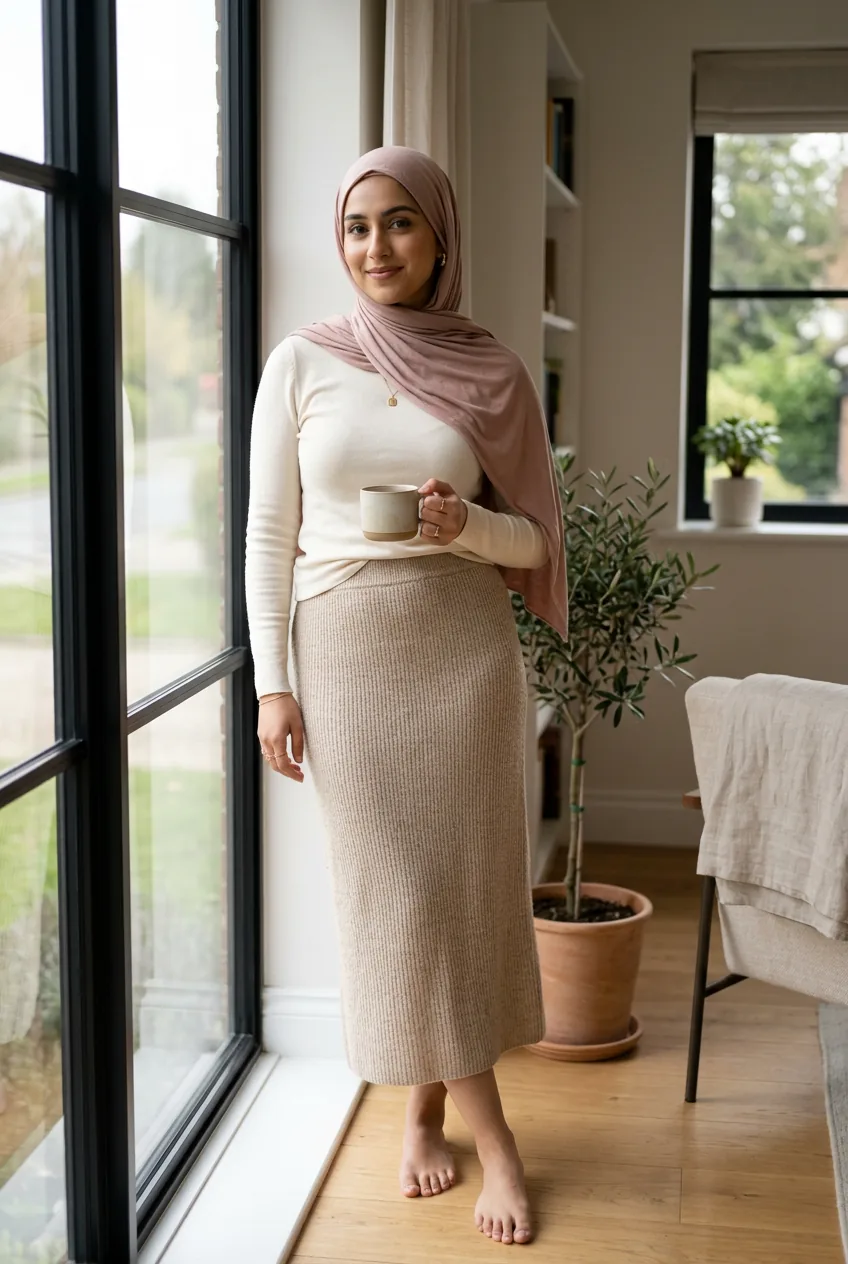
- Midi skirts in neutral knit — The kind that moves but doesn’t billow. Paired with a fitted long-sleeve top tucked just slightly at the front, this combination worked every single time. Coffee run, grocery store, an actual meeting I forgot I had. Done.
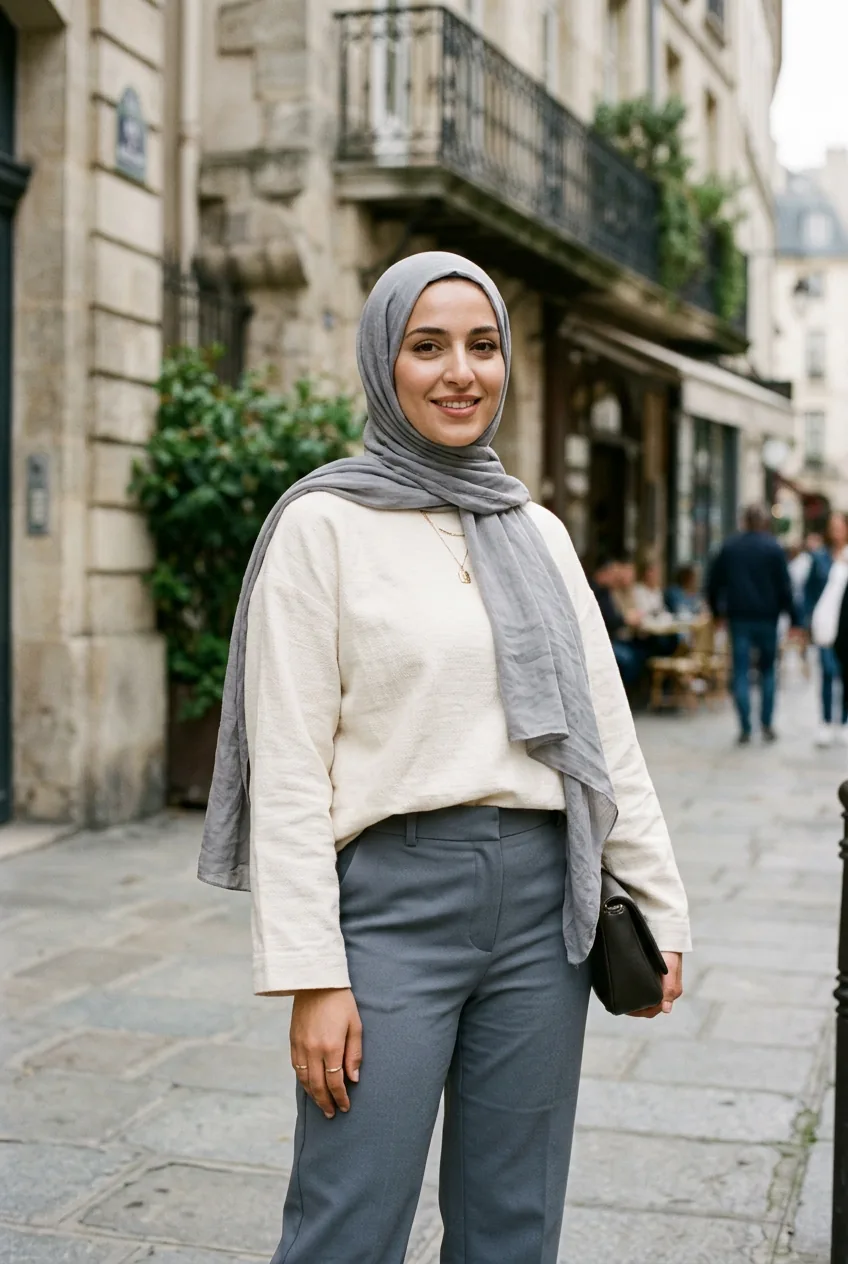
- Straight-leg trousers in muted tones — Not cigarette trousers, not wide-leg. The in-between cut that isn’t trying to be anything. Slate grey, warm sand, deep olive. These are the workhorses I didn’t know I needed.
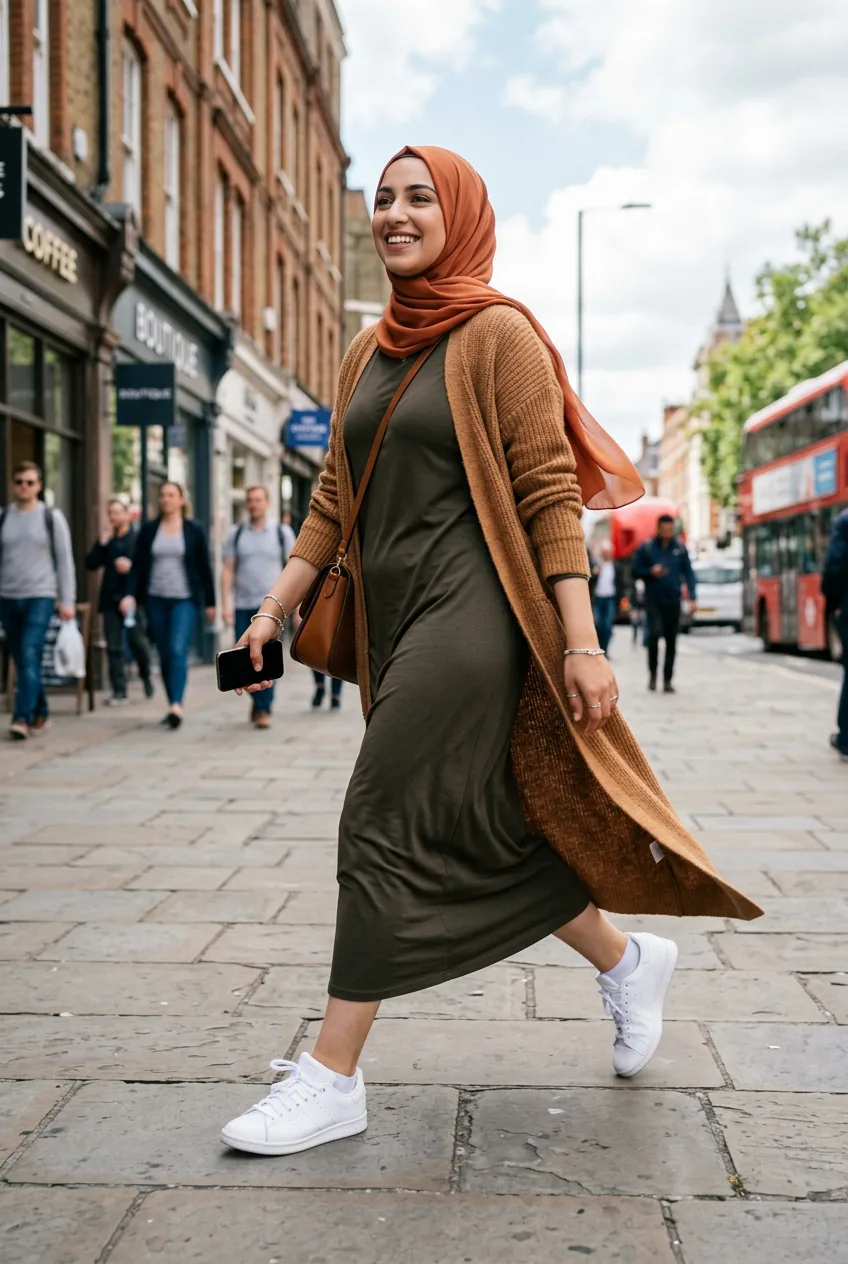
- Longline cardigans over simple dresses — This one surprised me most. A plain jersey dress that I’d been ignoring for two years became a completely different outfit under a longline cardigan. Coverage, shape, warmth — it solved three problems at once.
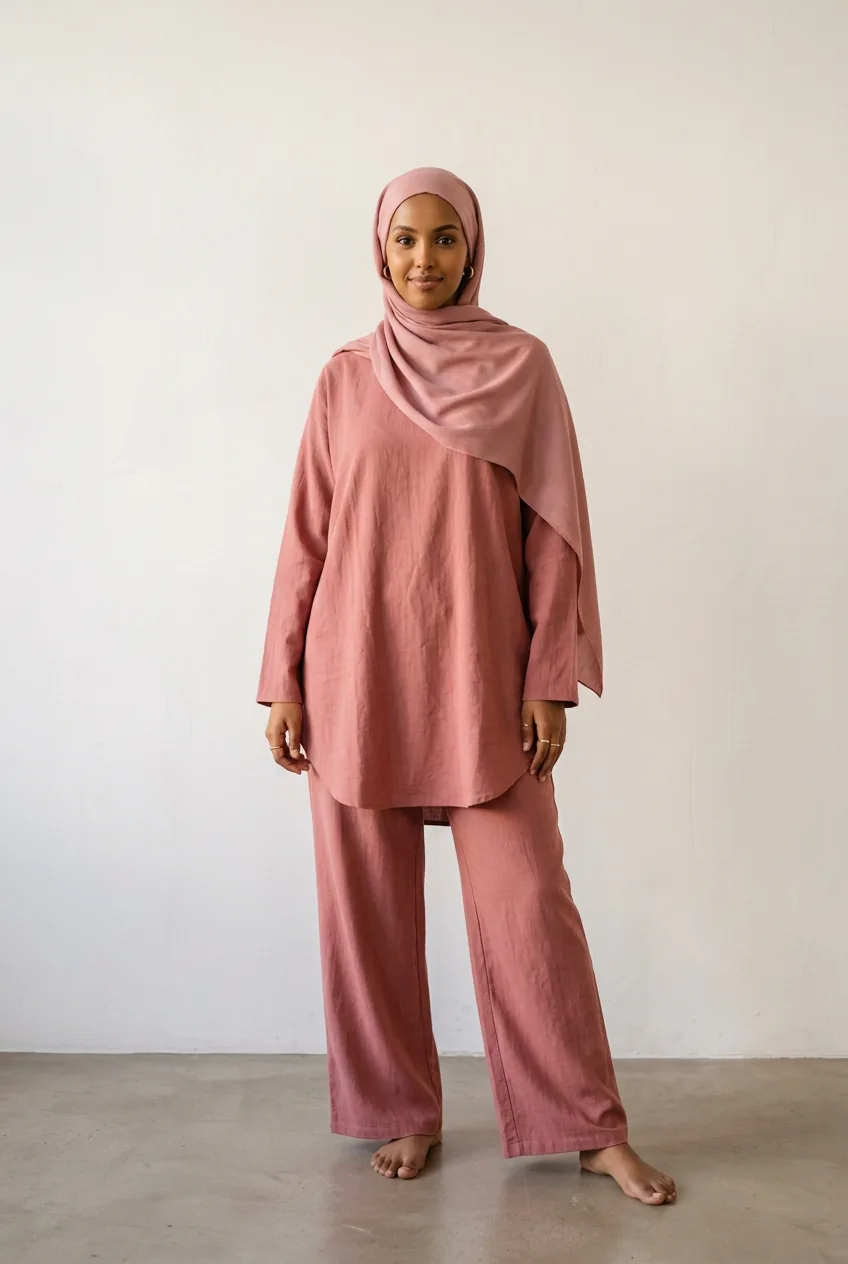
- Monochromatic layering — Matching or near-matching tones head to toe, including the hijab. When I first tried this I felt almost too simple. Then I walked past a mirror and stopped. It looked intentional in a way my previous outfits rarely had.
The common thread — literally and figuratively — was that these pieces made the hijab feel like part of the outfit rather than a separate element I was trying to style around. That shift was bigger than it sounds. Capsule wardrobe building completely changed how I thought about investing in fewer, better pieces.
A Styling Breakdown That Actually Clicks
The Unexpected Style Rules I Broke
Here’s my slightly controversial take: most “modest fashion” advice online is quietly limiting. Not intentionally, but structurally. The implicit message is often — add a layer here, cover that part there, work around this constraint. And I understand why that framing exists. But spending a year deliberately building my wardrobe made me realize I was following rules that had nothing to do with my actual taste.
Rule I broke: always balance volume. The fashion logic is — fitted top, wide bottom. Baggy top, slim bottom. I started pairing oversized tops with wide-leg trousers and the world did not end. In fact, it looked better to my eye. More relaxed. More street-style and less “following a formula.” The proportions work when the colors are cohesive, full stop.
Rule I broke: the hijab color should either match or contrast. I spent months trying to coordinate perfectly and then one morning grabbed a dusty rose hijab to go with a grey and white striped outfit and it was — fine? It was fine. Great, actually. It didn’t clash, it complemented. The anxiety I’d built around hijab color selection dissolved almost immediately once I stopped treating it like a math problem.
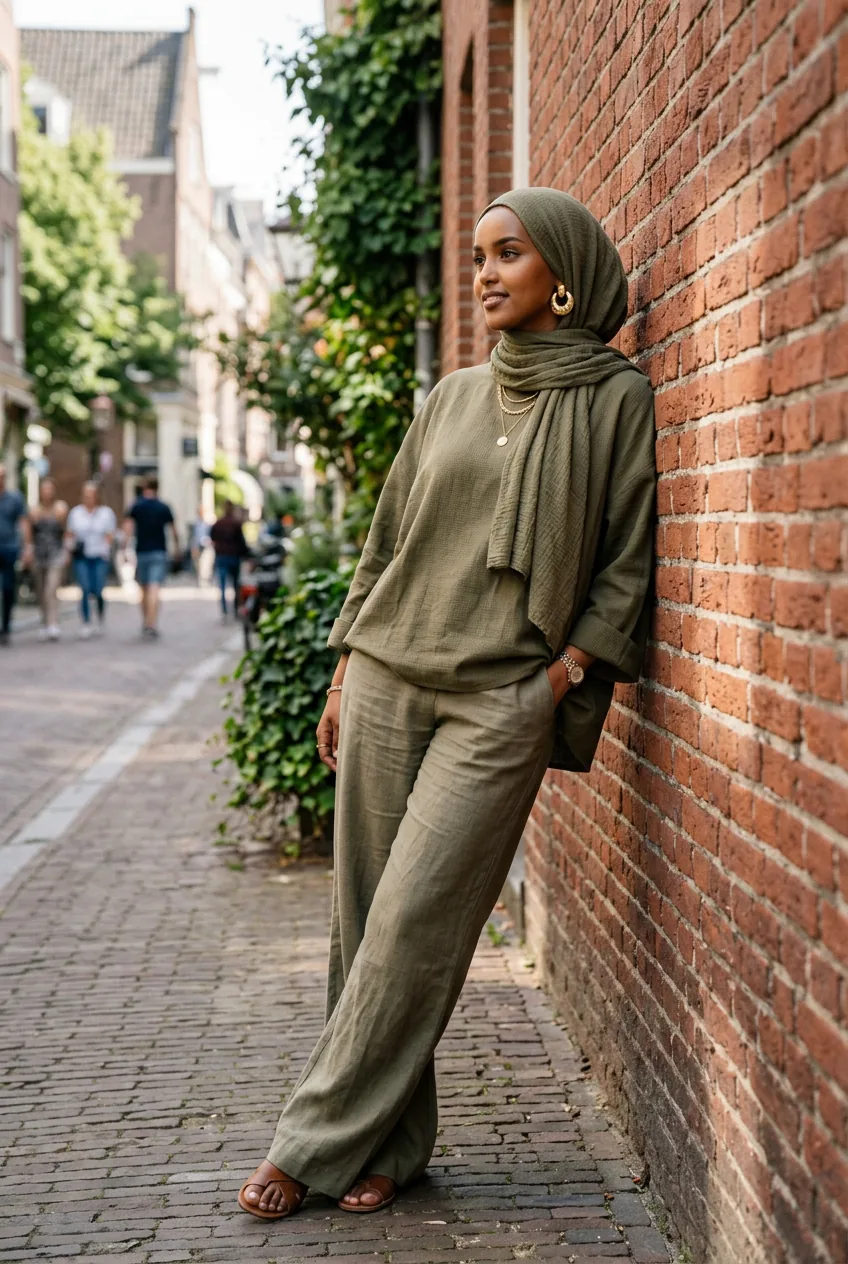
Rule I broke: casual means simple accessories. Some of my favorite outfits this year had a bold earring moment. A thick gold hoop peeking from beneath a loosely draped hijab is a whole thing. Don’t let anyone tell you otherwise.
If you’re building out your day-to-day rotation, The Effortless Girl’s Guide to Casual Outfits is genuinely one of the best breakdowns I’ve read for understanding how everyday style can feel considered without being fussy. It reframed how I think about effort levels entirely.
How Dressing Simply Made Me More Visible
I didn’t expect this part. When I started dressing more intentionally — more quietly, in a way — I thought I might fade a little. Less visual noise means less presence, right? Wrong. Completely wrong.
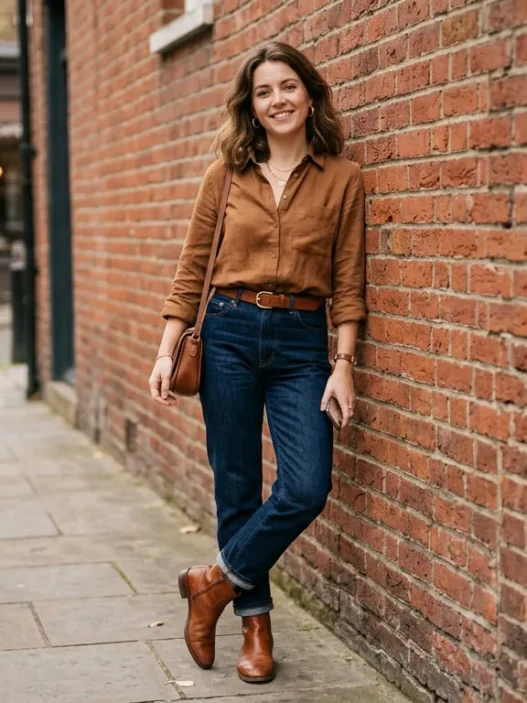
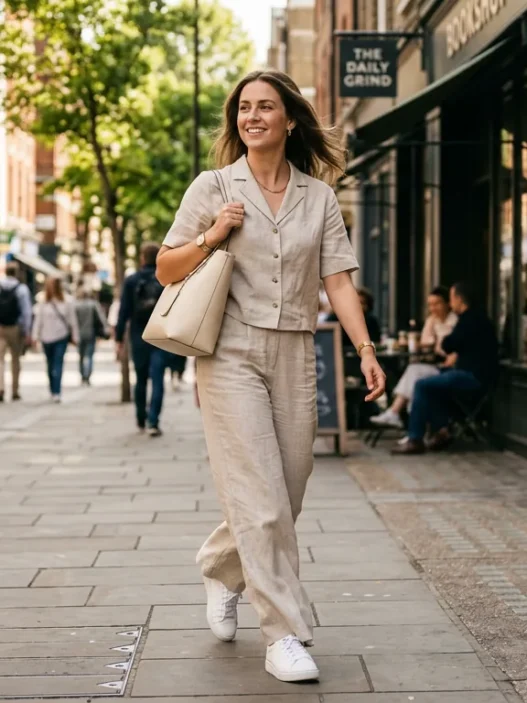
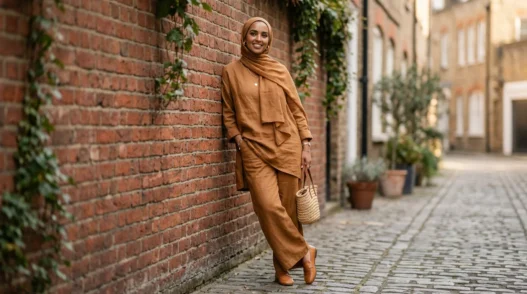
There’s a woman in this photo I keep coming back to — look at how she’s standing, that easy confidence in how she’s leaning against the wall. Nothing she’s wearing is shouting. And yet she is completely, undeniably there. That’s what intentional simplicity does. It doesn’t shrink you. It clarifies you.
I got more compliments in this year than I had in the previous three combined. Not because I was dressing up more — I was dressing up less, technically. But people could see the intention. “You always look so put-together” became something I heard regularly, and every time it surprised me a little, because I was putting in less effort than I used to. Choosing better, not trying harder.
There’s also something that happened internally. I stopped dreading getting dressed. The decision fatigue was gone because I had a genuine aesthetic framework instead of a wardrobe full of random impulse purchases. My mornings changed completely. That sounds small. It was not small.
And seasonally, I found I could adapt without starting over. For winter days, rather than abandoning my whole casual framework, I just layered it. The casual winter outfits for women approach I landed on was essentially my existing formula — midi skirt or straight trousers — with a long coat and thicker knit hijab. Simple. Winter layering tips helped me refine this without making the layers look bulky.
What I Actually Wear Now, Every Day
A year in, here’s what my actual rotation looks like. Not aspirational. Not the outfits I save to Pinterest at midnight. The real ones.
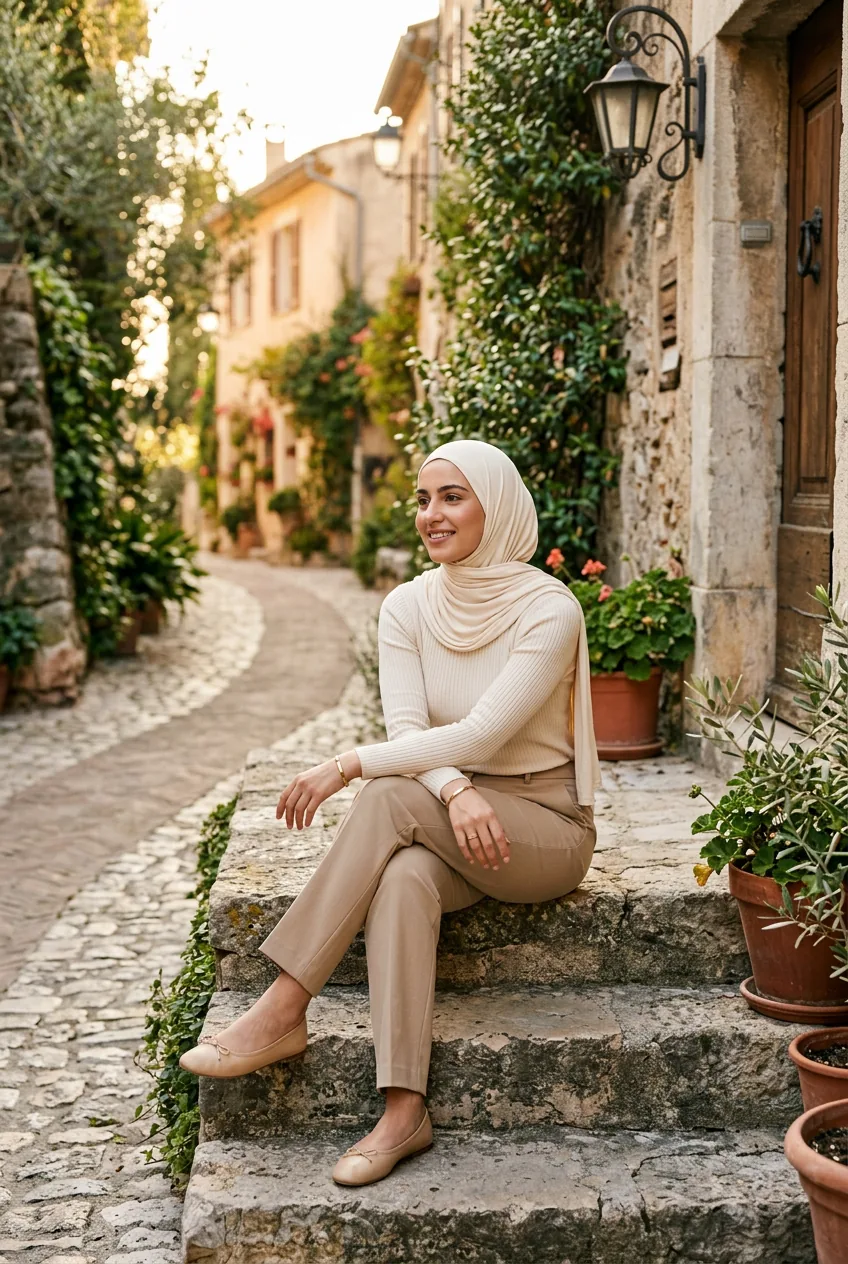
Most weekdays: a ribbed long-sleeve top in a neutral — cream, sage, warm white — tucked partially into a straight-leg trouser in a coordinating tone. A jersey hijab, loosely draped, in either the same tone or one step darker. Clean sneakers or simple ballet flats. That’s it. From a distance, it looks like I planned extensively. Up close, it took eight minutes.
Weekends lean toward knit midi skirts, more texture, sometimes a linen set in warmer months. I’ve become a person who owns multiple versions of the same trouser in different colors, and I have zero shame about this. Simple casual outfit ideas that work across multiple contexts are worth repeating — own your uniform.
The pieces I thought I’d miss? The statement tops. The printed blazers. The “fun” buys. I do not miss them. I thought variety meant chaos. Turns out variety, for me, means different color neutrals and occasionally a textured hijab instead of jersey. That’s variety enough when the base is solid.
For anyone building this kind of wardrobe from scratch, I’d really recommend looking at simple casual outfits across different effort levels — it helped me understand that there’s a spectrum here, and not every day requires the same formula. Some days you want throw-on-and-go. Other days you have five extra minutes and want to do something intentional with accessories. Having that spectrum mapped out was incredibly useful. And for winter-specific builds, trendy casual winter outfits gave me a ton of ideas for staying warm without losing the coherence of the aesthetic. Fabric guide for modest wear honestly changed how I shop — I stopped buying things that don’t drape well, which eliminated a lot of the problem outfits from my past.
Questions I Get About This
Don’t you get bored wearing similar things every day?
Genuinely, no — and I was certain I would. The boredom I used to feel came from a wardrobe that didn’t have a point of view, not from having too few pieces. When everything you own actually works together, putting it on feels satisfying rather than restrictive. The variety is in the small shifts: a different hijab fabric, a different shoe, a different tone. That’s enough.
Is this expensive to build?
It doesn’t have to be, but it does require a mindset shift. I spent less overall this year than in previous years because I stopped buying things impulsively. Fewer pieces, but pieces I actually wore 40+ times each. The price-per-wear calculation works heavily in favor of intentional buying. Start with one well-fitting trouser and one good longline cardigan — those two items alone can carry a lot of outfits.
How do you keep hijab colors cohesive with the outfit?
Once I gave up on perfect coordination, it got easier. My rule now: if the hijab is in the same tonal family as the outfit — warm tones with warm tones, cool with cool — it works. I keep my hijab collection mostly in neutrals (cream, dusty rose, warm grey, camel, soft terracotta) and they rotate across everything I own without clashing. Save one or two bold colors for when you specifically want a statement, and let the rest be quiet.
What if my lifestyle requires formal and casual looks?
The framework works across contexts more than you’d think. Straight-leg trousers with a silk blouse and simple heels become office-appropriate without leaving the aesthetic. A knit midi dress with pointed flats reads dressier than the same dress with sneakers. The bones of the wardrobe stay the same — you’re just adjusting which version of each item you reach for. The effort level shifts; the aesthetic doesn’t.
A year later, I still stand in front of my wardrobe in the morning. But I don’t spiral anymore. I just pick. And quietly, that has been the biggest change of all.