











I used to spend twenty minutes every morning staring into my closet, holding up different blazers against different blouses, wondering if navy pants worked with that striped top. The mental gymnastics of putting together business casual outfits was exhausting before I’d even had coffee. Then I realized something: the most stylish people I knew weren’t constantly reinventing their look. They had a formula.
What’s in My Corporate Uniform Formula
The Anchor Pieces
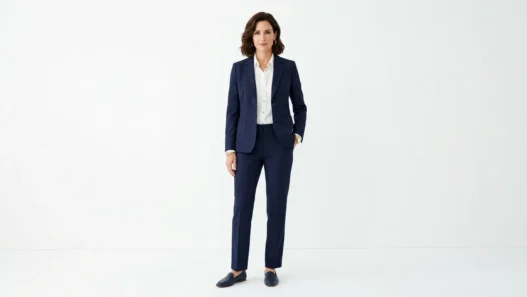
My corporate outfits uniform revolves around four pieces that never change. They’re the constants in an equation where everything else can shift slightly.
The navy blazer is my North Star. Not black — navy. It works with more colors than you’d think, and it doesn’t show lint the way black does. I have two identical ones from the same brand, so I can rotate them without thinking. Same cut, same buttons, same everything. When one goes to the cleaners, the other steps in seamlessly.

White button-down shirts are my second anchor. I own five. Crisp cotton, same brand, same fit through the shoulders and waist. No interesting collars or cuff details that might look dated in two years. Just clean lines that work under blazers or on their own. I replace them the minute they start looking tired.
Then there are the black trousers. Two pairs, both from the same manufacturer. Straight leg, not skinny, not wide. They hit right at my ankle bone when I’m wearing low heels. The rise is high enough that I never have to think about my shirt staying tucked. These trousers are workhorses — I can wear them with anything in my office wardrobe and they always look right.
The fourth anchor is black leather flats. Same style, same brand. I keep two pairs in rotation because nothing kills the uniform effect like scuffed shoes. They’re comfortable enough for long days but polished enough for client meetings. No embellishments, no trends — just good leather that gets better with age.

The Three Variables I Allow Myself
Here’s where the formula gets interesting. With my four anchors locked down, I allow myself exactly three variables. Not four, not five. Three. This keeps things from spiraling back into decision paralysis.
Variable one: accessories. A silk scarf changes everything about a basic white shirt and blazer combo. I have about eight scarves in different patterns and colors — some geometric, some floral, one leopard print that makes me feel slightly dangerous in budget meetings. Sometimes I swap the scarf for a statement necklace or interesting earrings, but never all three together.
Variable two: the third layer. This is where I get creative with the pieces underneath or on top of my blazer. A thin cashmere sweater instead of the white shirt. A silk camisole when it’s hot. In winter, a wool coat in camel or gray. The layering methods completely change the outfit’s personality while keeping the formula intact.

Variable three: my bag. I alternate between a structured black leather tote for client days and a smaller crossbody in cognac for internal meetings. The bags are different enough to make the outfit feel fresh, but both work with the color palette I’ve committed to.
That’s it. Blazer, shirt, trousers, flats — then three small decisions. It sounds restrictive, but it’s actually liberating. I spend my creative energy on work projects instead of wondering whether my shoes match my belt.
See the Formula in Action
What This Cuts From My Mornings
The time savings are obvious, but the mental space this creates is what really surprised me. I used to waste so much brain power on outfit anxiety. Standing in front of the mirror, second-guessing color combinations, changing twice before leaving the house.
Now I get dressed in under five minutes. The clothes are always clean and ready because I know exactly what I need. My dry cleaning routine is predictable. My shopping is focused — when something wears out, I replace it with the identical item. No wandering through stores wondering if I “need” a burgundy blazer to mix things up.

But here’s what I didn’t expect: having a uniform made me more confident, not less. When you’re not wondering if your outfit works, you can focus entirely on what you’re saying and how you’re presenting your ideas. There’s something powerful about knowing you look put-together without having to think about it.
The capsule wardrobe benefits extend beyond just getting dressed. My closet is smaller but everything works together. I never buy something impulsively that doesn’t fit the system. My cost-per-wear on every piece is incredibly high because I actually wear everything regularly.
Anna Wintour has worn basically the same silhouette for decades, and no one calls her boring. Steve Jobs had his black turtlenecks. When you remove clothing decisions from your daily routine, you free up mental energy for decisions that actually matter.
When I Break the Uniform
I’m not a robot. Sometimes the formula gets temporarily shelved, and I’ve learned to recognize when that makes sense versus when it’s just restlessness.
Client presentations where I know they’ll be in jeans and hoodies? I’ll swap my trousers for dark jeans and keep everything else the same. The blazer and white shirt still signal professional, but the jeans help me blend in instead of looking overdressed. I learned this the hard way after showing up to a startup pitch looking like I was interviewing to be their mother.

Summer heat breaks the uniform more than anything else. When it’s 95 degrees, blazers become torture devices. I switch to sleeveless blouses in white, navy, and light blue, but I keep the same trousers and flats. The silhouette stays consistent even when the pieces change for practicality.
Special events get special treatment, obviously. Company holiday parties, awards ceremonies, networking events where looking memorable matters — these call for breaking the formula entirely. But I’ve noticed I feel less confident in these one-off outfits now. The uniform has become my armor, and stepping outside it feels vulnerable.
Here’s my controversial take: I think the business professional uniform approach actually makes you more stylish, not less. When you’re not chasing trends or trying to express your entire personality through your work clothes, you develop a clearer sense of what actually looks good on your body. You invest in quality over quantity. You present a consistent, polished image that people remember.

The seasonal transitions are where I allow the most variation. Winter means adding elegant winter layers, and summer might call for lighter fabrics and colors. But the basic formula stays intact — it just adapts to the weather.
Most mornings, I reach for the same pieces and feel grateful for the simplicity. Getting dressed isn’t a creative challenge anymore. It’s just something I do efficiently so I can spend my creativity elsewhere. And honestly? That feels like the most stylish choice of all.
Questions I Get About This Formula
Don’t you get bored wearing basically the same thing?
Surprisingly, no. The small variations keep it interesting, and I found I was getting bored with decision fatigue more than I ever got bored with the clothes themselves. Plus, I save my fashion creativity for weekends and special events where it’s more fun anyway.
What if someone notices I’m wearing a uniform?
In three years of doing this, exactly one person has commented — and they asked where I shop because they liked how pulled-together I always look. Most people don’t pay as much attention to your clothes as you think they do.
How do I choose the right anchor pieces for my body type?
Start with pieces you already love and wear frequently. If you feel confident in straight-leg trousers but hate how you look in skinny pants, your anchor should be straight-leg. The uniform only works if you genuinely like how the base pieces fit your body.
Is this approach too limiting for creative industries?
I work in marketing, which definitely values creativity, and I’ve never felt limited. If anything, having a reliable professional look freed up mental space for creative thinking. But if your workplace expects fashion-forward looks, you might need more variables or a different approach entirely.