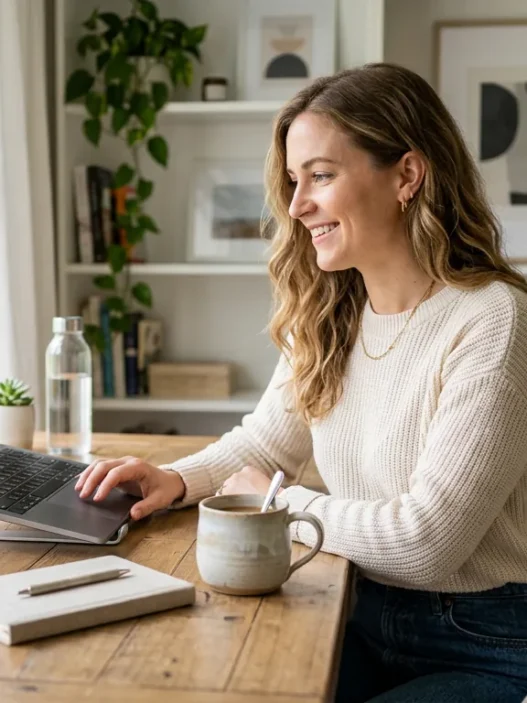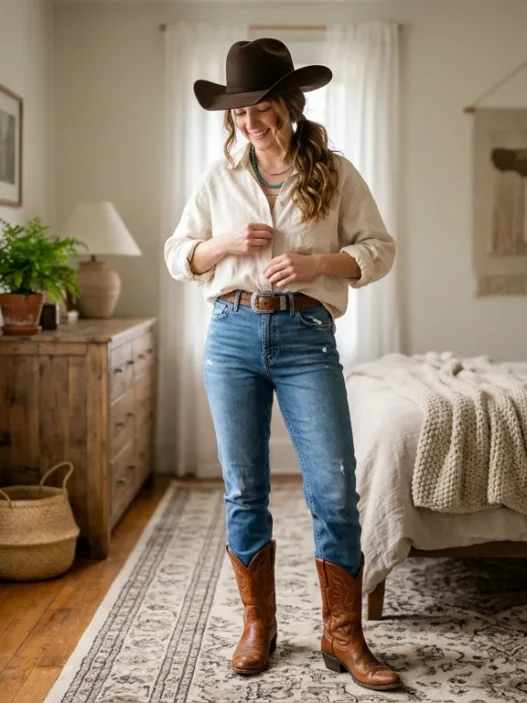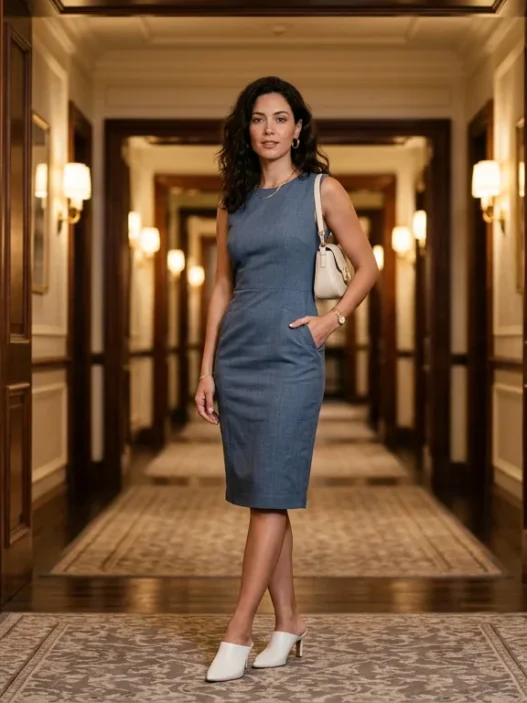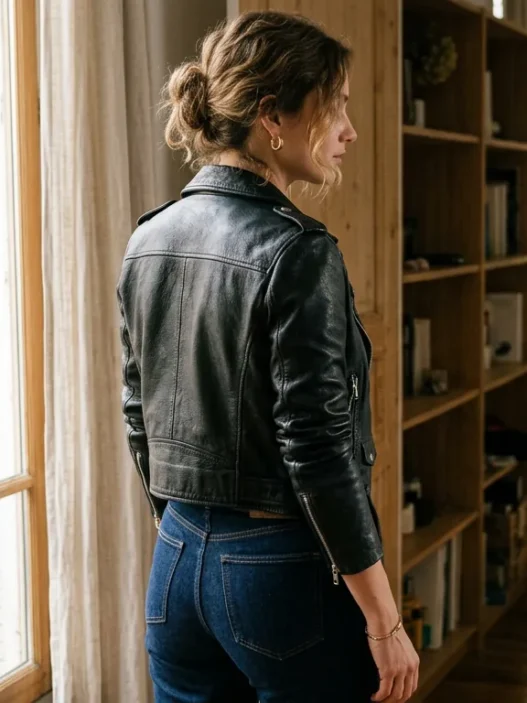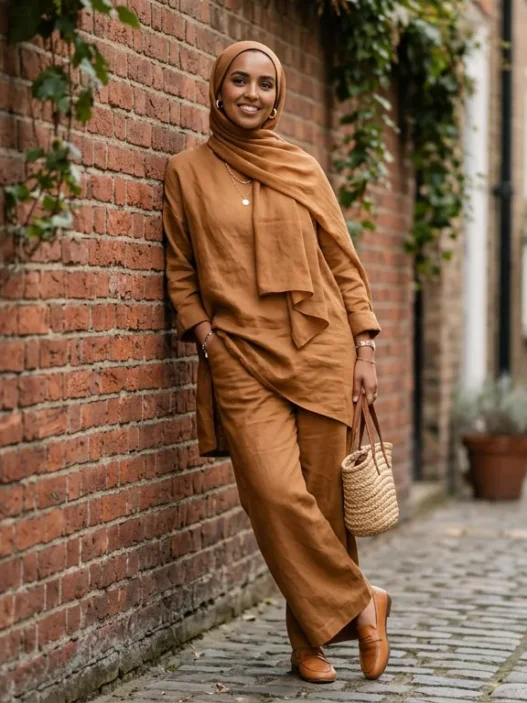







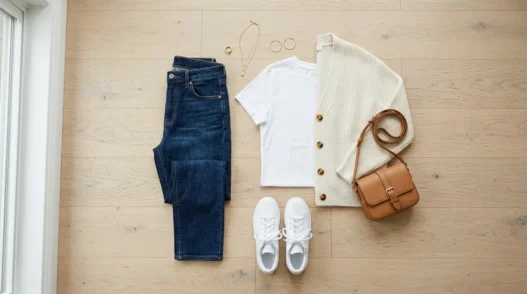
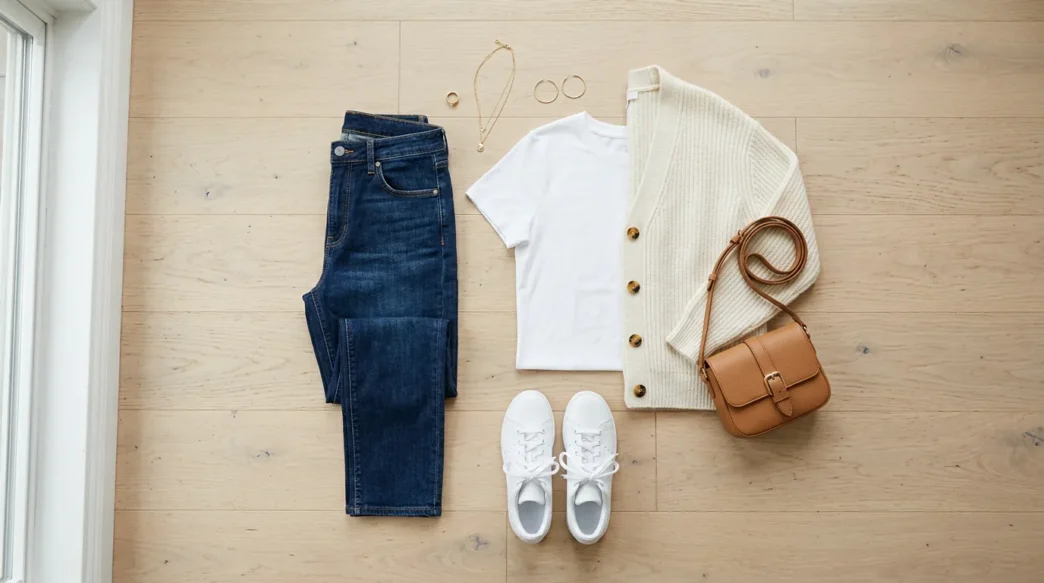
I used to stand in front of my closet every morning feeling completely overwhelmed by all the casual outfit inspiration I’d saved on Pinterest. So many beautiful flat lays and styled looks, but I had no clue how to translate them into something I could actually wear. After way too many mornings running late because I tried on five different combinations, I finally figured out a system that works.
Your Casual Outfit Journey Starts Here
Before we dive in, let me tell you what you’ll need to make this work. I’m not talking about buying a whole new wardrobe — most of this is probably already hanging in your closet.
What you’ll need:
- One good pair of jeans that fit you well (any style you love)
- A few basic tops in colors you actually like wearing
- One cardigan, blazer, or denim jacket
- Comfortable shoes you can walk in
- A mirror (full length is ideal, but any will do)
- Your phone camera for quick outfit checks
- About 15 minutes to experiment
First Things First — You’re Not Going to Look Weird
The biggest fear I had when trying to recreate casual outfit inspiration was looking like I was trying too hard. You know that feeling when you put together something that looks amazing on someone else, but on you it feels… off?
Here’s what I learned: casual outfit inspo isn’t about copying someone else’s exact look. It’s about understanding why their outfit works and adapting those principles to your own style and body.
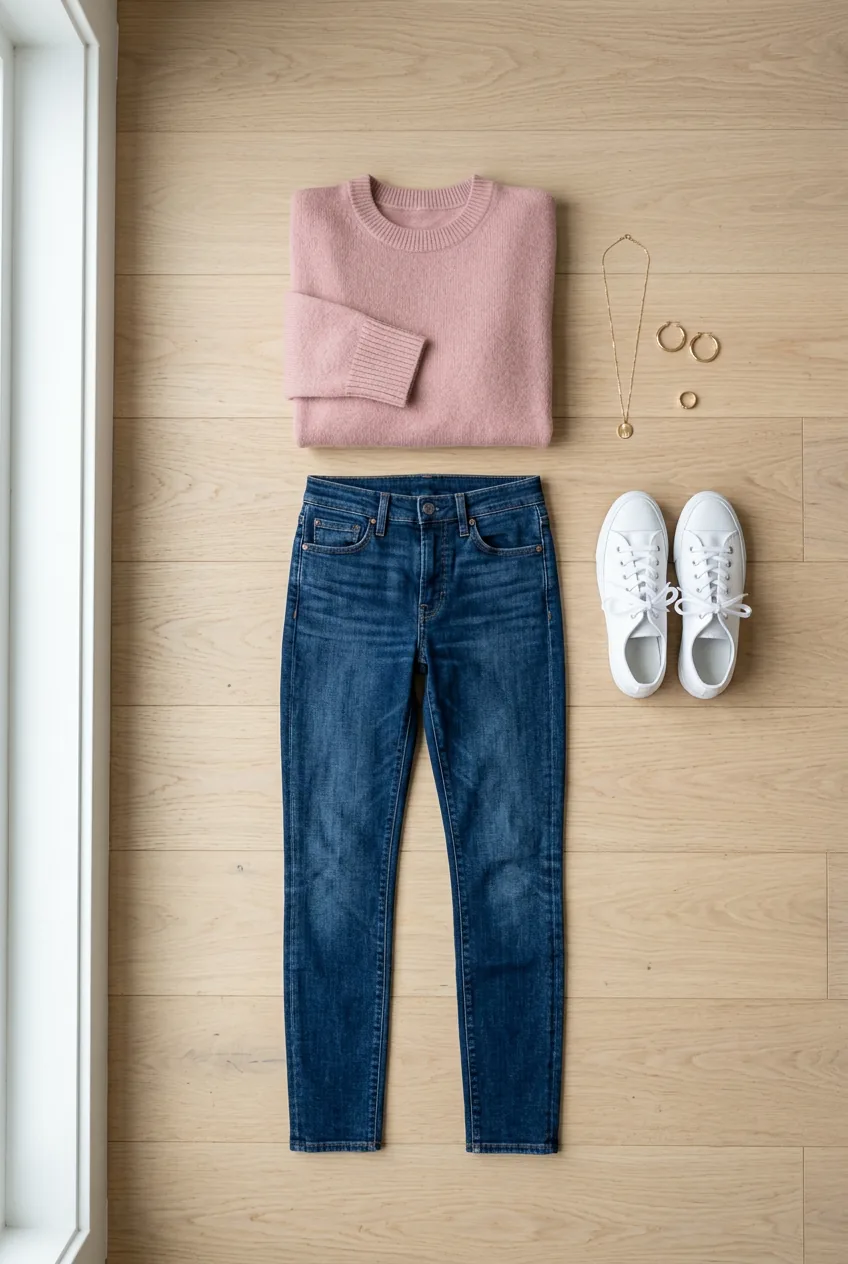
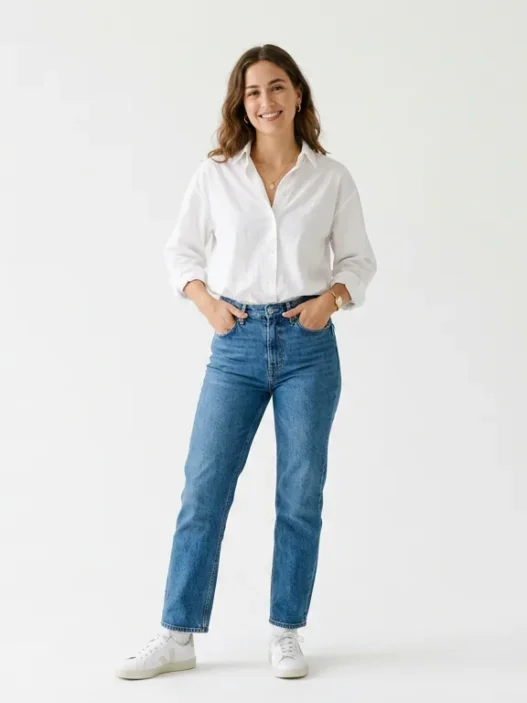
Start by taking a photo of yourself in your most comfortable, go-to casual outfit. I’m serious about this step. This is your baseline — the outfit where you feel most like yourself. We’re going to build from here, not throw it all away and start over.
Look at what makes this outfit work. Is it the fit of your jeans? The color of your favorite sweater? The way your sneakers make everything feel effortless? These are your style anchors, and they’re going to guide every outfit decision from now on.
Start With What You Actually Own (And Love)
This step saved my sanity and my bank account. Instead of looking at outfit inspiration and immediately thinking “I need to buy that exact top,” I started looking for pieces in my closet that could create a similar vibe.
Pull out everything you genuinely like wearing. Not the things you think you should like, or the pieces you bought because they were on sale. The stuff that makes you feel good when you put it on.
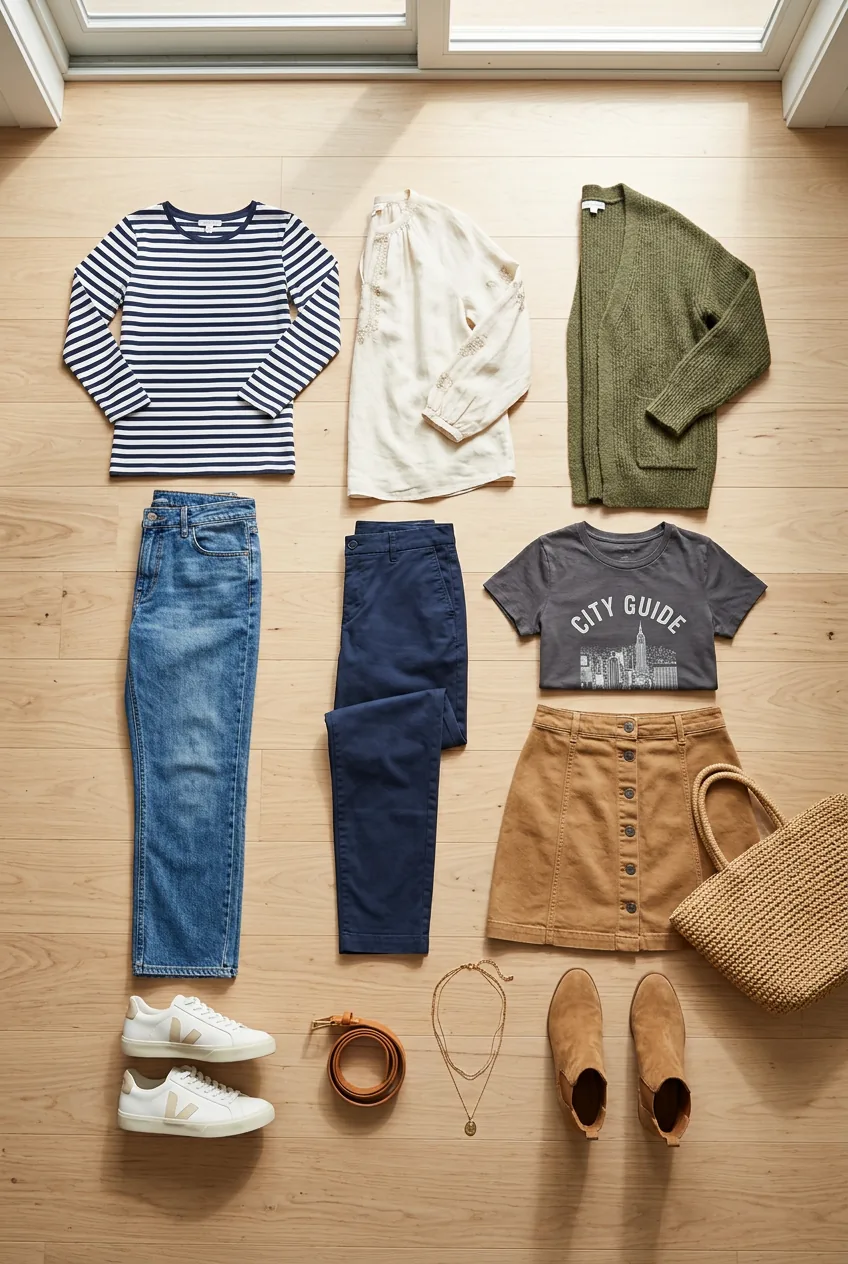
Now here’s the game-changer: lay them out on your bed and start making combinations you’ve never tried before. That flowy blouse you always wear with dress pants? Try it with your favorite jeans. The cardigan you only wear over dresses? See how it looks over a simple tee and jeans.
I discovered so many “new” outfits this way. My striped long-sleeve tee that I’d only ever worn alone became perfect for layering under a slip dress. My black ankle boots worked just as well with wide-leg pants as they did with skinny jeans. Sometimes the best casual outfit ideas are hiding right in your own closet.
The Foundation Piece That Changes Everything
Every great casual outfit has one piece that everything else builds around. I call it the foundation piece, and it’s usually the item that fits you best or the one you feel most confident wearing.
For me, it’s almost always my dark wash straight-leg jeans. They fit perfectly, they go with everything, and I know I look good in them. Once I put those on, building the rest of the outfit becomes so much easier.
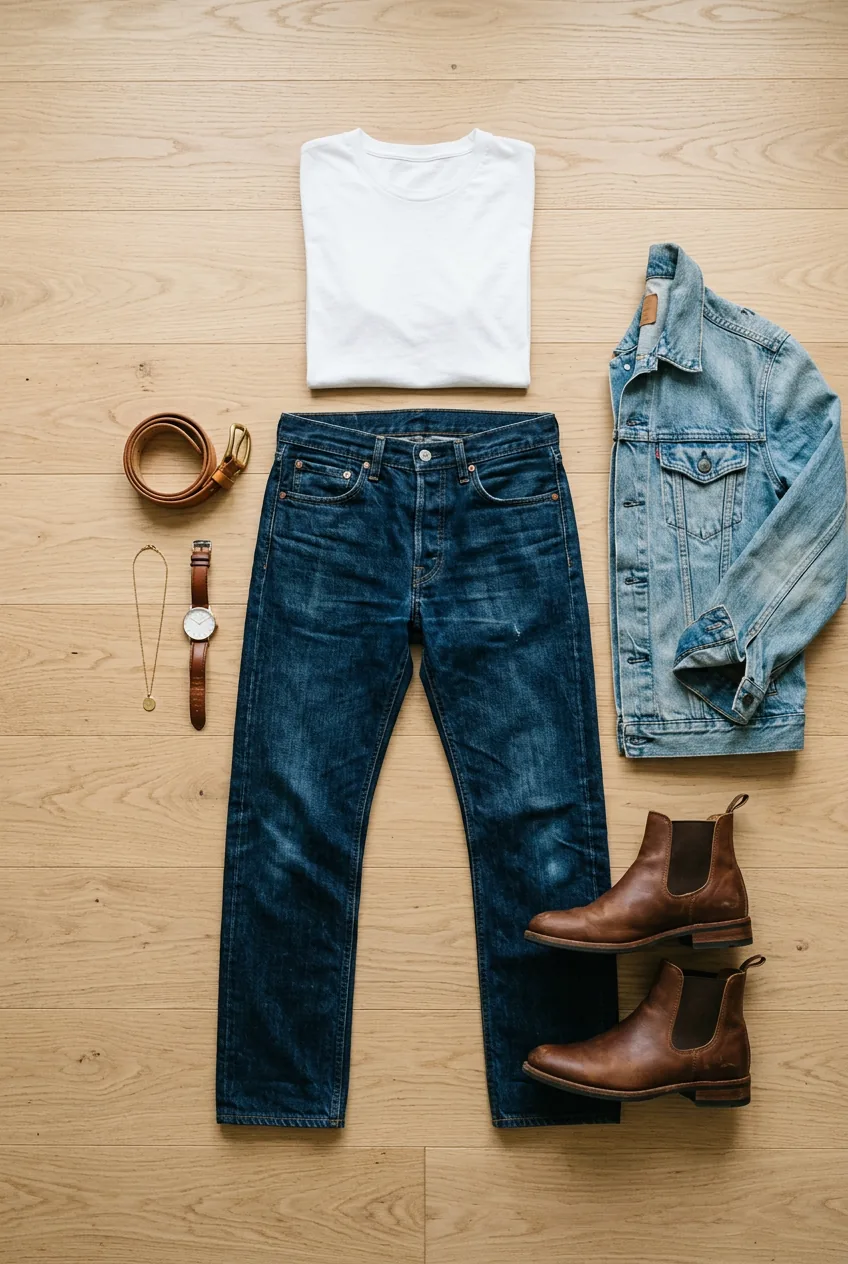
Your foundation piece might be different. Maybe it’s a perfectly fitted white tee, a blazer that makes your shoulders look amazing, or a midi skirt that hits at just the right spot. The key is identifying what it is and starting there every time you get dressed.
Once you’ve got your foundation on, everything else becomes a supporting character. If your foundation is simple (like basic jeans), you can add more interesting pieces on top. If your foundation is already a statement (like a bold colored skirt), keep everything else more subdued.
I used to think I needed to plan out my entire outfit before getting dressed. Big mistake. I’d end up changing three times because I was trying to force pieces together that didn’t want to work. Starting with one foundation piece and building from there changed everything.
Don’t Worry If This Happens — Mixing Patterns
Pattern mixing used to terrify me. I’d see these gorgeous outfits with stripes and florals together, or plaid mixed with polka dots, and I thought there was some secret formula I didn’t know.
Turns out, there’s really only one rule: make sure the patterns are different scales. A small polka dot with a chunky stripe works. A tiny floral with a large plaid works. What doesn’t work is trying to mix two patterns of the same size — they’ll compete for attention and your eyes won’t know where to focus.
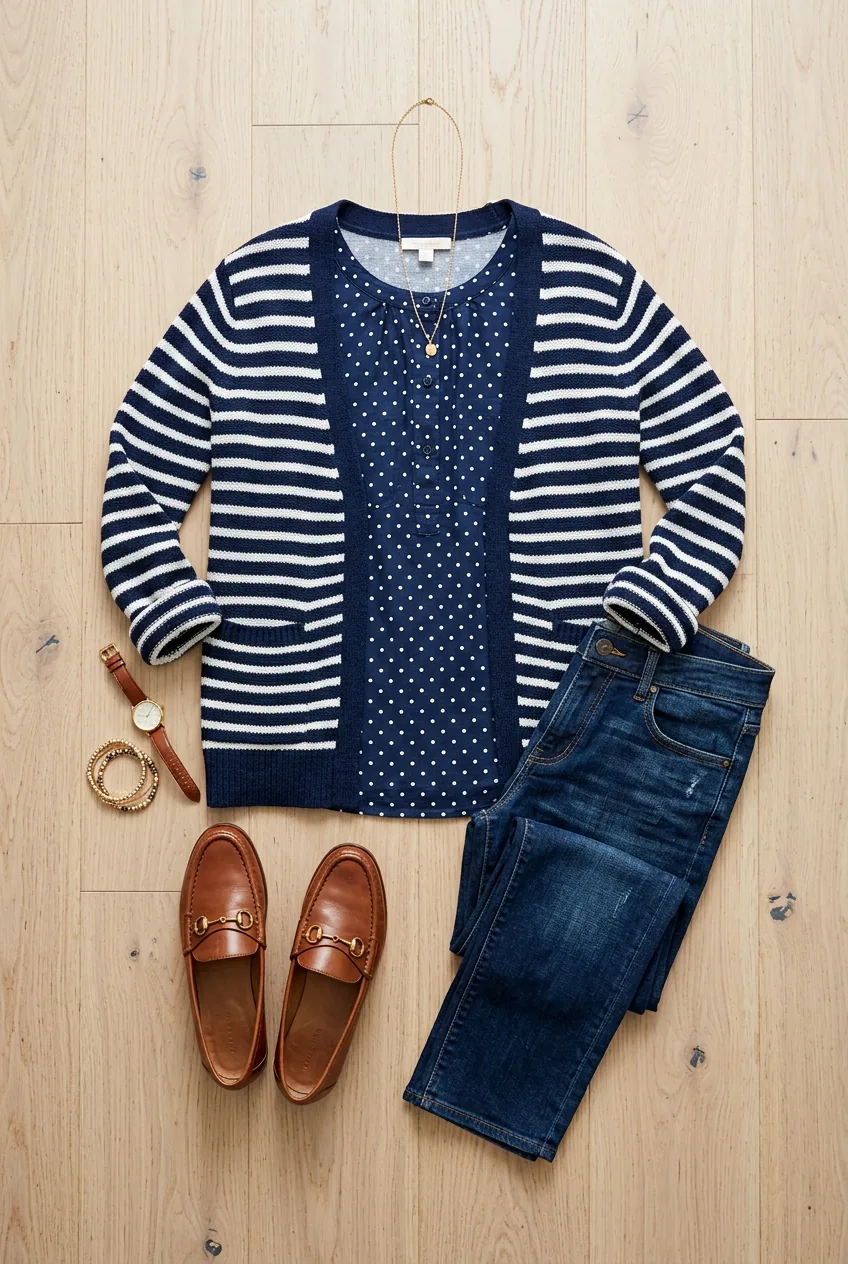
Start small if you’re nervous about this. Try a striped top under a solid cardigan, or add a patterned scarf to a simple outfit. You’ll be surprised how natural it starts to feel once you get the hang of it.
The other thing that helps? Stick to a similar color palette. If your striped shirt has navy and white stripes, look for patterns that include one of those colors. Pattern mixing techniques can really elevate your everyday style once you get comfortable with the basics.
And honestly? Even if you mess it up occasionally, most people won’t notice. We’re way more critical of our own outfits than anyone else is.
The Part That Seems Hard But Isn’t — Proportions
This is where so much casual outfit inspiration goes wrong when you try to recreate it. The model in the photo might be 5’9″ with long legs, and you’re 5’4″ with a shorter torso. The exact same pieces won’t create the same proportions on different bodies.
But here’s the thing about proportions — it’s not about your actual measurements. It’s about creating visual balance in your outfit.
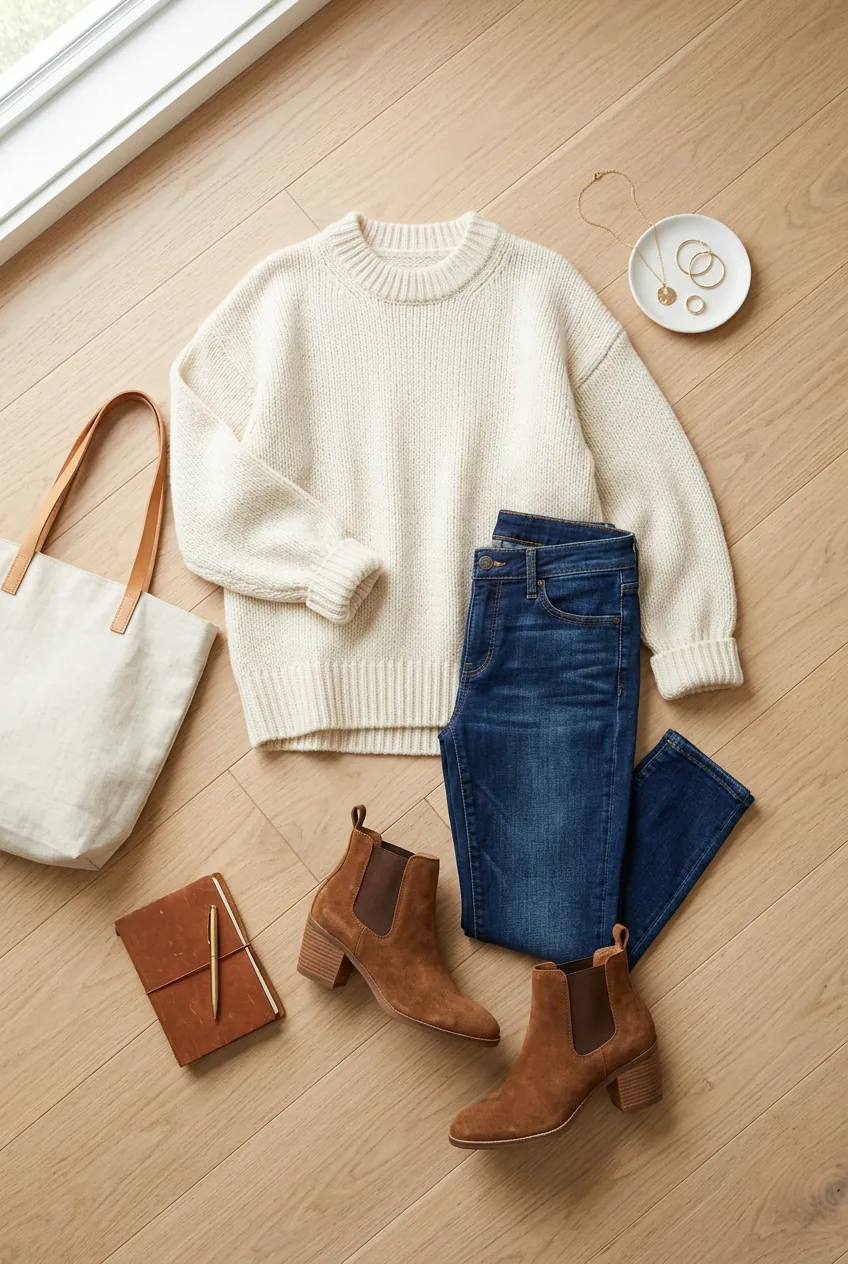
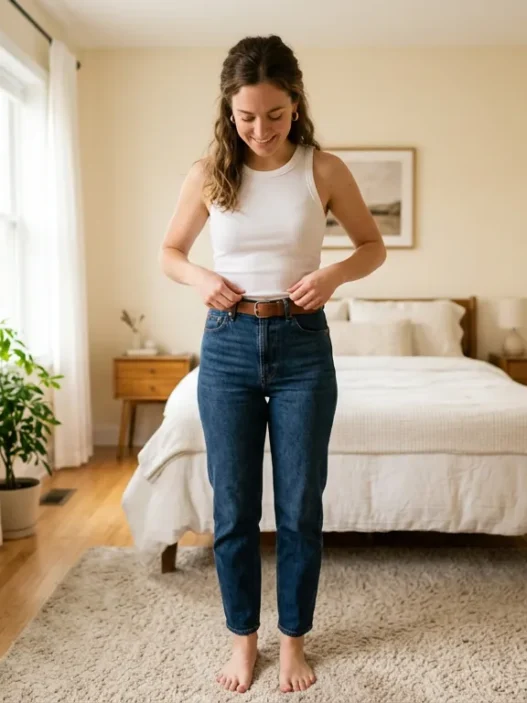
The easiest proportion rule to remember? If you’re wearing something loose on top, go more fitted on the bottom, and vice versa. Oversized sweater with slim jeans. Flowy wide-leg pants with a fitted tank. This creates a shape instead of just looking like you’re drowning in fabric.
Length matters too, but not in the way you might think. You don’t need to show skin to create good proportions. You just need to show where your waist is. A long cardigan over a tee and jeans can look amazing, but tuck the tee in or add a belt so there’s definition at your waistline.
I learned this lesson the hard way when I tried to copy an outfit with a long, flowing kimono-style cardigan. On the model it looked effortless and chic. On me it looked like I was wearing a bathrobe. The fix? I belted it at the waist and suddenly it worked. Those simple casual outfits you see everywhere often have these small proportion tricks that make all the difference.
See the Proportion Trick in Action
You Look Great — Final Details That Matter
This is where your outfit goes from “fine” to “actually put-together.” The details are what make casual outfit inspiration translate into real life.
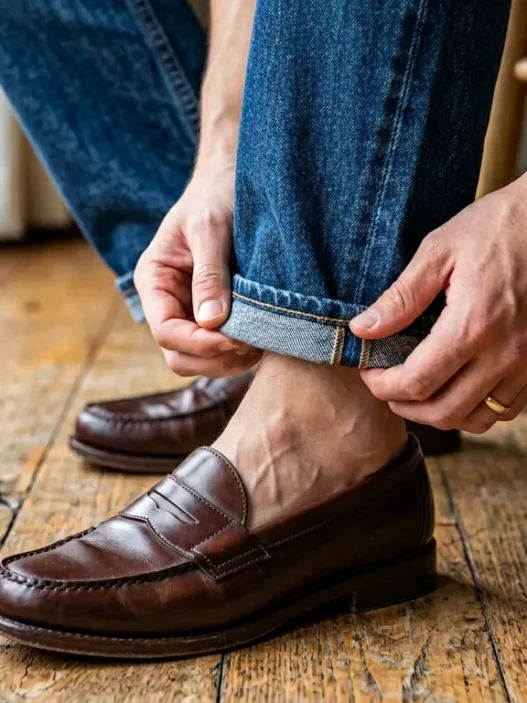
First, check your fit in a mirror. Not just the front view — turn to the side, look over your shoulder. Does anything pull or bunch in weird ways? If your jeans are bunching at the knees, try cuffing them or switching to a different pair. If your sleeves are too long, push them up or roll them deliberately.
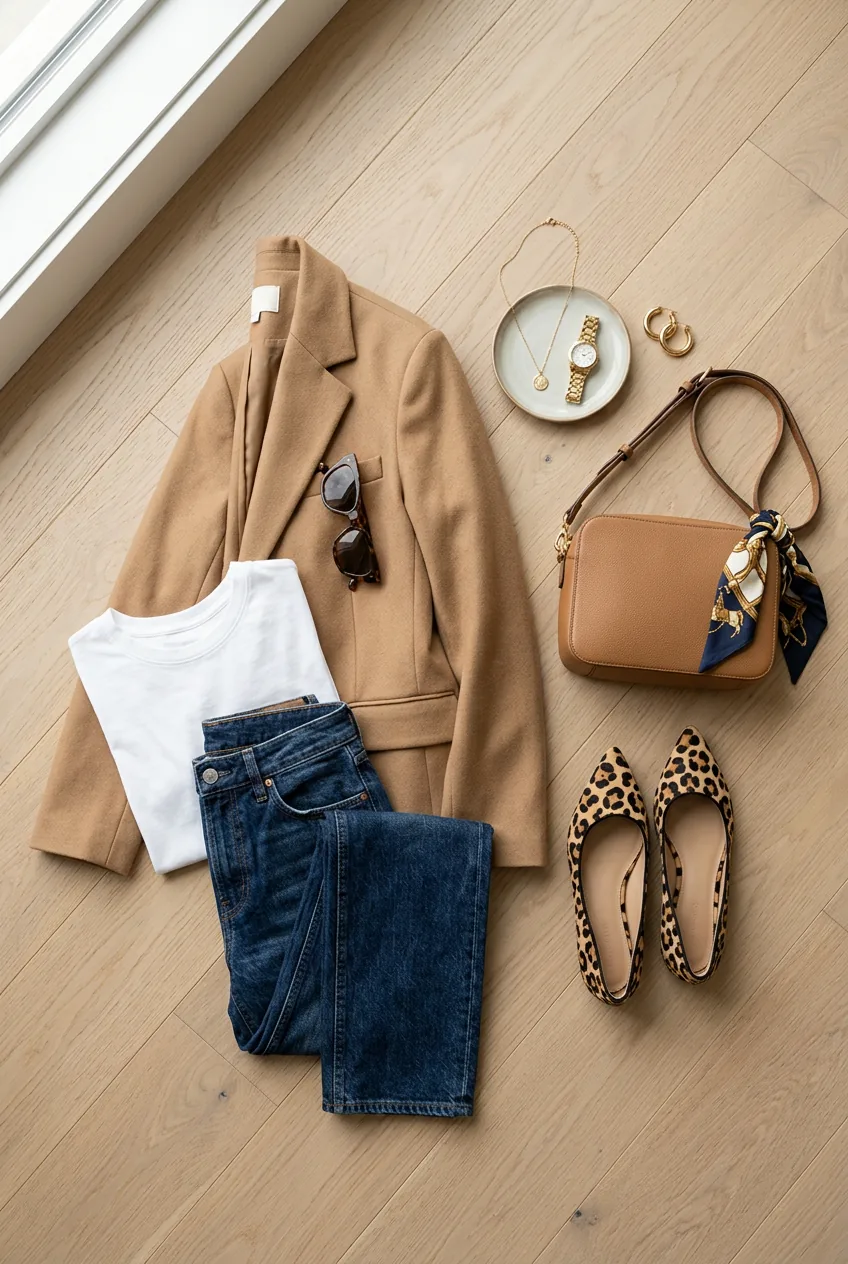
Accessories are your secret weapon, but keep them simple for casual looks. A watch, small hoop earrings, or a delicate necklace can make even jeans and a tee look intentional. The key is picking one or two pieces max — this isn’t the time to pile everything on.
Shoes can make or break a casual outfit. Your most comfortable sneakers might not always be the best choice. Sometimes swapping them for ankle boots or simple flats elevates the whole look without making it feel overdressed.
Finally, do the movement test. Sit down, raise your arms, walk around a little. If anything feels restrictive or looks weird when you move, adjust it now rather than discovering it later when you’re out.
Styling advice from fashion experts often focuses on these finishing touches, and honestly, they’re what separate a thrown-together look from one that appears effortless.
The best part about mastering casual outfit inspiration is that once you understand these basic principles, getting dressed becomes so much faster. You’re not starting from scratch every morning — you’re working with a system that you know produces outfits you feel good in.
I went from someone who dreaded getting dressed to someone who actually enjoys putting outfits together. And the weird thing? People started asking me for style advice. Not because I suddenly started wearing expensive clothes, but because I figured out how to make my regular clothes work better for me. That confidence shows, and it’s way more important than any single piece you could buy.
Questions I Get About This
What if I don’t have enough clothes to make different combinations?
You probably have more options than you think. Try wearing pieces in ways you haven’t before — a dress as a skirt with a tee over it, or a button-up shirt as a light jacket. Sometimes it’s about creative styling rather than having more clothes.
How do I know if proportions actually look good or if I’m just used to how I always dress?
Take photos! Your mirror can lie to you, but your phone camera usually tells the truth. If something looks off in a photo, it probably is. Also, pay attention to how you feel — if you keep adjusting or feeling self-conscious about one part of your outfit, that’s usually a proportion issue.
Is it okay to wear the same foundation piece multiple times a week?
Absolutely. I wear my favorite jeans at least three times a week, just styled differently each time. Most people won’t notice, and even if they do, so what? You found something that works for you — embrace it.
What about when casual outfit inspiration feels too dressed up for my actual life?
Scale it down. If the inspiration outfit has heels, try it with sneakers. If it has a blazer, try it with a cardigan instead. The key is adapting the overall vibe to fit your lifestyle, not copying every single element.
Remember, the goal isn’t to look like someone else. It’s to feel like the best version of yourself, just with better outfit-building skills. And trust me, once you get this system down, you’ll wonder why getting dressed used to feel so complicated.